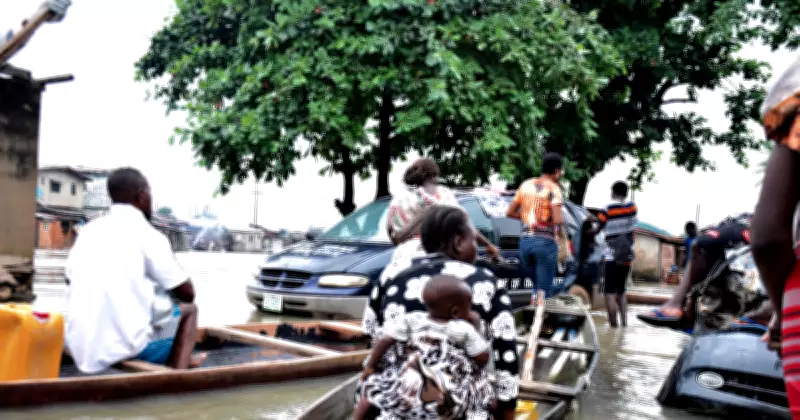
The Lagos State Government, in collaboration with the Nigeria Hydrological Services Agency (NIHSA), has identified 17 high-risk neighbourhoods prone to severe flooding during the 2026 rainy season. With predictions of above-normal rainfall reaching up to 3,030 mm, residents in areas such as Lekki, Ajah, Ikorodu, and Badagry are urged to take precautionary measures. The peak rainy season is expected to last from late March to early December 2026.
High-Risk Neighbourhoods
Lekki, Ajah, and Victoria Island
These affluent areas, built on reclaimed land, are highly susceptible to flooding. Lekki Phase 1 and 2 often experience street flooding after just two hours of heavy rain. Ajah, particularly Addo Road, struggles with inadequate drainage, while Victoria Island faces tidal surges from the Atlantic Ocean.
Surulere and Mushin
On the mainland, ageing infrastructure and blocked gutters cause rapid flash floods. Surulere's Aguda and Adeniran Ogunsanya areas see water rise quickly, submerging parked cars. Mushin and Itire suffer from waste-clogged drains that overflow with black water.
Ikorodu and Ketu
These areas face riverine flooding due to releases from the Oyan Dam. Owode-Onirin and Agiliti are particularly vulnerable when dam water is discharged to prevent a burst.
Alimosho and Ikeja
Alimosho, including Ipaja and Ayobo, has many homes built on natural floodplains. Ikeja's Allen Avenue and Toyin Street experience heavy ponding, causing traffic jams.
Badagry and Epe
These coastal areas are expected to receive the highest rainfall, over 2,000 mm. Badagry's low-lying terrain and Epe's proximity to lagoons make them prone to coastal flooding.
Chisco and Elegushi
The Lekki-Epe Expressway experiences a phenomenon called "tidal lock," where high tide prevents drainage, causing severe flash floods at Chisco, Elf, and Jakande.
Apapa and Ijora
Apapa's industrial nature and port proximity lead to drainage blockages and prolonged ponding. Ijora and Badia are low-lying areas that collect runoff from higher mainland areas.
Isheri and Mile 12
These areas are prone to riverine flooding when the Ogun River overflows due to Oyan Dam releases.
Flood Safety Tips
- Avoid driving through moving water; it can stall your engine or sweep your car away.
- Clear gutters in front of your home to improve water flow.
- Check for watermarks on walls before renting to avoid flood-prone properties.
Residents are advised to stay informed through real-time weather alerts and prepare accordingly to minimize risks during the rainy season.