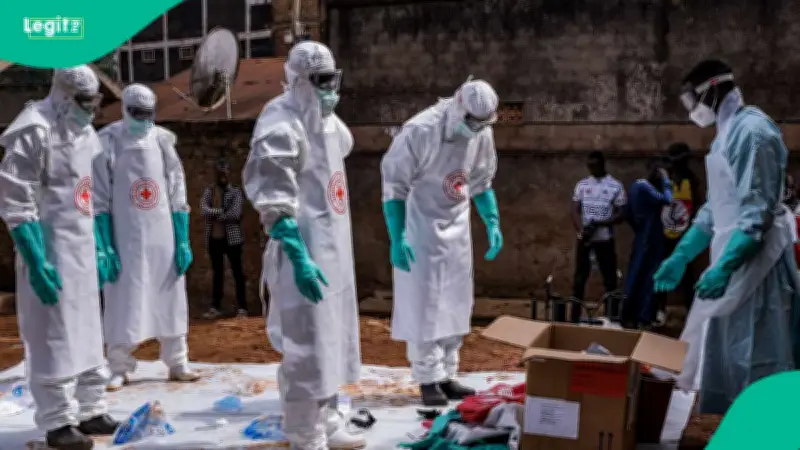
Uganda is preparing to discharge its last Ebola patient on Thursday, a pivotal step that will trigger a 42-day countdown under World Health Organization (WHO) guidelines. If no new cases emerge during this period, the country can be officially declared free of the virus, according to government officials.
Alan Kasujja, a Ugandan government spokesperson, announced on Wednesday evening that the patient would be released from Mulago National Referral Hospital in Kampala on Thursday morning. “When that happens, Uganda starts counting down,” Kasujja said. “If 42 days pass without a single new case, WHO guidelines stipulate that we will be declared Ebola free.”
WHO guidelines on ending outbreaks
The World Health Organization requires a 42-day waiting period after the last patient is discharged before an outbreak can be declared over. This period is double the maximum incubation time of the virus, ensuring no hidden cases remain.
An online portal from Uganda’s health ministry reported on Thursday that the country has recorded 17 recoveries, one patient still in isolation, and two deaths. Of the total cases, five were locally acquired while 15 were imported. All infections are linked to the rare Bundibugyo strain, which WHO has described as the third-worst Ebola outbreak on record.
Wider outbreak in the Democratic Republic of Congo
The outbreak was first declared a public health emergency in the Democratic Republic of Congo in May. As of Wednesday, the DRC has reported 2,011 confirmed cases and 754 confirmed deaths, according to government data. According to Reuters, Uganda’s progress marks a hopeful step in the fight against Ebola, but the situation in neighbouring DRC remains severe.
About Uganda
Uganda is a landlocked country in East Africa, bordered by Kenya, South Sudan, the Democratic Republic of Congo, Rwanda, and Tanzania. Its capital, Kampala, lies on the northern shores of Lake Victoria, Africa’s largest freshwater lake. With a population of nearly 46 million, Uganda is home to diverse ethnic groups, the largest being the Baganda. English and Swahili are official languages, while Luganda is widely spoken. The country gained independence from Britain on October 9, 1962. Uganda’s economy relies heavily on agriculture, fishing, and mining, while its scenic landscapes and wildlife reserves make it a popular eco-tourism destination.
WHO declares Ebola outbreak a global health emergency
Legit.ng earlier reported that the World Health Organization has sounded the alarm over the latest Ebola outbreak in the Democratic Republic of the Congo, describing the situation as a public health emergency of international concern. The rare Bundibugyo strain of Ebola has already claimed 220 suspected lives, with cases spreading across borders into Uganda. He explained that delays in detecting cases meant responders are now “playing catch-up”. Surveillance efforts in the DRC have identified more than 900 suspected cases so far, with the epicentre in Ituri province. The outbreak has spread up to 200km (125 miles) from “ground zero” and crossed into Uganda.