African Union Appeals for Global Assistance in Nigeria's Counter-Terrorism Campaign
The African Union (AU) has issued a strong call for international support to bolster Nigeria's ongoing struggle against violent extremism, as the nation's military leadership confronts what it describes as "enemies within" complicating counter-insurgency operations in the northeast.
Military Leadership Relocates to Borno Epicenter
Normalcy gradually returned to Maiduguri, the historic epicenter of Nigeria's seventeen-year Islamist insurgency, following President Bola Tinubu's directive requiring all service chiefs to relocate to the Borno State capital. This strategic move comes amid a concerning resurgence of attacks and bombings in the theater of operations against Boko Haram and Islamic State West Africa Province (ISWAP) militants.
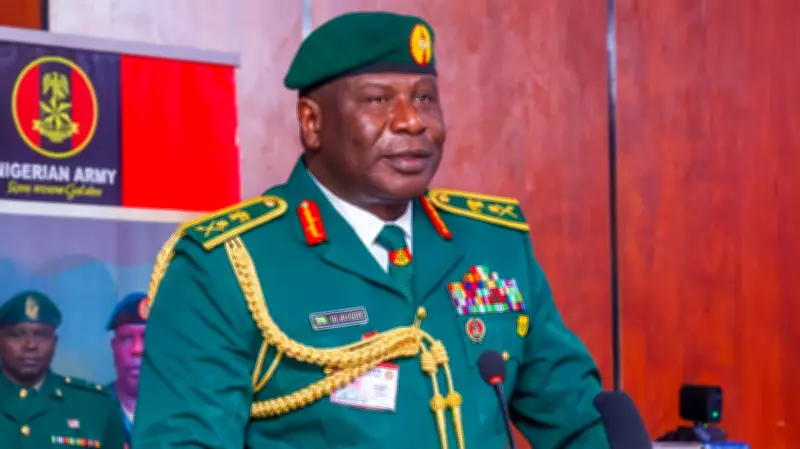
Chief of Defence Staff General Olufemi Oluyede and Chief of Army Staff Lt Gen Waidi Shaibu arrived at Maiduguri Air Force Base and proceeded directly to the Theatre Command Headquarters of Joint Task Force North East Operation HADIN KAI. Their presence preceded Vice-President Kashim Shettima's visit to the University of Maiduguri Teaching Hospital to commiserate with victims of Monday night's multiple bomb explosions that affected over one hundred people and left more than twenty dead.
African Union's Solidarity Statement
In a formal statement issued by spokesperson Nuur Sheekh, AU Chairperson Mahmoud Youssouf declared the organization's "full solidarity with the government and people of the Federal Republic of Nigeria during this difficult time." The statement extended deepest condolences to victims' families while wishing speedy recovery to the injured.
Youssouf specifically urged the international community to "scale up support to Nigeria and the Lake Chad Basin region at large" through enhanced humanitarian assistance, capacity-building initiatives, intelligence-sharing mechanisms, and sustained investment in stabilization and development programs targeting the root causes of violent extremism. This appeal follows the arrival of one hundred American soldiers in Abuja one month earlier to support Nigeria's security efforts against jihadist groups destabilizing multiple regions.
Military Warns of Local Complicity
During a briefing with journalists after closed-door meetings with senior military commanders in Maiduguri, Chief of Defence Staff General Oluyede delivered a stark warning about internal challenges hindering counter-terrorism operations. "Unfortunately, many of the perpetrators are our brothers, sisters, and cousins. We know them," Oluyede revealed, citing credible intelligence indicating that numerous individuals responsible for attacks over the past fifteen years originate from the affected states.
The defence chief called on residents of Borno and Yobe states to actively participate in the fight against terrorists, emphasizing that local cooperation represents a critical component for ending the insurgency. He highlighted an incident where two wounded terrorists were discovered hiding inside a village during cordon and search operations following the Kukawa attack.
Evolving Terrorist Tactics and Military Response
Addressing emerging threats, Oluyede noted terrorists' increasing utilization of drones and other technological weapons, prompting military countermeasures including the deployment of German-made drones and enhanced surveillance capabilities. Meanwhile, Nigerian troops backed by air support successfully repelled a coordinated assault by Islamist insurgents on a military base in Mallam Fatori near the Niger border, killing at least eighty fighters including three senior commanders.
Military task force spokesperson Sani Uba described the pre-dawn attack that involved insurgents advancing on foot while deploying armed drones. Troops mounted what Uba termed an "offensive-defensive" response utilizing ground fire and precision airstrikes from both Nigerian and allied Nigerien jets. The operation resulted in four wounded soldiers and recovery of substantial weapon caches including assault rifles, RPG launchers, machine guns, ammunition, improvised explosive devices, and armed drone components.
Political and Civil Society Reactions
Vice-President Shettima, during his hospital visit, described the perpetrators of multiple terror attacks as "barbaric," stressing that "no cause justifies the killing of innocent people." He reaffirmed the Federal Government's determination to defeat terrorism while announcing increased investment in equipment and logistics to boost counter-terrorism efforts nationwide.
The Arewa Consultative Forum (ACF) condemned recent deadly attacks in Borno, Plateau, and other regions, warning that Nigeria risks sliding into anarchy without urgent intervention. In a statement by National Publicity Secretary Professor Tukur Muhammad-Baba, the forum expressed deep sorrow over loss of lives and property destruction while criticizing inadequate security responses despite growing threats.
Former senator Shehu Sani linked the surge in terrorist attacks to forthcoming general elections, noting that security crises typically deteriorate during election seasons. In a social media post, Sani questioned why assailants target fellow Muslims during Ramadan while claiming religious justification, urging clerics to "muster the courage to rebuke these evil forces."
NYSC Safety Concerns
The National Association of Seadogs (Pyrates Confraternity) called for immediate overhaul of the National Youth Service Corps deployment system, urging authorities to stop posting corps members to states plagued by insecurity. Association leader Dr Joseph Oteri warned that worsening insecurity poses direct threats to young graduates, stating that "national unity should never come at the cost of the lives and safety of Nigeria's young graduates."
The group cited rising incidents of kidnapping, banditry and violent attacks affecting corps members, referencing recent abductions and assaults in Sokoto, Zamfara and the Federal Capital Territory as evidence of a disturbing decade-long pattern.