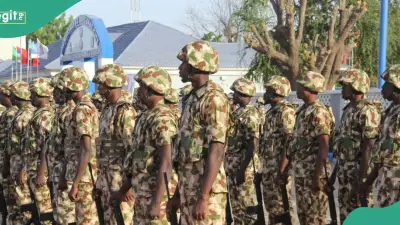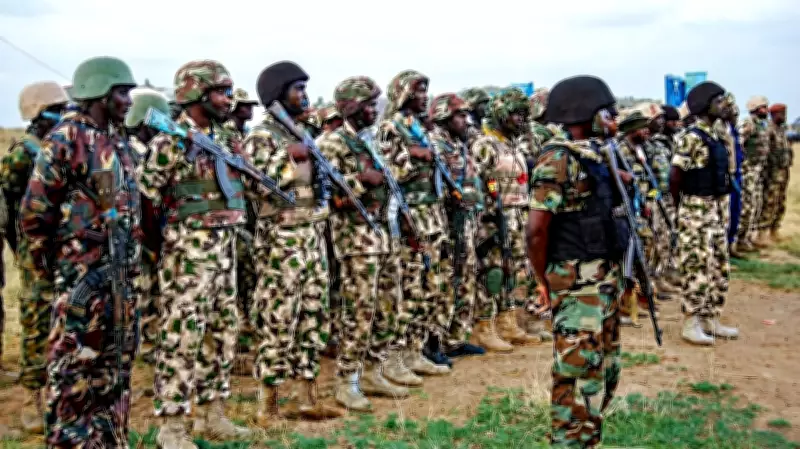
For President and military, ending terrorism is the only option. The Nigerian Military and all other security agencies fighting terrorists on various fronts deserve special commendation for their bravery and unrelenting push against insurgency. Their efforts and sacrifice, often with their lives, are certainly what is saving the country from being overrun by terrorists, whether Boko Haram or other groups. This must be the toughest time for soldiers, considering the persistence of the terrorists and kidnappers who refuse to be defeated despite suffering high casualties. Nigerians’ prayers and thoughts are with the army as they battle the scourge, and in appreciation of the grave security situation.
Military Morale and Government Responsibility
It is important that soldiers do not become demoralised, especially by the killings of their colleagues before their very eyes. Terrorism, insurgency and banditry must not be allowed to get out of hand. The government must not allow that to happen. It is a matter of serious concern that security officers are falling in the line of duty while leading the campaign against insurgency. The terrorists display arrogance and an air of invincibility, an attitude that emerged from the failure of past governments to nip the crisis in the bud before it festered.
As Commander-in-Chief of the Armed Forces, President Bola Tinubu must assume full control and take the battle to the terrorists. The mindset of incremental battlefield successes must change. What the country needs now is total victory and respite for the military, which is understandably battle-weary.
Recent Casualties
It is sad that in April alone, Nigeria lost two top officers and many soldiers to terrorists. On April 9, 2026, terrorists killed Brigadier-General Oseni Momoh Braimah of 29 Task Force, along with 17 soldiers, during attacks on military formations at Benisheikh, Ngamdu and Pulka, Borno State. Colonel I.A. Mohammed, who led the Monguno camp in Borno State, was killed on April 12, 2026, when his vehicle struck an improvised explosive planted by terrorists. On April 4, 2026, four police officers were killed when terrorists attacked Nganzai Divisional Police Headquarters. Earlier on March 6, 2026, Colonel S.I. Iliyasu, the Commanding Officer of the 222 Battalion, was killed in coordinated attacks on military positions in Konduga, Borno State.
While such casualties are not abnormal during military operations, the current situation is palpable because soldiers are deployed on many fronts. Their operations are overstretched. They’re dealing with elements of Boko Haram and the Islamic State West Africa Province (ISWAP) fighters, including those of ISIS, sandwiched around the Yobe, Borno and Adamawa States northeast axis. Soldiers are combating well-armed bandit groups in Zamfara, Katsina and Sokoto in the Northwest, as well as trailing the deadly Lukarawa terrorists operating in Niger and Kwara states. Not to forget the perennial unrest and killer herders’ onslaught on local communities in Plateau and Benue states. The military also battles Biafran agitators in the Southeast and oil thieves in the South-south.
Clearly, the military needs respite from these endless engagements. It is unfortunate that military outposts have become easy access for terrorists. But losing more soldiers to terrorists is antithetical to the morale of troops. It is the government’s responsibility to ensure that Nigerian soldiers are safe. They must be well armed and combat-ready at all times. With so much money going into defence and security, the government must not slacken in the procurement of quality arms, timely back-ups, and the judicious deployment of resources allocated to the defence of the country.
Intelligence and Sabotage
Nigerians demand real-time responses to distress situations, and there should be adequate backup for fighters in the war theatre. The case of Brigadier-General Musa Uba, who was killed by terrorists last November due to a lack of response to his distress call, remains painful. He needed urgent rescue after his team was displaced by terrorists. He shared his location with the Army, but he was left stranded until the enemy caught up with him. The military must scale up on intelligence to put the country’s fighters ahead of the enemy. Saboteurs within the system should be carefully fished out and dealt with as appropriate. There are reports of fifth columnists and saboteurs infiltrating the army and working for the enemy. The military must no longer tolerate such enemies if the war against terror is to have an end.
Airstrike Controversy
The military airstrike at Jilli, a border town between Yobe and Borno, has raised a critical dimension to the insurgency fight, following alleged civilian casualties in the aftermath of the airstrike. Although the military and government insisted that those killed were terrorists embedded in the Jilli market, which is a known transaction hub for terrorists, there is always a chance of innocent Nigerians being adversely affected, especially in a war where the enemy is deeply embedded among the civilian population. The military should nevertheless work towards more precise target identification before airstrikes are ordered.
Local administrators and traditional rulers should assume more responsibility in securing their communities. They must report suspicious movements and should not be found to be harbouring terrorists. They must understand that it is treasonable to betray the unity and security of the country, which actually is everybody’s business.
Political Will and Distractions
In all these, there are palpable concerns that the political leadership has not fully grasped the immensity of the trouble the country faces. Although President Tinubu has expressed determination to squarely face and eliminate insecurity in the country, there are too many political distractions in the polity, thus tending to trivialise official resolve. Reports of deaths across the landscape are regular in ways that question the territorial integrity and sovereignty of the country. A leadership that cannot guarantee the safety of life and property is a failure.
The nuances of Senate President Godswill Akpabio, seemingly reducing the crisis to a political fight between the ruling party and the opposition, do not help matters. His remark that terrorism would be over two weeks after the next elections suggests he knows more about the insurgency than the ordinary citizens or even the security class. Akpabio will do well to clarify his position or avoid such controversial statements.
Amid electioneering campaigns for the 2027 elections, President Tinubu and the political class should remember that Nigeria must first exist as a country with citizens who are hale and hearty enough to participate in elections. The President must demonstrate political will and sagacity to take the fight to the terrorists wherever they may be.
Regional Context
The situation in Mali should serve as a wake-up call. The Minister of Defence of Mali, Sadio Camara, was killed in Bamako in a suicide attack on his residence by jihadists. The country’s military intelligence chief, Modibo Kone, was similarly killed. Mali is in turmoil. The jihadists are unrelenting. Governments in the ECOWAS sub-region must also be unrelenting. It’s unimaginable for Nigeria to lose the fight to terrorists.