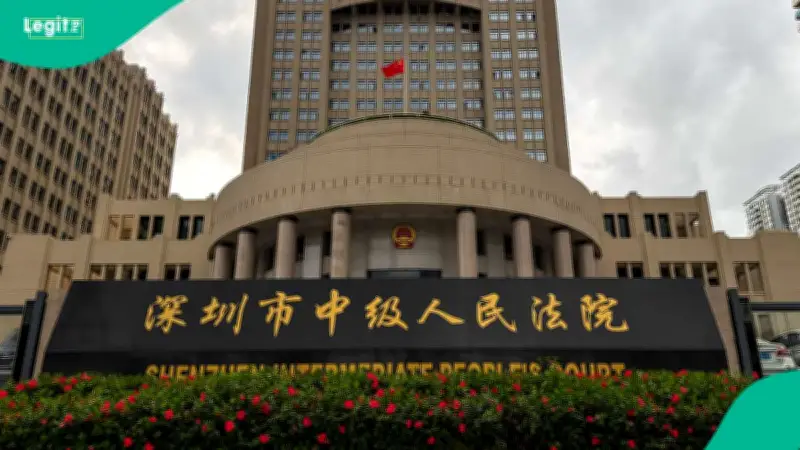
Hui Ka Yan, the founder of Chinese property giant Evergrande, has been sentenced to life in prison by the Shenzhen Intermediate People's Court, which also ordered the confiscation of all his personal assets. The sentence followed Hui's guilty plea in April to charges of embezzlement and corporate bribery. According to the BBC, the court levied fines totalling 15.82 billion yuan (approximately £1.73 billion or $2.35 billion) against his former companies for offences that included falsifying financial records and hiding debt.
Court Ruling and Financial Penalties
The Shenzhen Intermediate People's Court handed down the life sentence after Hui, also known as Xu Jiayin, admitted to the charges in April. Beyond the life term, the court imposed significant financial penalties on his former companies. The court stated that Hui and his businesses "seriously disrupted" China's property market, causing substantial economic losses across the sector.
Other Evergrande Executives Also Jailed
Hui was not the only figure punished in the proceedings. Several other senior executives within the company, including his two sons Xu Zhijian and Xu Tenghe, received prison sentences ranging from 22 months to 18 years, according to Chinese state media.
From Rags to Asia's Richest Man
Hui's fall from the top is particularly striking given how far he once climbed. Raised by his grandmother in rural China, he built Evergrande into the country's largest real estate developer after founding it in 1996. The company was once valued at over $50 billion on the stock market, and Hui himself was at one point considered the wealthiest person in Asia. That rise, however, was built on aggressive borrowing. Evergrande expanded rapidly using enormous amounts of debt, a strategy that eventually caught up with the company when it began to collapse under the weight of its liabilities. The fallout rattled China's broader property sector, dealt heavy losses to investors, and left domestic banks exposed to significant financial risk.
Impact on China's Real Estate Sector
Hui's sentencing draws a line under one of the most consequential corporate collapses in recent Chinese history, closing a chapter that has reshaped how regulators and investors view the country's real estate industry. The court ruling confiscates Hui Ka Yan's assets, reshaping China's real estate industry.