A six-year study by the Observatory for Religious Freedom in Africa (ORFA) has challenged international understanding of violence in Nigeria, revealing that Fulani Terror Groups are responsible for 44% of civilian deaths, far outpacing Boko Haram and ISWAP.
Study overturns assumptions about Nigeria's deadliest groups
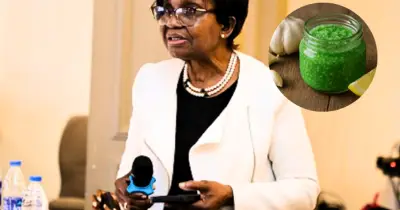
Senior research analyst Frans Vierhout presented the findings at a peace summit in Jos on Monday. The study, covering attacks from 2020 to 2025, recorded 79,323 terror-related deaths, with 42,033 being civilians. "Our data leaves little room for ambiguity," Vierhout said. "Boko Haram is not the main source of civilian deaths in Nigeria."
Boko Haram accounted for 8% of civilian killings, and ISWAP for 4%, totaling 12%. In contrast, armed militias classified as Fulani Terror Groups were responsible for 44% of all civilian deaths—four times the combined toll of Boko Haram and ISWAP. Vierhout stressed that the classification refers strictly to armed militias, not the Fulani ethnic group.
Christians disproportionately affected
The study found that Christians suffered disproportionately, with 28,551 Christians killed compared to 13,224 Muslims. When measured against state population sizes, Christians were killed at 4.4 times the rate of Muslims in affected states. "This is not just about raw numbers," Vierhout said. "In population terms, the losses suffered by Christian communities are devastating."
Three-quarters of civilian deaths occurred during community attacks, typically raids on farming settlements involving abductions, sexual violence, and destruction of property.
Abductions and unequal treatment
ORFA's data recorded 34,773 civilian abductions between 2020 and 2025. Fulani Terror Groups were linked to 43% of these kidnappings, while unidentified armed groups accounted for 49%. Although the total number of Christian and Muslim abductees was nearly equal, Vierhout said field research revealed stark differences in treatment. "Christian hostages face higher ransom demands, longer captivity, harsher violence, and a greater likelihood of execution," he said. "Christian women, in particular, face extreme sexual violence, forced conversion, and forced marriage."
Call for policy rethink
Vierhout warned that Nigeria is "incubating a complex terror ecosystem that the outside world has yet to fully acknowledge." He argued that policy responses based on incomplete understanding are unlikely to succeed. "Without a full accounting of the religious and communal dimensions of this conflict, efforts to stabilise Nigeria will remain fundamentally flawed," he said. He urged governments and international organisations to engage with ORFA's data and reassess their approach to Nigeria's security crisis.