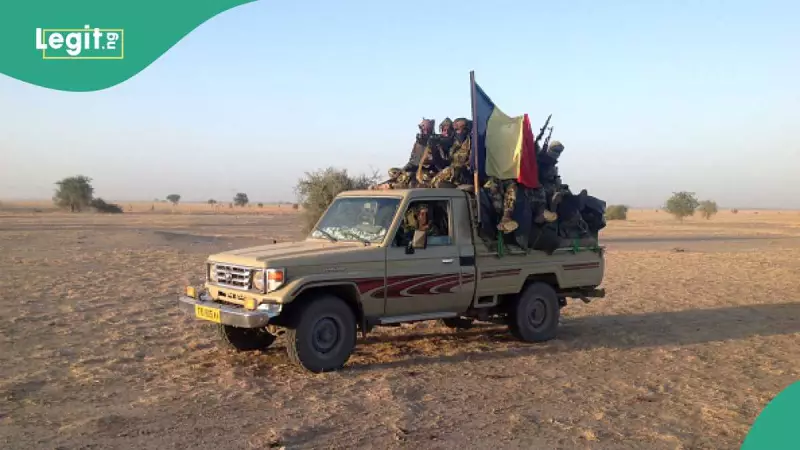
For years, the persistent survival of the Boko Haram insurgency has confounded security experts and the Nigerian public. A new, detailed account by a prominent journalist has now shed light on the complex and evolving financial architecture that has allowed the terrorist group to endure.
The Evolution of a Terrorist Financial System
On December 6, 2025, Ahmad Salkida, a Nigerian journalist and the CEO of Humangle Media, provided a critical analysis of how Boko Haram and its splinter faction, the Islamic State West Africa Province (ISWAP), built a resilient financial ecosystem. Salkida emphasized that the group's strength lies in its adaptive financing model, which has made it nearly impossible to trace its survival to a single source of funds.
He explained that from its inception, the movement deliberately spread its financial roots wide, creating a system that could withstand sustained military and economic pressure. This strategic diversification is identified as a primary reason for the insurgency's longevity.
Phase 1: Community-Based Funding (2002-2009)
In its formative years, Boko Haram's operations were largely bankrolled by grassroots support. Salkida reported that nearly 90 percent of its revenue between 2002 and 2009 originated from within local communities. This funding stream included widespread crowdfunding efforts, obligatory Islamic alms known as Zakat, and occasional large-sum donations from international terrorist networks like Al-Qaeda.
Phase 2: Expansion into Criminality (2009-2014)
As the group transformed into a full-blown armed insurgency following the 2009 uprising, its financial tactics became more aggressive and criminal. According to Salkida's account, this period saw Boko Haram supplement its ongoing public fundraising with significant income from large-scale bank robberies and ransom payments from kidnappings. This marked a pivotal shift towards leveraging violence directly for economic gain.
Phase 3: The Criminal-Terrorist Enterprise (2014-Present)
From 2014 to the present day, the organisation has morphed into a hybrid criminal-terrorist enterprise with diverse income streams. Salkida outlined that the group now draws substantial revenue from:
- Control of trade networks and smuggling routes.
- Taxes and levies forcibly imposed on communities under its influence.
- Organised extortion rackets targeting businesses and individuals.
- Engagement in large-scale crop cultivation and fish farming.
- Continued ransom payments from abductions.
- Periodic financial injections from the so-called Islamic State central command.
Implications and Broader Context
Salkida's analysis underscores a critical challenge for counter-terrorism efforts in Nigeria: targeting a monolithic funding source is ineffective against such a diffuse and adaptive financial network. The group's ability to function as both an ideological movement and a pragmatic criminal organisation has been key to its survival.
This revelation comes amid ongoing national discourse on terrorism financing. Legit.ng had earlier reported on a December 5, 2025, publication by Sahara Reporters, which revisited an investigation into 23 suspected terror financiers allegedly handling billions of naira linked to convicted Boko Haram members.
That probe, led by retired Major General Danjuma Ali-Keffi, reportedly noted business connections between some suspects and high-profile figures, including former Attorney-General of the Federation, Abubakar Malami, and former Central Bank Governor, Godwin Emefiele. Emefiele has since strongly denied any involvement, labelling the allegations as mischievous and malicious.
The detailed breakdown by Ahmad Salkida provides crucial insight for policymakers and security agencies, highlighting the need for multifaceted strategies that address not just military threats but also the complex economic ecosystems that sustain terrorism in Nigeria.