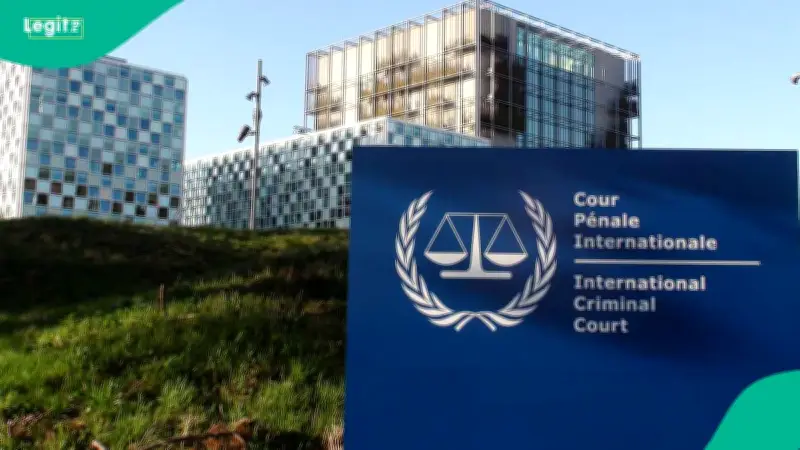
The International Criminal Court (ICC) has condemned the United States government's decision to place its president and a senior lawyer on a sanctions list, describing the action as a direct assault on judicial independence. The court's statement on Wednesday followed Washington's announcement that it had sanctioned ICC President Tomoko Akane, a Japanese judge who has led the court since March 2024, and Abdoulaye Seye, a Senegalese senior trial lawyer.
US Sanctions as a 'Flagrant Attack' on Judicial Independence
The Trump administration has described the ICC as 'a corrupt and fatally politicised body.' 'These sanctions are a flagrant attack against the independence of an impartial judicial institution,' the Hague-based court said. 'Such measures targeting judges, prosecutors and staff … undermine the rule of law.'
According to Al Jazeera, the court had already warned on August 18 that 'when judicial actors are threatened for applying the law, it is the international legal order itself that is placed at risk.' The sanctions bar the named individuals from entering the US and from conducting transactions within the American financial system.
Global Backlash: Japan and EU Defend ICC
Japan, which is both the ICC's largest financial contributor and a close Washington ally, objected to the measures. Ministry of Foreign Affairs press secretary Toshihiro Kitamura said his country has 'consistently supported the ICC … in its efforts to prosecute and punish the most serious crimes of concern to the international community and to uphold the rule of law.'
The European Union also backed Akane. European Commission chief Ursula von der Leyen and European Council head Antonio Costa said in separate social media posts that they 'stand firmly' with Akane and other senior officials, who 'must be able to act independently and without external pressure.'
Background to the US-ICC Dispute
US Secretary of State Marco Rubio, without citing specific examples, said the sanctioned individuals had 'directly engaged in efforts by the ICC to investigate, arrest, detain, or prosecute officials whose government has not consented to ICC jurisdiction.' Washington's push against the court has intensified since the ICC issued an arrest warrant in 2024 for Israeli Prime Minister Benjamin Netanyahu over the war in Gaza. The Trump administration has already sanctioned several other court officials and last month called on partner nations to withdraw from the ICC, a step that Chad and Venezuela have since announced.
Four human rights organisations, including Human Rights Watch, filed a lawsuit against President Donald Trump in a New York court last week, arguing that the sanctions prevent victims of war crimes from seeking justice. The ICC, established in 2002, serves as a court of last resort for prosecuting individuals accused of the world's gravest crimes. The US signed the Rome Statute that created the court but never ratified it. Israel and Russia are also not members. In 2023, the court issued an arrest warrant for Russian President Vladimir Putin over the war in Ukraine, after which Moscow responded by issuing its own arrest warrants targeting senior ICC officials, including Akane.