Israel Alleges Michigan Synagogue Attacker's Brother Was Hezbollah Commander
Israel's military has publicly claimed that the brother of the individual who attacked a Michigan synagogue last week held a significant command position within the militant group Hezbollah. According to a statement released by the Israel Defense Forces (IDF) on the social media platform X, Ibrahim Mohamad Ghazali was a commander responsible for overseeing weapons in a specialized branch of Hezbollah's Badr unit. The IDF asserted this unit has launched hundreds of rockets targeting Israeli civilians.
Details of the Allegations and Attack
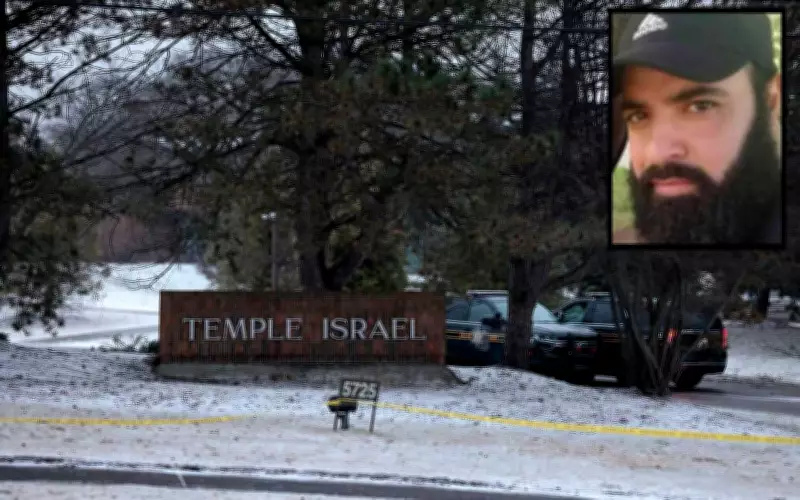
The IDF further stated that Ibrahim Ghazali was eliminated in an Israeli air force strike on a Hezbollah military structure in Lebanon last week. His brother, Ayman Mohamad Ghazali, a naturalized US citizen originally from Lebanon, carried out the attack on Temple Israel in West Bloomfield Township, Michigan. After driving his Ford F-150 truck into the synagogue and opening fire through his windshield, Ayman Ghazali was confronted by an armed private security guard. An exchange of gunfire ensued, during which the guard was injured. The truck's engine caught fire, igniting gasoline and fireworks in the vehicle bed. Ultimately, Ayman Ghazali took his own life at the scene.
Miraculously, none of the 103 children or nearly 50 staff, teachers, and clergy inside the synagogue were harmed. Temple Israel had previously strengthened its security measures following past attacks on places of worship and antisemitic incidents, a move credited with preventing fatalities. US Senator Elissa Slotkin of Michigan praised the security response, stating, "If they had not done their job almost perfectly we would be talking about an immense tragedy here today with children gone." Michigan Governor Gretchen Whitmer also commended the personnel, calling them heroes who "threw themselves in harm's way."
Motivation and Regional Tensions
A Hezbollah official reportedly informed the New York Times that Ayman Ghazali's attack was an act of revenge for the deaths of four family members during an Israeli airstrike in Lebanon on March 5. The official did not confirm or deny the IDF's specific claim about Ibrahim Ghazali's role. According to Imam Hassan Qazwini of the Islamic Institute of America, Ayman Ghazali attended a memorial for his slain relatives—including two children and another brother besides Ibrahim—at a mosque in Dearborn Heights, Michigan, on March 8.
The IDF stated that the March 5 strike in Mashgharah, Lebanon, targeted a Hezbollah military structure used for weapon storage and operatives. Lebanese officials reported the airstrike hit a three-story building and seriously wounded Ibrahim Ghazali's wife. Tensions between Israel and Hezbollah have escalated significantly since the US and Israel launched military operations in Iran on February 28, following a missile strike that killed Iranian supreme leader Ayatollah Ali Khamenei. Hezbollah retaliated by firing rockets into Israel on March 2, prompting Israeli airstrikes that Lebanon's health ministry estimates have killed approximately 800 people.
US Security Concerns and Political Response
The Michigan attack has heightened concerns about potential revenge actions within the United States linked to the ongoing Middle East conflict. US House member Adam Smith of Washington state, the top Democrat on the House Armed Services Committee, told ABC's This Week that the conflict has "exacerbated" the risk of politically motivated lone wolf attacks in the US. He emphasized, "We'd be wrong to say it sparked it... but we need to be prepared for those." Smith warned that the conflict "is without question spreading right now," underscoring the broader security implications for American communities.
This incident highlights the complex interplay between international conflicts and domestic security, raising urgent questions about preparedness and response to such threats on US soil.