A Nigerian Muslim man has voiced a profound concern shared by many, stating that the relentless insecurity plaguing the nation makes it exceedingly difficult to present Islam as a religion of peace to Christians and non-believers.
A Candid Admission from a Northern Muslim
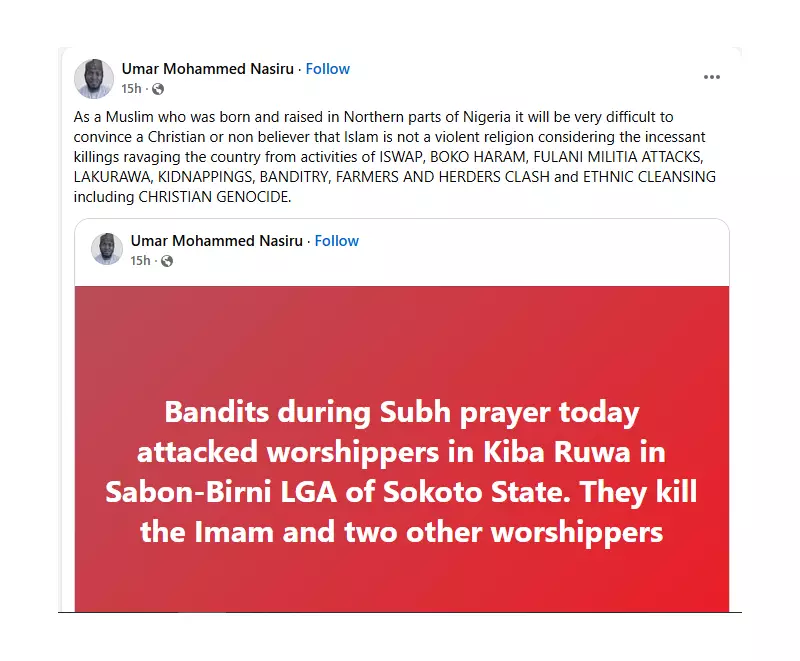
Umar Mohammed Nasiru, who identifies as a Muslim born and raised in Northern Nigeria, made this sobering observation in a Facebook post on Sunday, July 12, 2025. His comments were a direct reaction to the latest wave of bandit attacks terrorizing communities in Sokoto State.
Nasiru articulated a struggle felt by many peace-loving Muslims in the region. He pointed to the continuous cycle of violence carried out by various armed groups as the core of the problem. His post highlighted the immense challenge of countering the narrative that Islam is inherently violent when faced with daily reports of atrocities.
The Long List of Violence
In his social media statement, Nasiru did not shy away from naming the specific sources of violence that contribute to this damaging perception. He provided a grim catalogue of the security crises afflicting Nigeria.
The groups and crimes he mentioned include:
- The terrorist activities of ISWAP and Boko Haram.
- Attacks attributed to Fulani militia.
- The menace of Lakurawa groups.
- Widespread kidnappings for ransom.
- Rampant banditry in the northwest.
- Deadly clashes between farmers and herders.
- Incidents of ethnic cleansing.
- What he described as a "Christian genocide."
Nasiru's argument is that this unending barrage of violence, often carried out by individuals claiming a religious motive, creates an almost insurmountable barrier for Muslims trying to engage in interfaith dialogue or correct misconceptions.
The Ripple Effect of Insecurity
The implications of Nasiru's statement extend beyond theology into the very fabric of Nigerian society. His words underscore how national insecurity fuels religious and ethnic distrust, fracturing social cohesion.
When communities in Sokoto and elsewhere are attacked, the immediate consequences are loss of life and property. However, a deeper, more corrosive effect is the erosion of mutual understanding between religious groups. Each attack hardens perceptions and makes the work of peacebuilders and religious leaders significantly more difficult.
This admission from within the Muslim community is a powerful call for introspection and action. It suggests that addressing the security crisis is not just a matter for the military or government, but also a crucial step for preserving the integrity of religious identity and fostering national unity.
Ultimately, Umar Mohammed Nasiru's heartfelt post serves as a mirror to Nigeria's complex reality. It reflects the painful position of moderate Muslims who feel their faith is being hijacked by violence, and it highlights the urgent need for tangible security solutions that can begin to heal these deep societal wounds.