Nigeria's Escalating Terror Crisis and the Silent US Partnership
In the aftermath of Christmas 2025, a wave of cautious optimism swept through Nigeria's security apparatus. The authorization of United States military strikes against terrorist hideouts within Nigerian territory, reportedly targeting Boko Haram and Islamic State West Africa Province (ISWAP) camps, was heralded as a potential turning point. This operation, ordered during the administration of President Donald Trump, symbolized a shift from behind-the-scenes support to direct international military intervention in Nigeria's protracted conflict.
From Christmas Hope to Violent Reality
The initial relief felt across military barracks, policy circles, and Nigerian homes has since evaporated, replaced by a frightening resurgence of terror. Recent weeks have witnessed intensified attacks across multiple regions, resulting in significant military casualties and community devastation. The deaths of senior officers including Lt. Col. Umar Faruq, Lt. Col. S. I. Iliyasu, and Major U. I. Mairiga, alongside numerous soldiers, have profoundly shaken Nigeria's armed forces.
These coordinated assaults demonstrate the adaptive and strategic nature of insurgent groups despite years of military operations. The violence has expanded geographically beyond the traditional North East theater, with the Middle Belt and North West regions experiencing increased militant activity.
The Plateau Ambush and Widening Insecurity
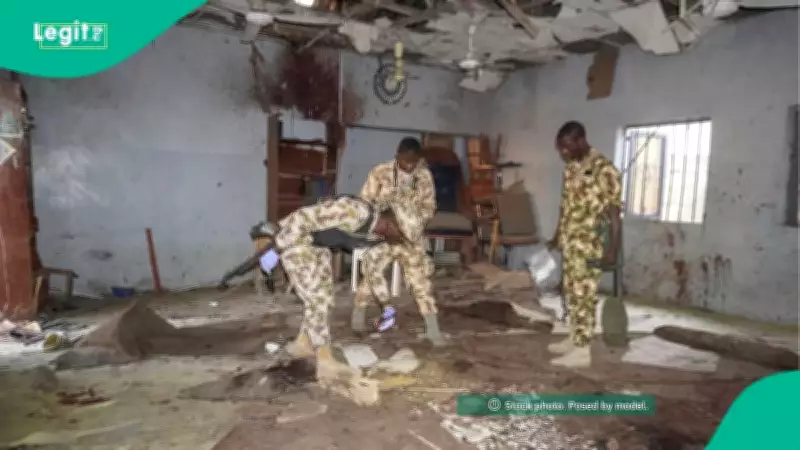
A particularly alarming incident occurred in Plateau State's Wase Local Government Area on March 13, where gunmen ambushed a military convoy during routine patrol. Approximately fourteen soldiers, including senior officers, were killed in this brutal assault executed with deadly precision. This attack underscores the growing boldness of armed groups and signals the dangerous expansion of insecurity across Nigeria's central regions.
Beyond conventional insurgency, kidnapping for ransom has evolved into a sophisticated industry of fear, with villages regularly raided and highways becoming perilous zones. Recent intelligence indicates terrorists have intensified coordinated attacks on military installations in the North East and North West, systematically overrunning bases, killing personnel, and seizing weapons and equipment.
Questioning US Security Cooperation
The Christmas Day strikes initially suggested a new phase in Nigeria-US security relations, with Washington potentially providing enhanced intelligence, surveillance, and strategic support. Following the operation, a Nigerian delegation led by National Security Adviser Nuhu Ribadu traveled to Washington to discuss expanded counterterrorism cooperation, with the Nigerian government confirming intelligence collaboration.
However, the subsequent resurgence of attacks raises critical questions about the partnership's effectiveness and continuity. Many Nigerians now wonder whether the strikes delivered only symbolic impact without sustained follow-up operations, whether intelligence cooperation was meaningfully strengthened, and whether Nigeria received adequate operational support to dismantle terrorist networks.
Strategic Concerns and National Security
The persistence of terror networks capable of striking military bases, ambushing convoys, and terrorizing communities after years of military campaigns and international partnerships represents a profound strategic failure. Counterterrorism experts emphasize that airstrikes alone rarely end insurgencies, as militant networks adapt through decentralization, blending with civilian populations, and exploiting ungoverned spaces.
Nigeria requires a coherent national strategy combining military strength, intelligence coordination, regional cooperation, and transparent international partnerships. If the United States remains a strategic ally, Nigerians deserve clarity about the partnership's true scope—whether it involves substantial intelligence sharing, military training, operational support, or merely diplomatic reassurance.
As violence spreads to regions once considered relatively safe, Nigeria stands at a dangerous crossroads. The haunting question echoing across the country remains: if terror is rising again, why does the partnership appear silent? Until this question receives clear answers, the promise of Christmas 2025 relief continues to feel increasingly unreal amid ongoing bloodshed and insecurity.