The Nigerian government has firmly stated that it will not tolerate any humiliation or damage to its interests and businesses in South Africa amid the ongoing wave of xenophobic attacks and anti-immigration marches. Presidential Adviser on Foreign Affairs, Demola Oshodi, made this declaration during a television broadcast on Tuesday, June 30, as thousands marched across South Africa demanding the departure of undocumented foreign nationals.
Protests and Repatriations Continue
On Tuesday, thousands of people participated in nationwide protests across South Africa, calling for undocumented foreigners to leave. The demonstrations, which have been ongoing for weeks, have resulted in four deaths and forced thousands to flee. Police were deployed in force, and soldiers were stationed in major cities overnight. While most protests remained peaceful, there were isolated incidents of tension, including stone-throwing and confrontations where security forces escorted foreign nationals away from mobs. Authorities confirmed several arrests for looting.
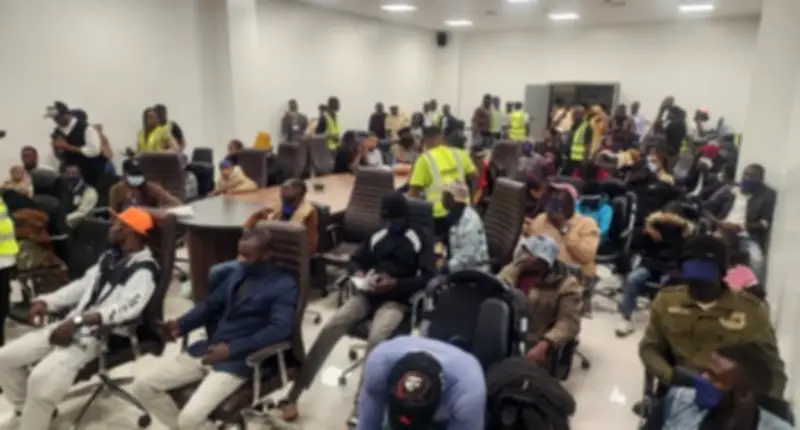
The renewed xenophobic violence has prompted countries like Ghana and Nigeria to repatriate their citizens. Another batch of Nigerians returned home on Tuesday, coinciding with the deadline set by some groups for undocumented immigrants to leave.
Government Measures and Assurance
According to Oshodi, the Federal Government has implemented measures to ensure the safety of Nigerians and protect national interests in South Africa. “We will not accept any sort of humiliation or definitely any huge damages to our interests there. It’s just not possible,” Oshodi said. He emphasized that the government prioritizes the lives of Nigerians over investments, noting that President Muhammadu Buhari has sent his ambassador to South Africa to address the crisis.
Oshodi explained that the government is taking a measured approach due to the deep ties between the two nations. “There’s a lot of vested interest in both countries. There’s a lot of investments in both countries. We also have a history together. We have been the two largest economies in Africa. So it’s important we take things incrementally,” he stated. He added that the government is monitoring the situation closely, particularly the June 30 deadline, and assessing the South African government's efforts to protect Nigerian nationals.
Compensation for Lost Businesses and Properties
Nigeria’s Acting High Commissioner to South Africa, Alexander Ajayi, revealed that the Federal Government is actively exploring compensation for Nigerians forced to abandon their businesses and properties due to the protests. “So, this repatriation will not end with just taking people to Nigeria. We are going to systematically follow up on the information given to us,” Ajayi said. He urged returnees to provide accurate details about their businesses and properties so that the government can work with South African authorities to locate them and seek compensation. “We will not allow the labour people have suffered to build over the years to just go down the drain or be taken over by people,” he added.
Diplomatic and Economic Context
Oshodi highlighted the strong economic and historical bonds between Nigeria and South Africa, calling for incremental steps rather than drastic measures. “We don’t want to throw the baby out with the bathwater, as they say,” he remarked. The government has escalated the matter to the South African government and moved hundreds of the most vulnerable Nigerians out of South Africa. The situation remains tense as authorities continue to monitor developments and ensure the safety of foreign nationals.