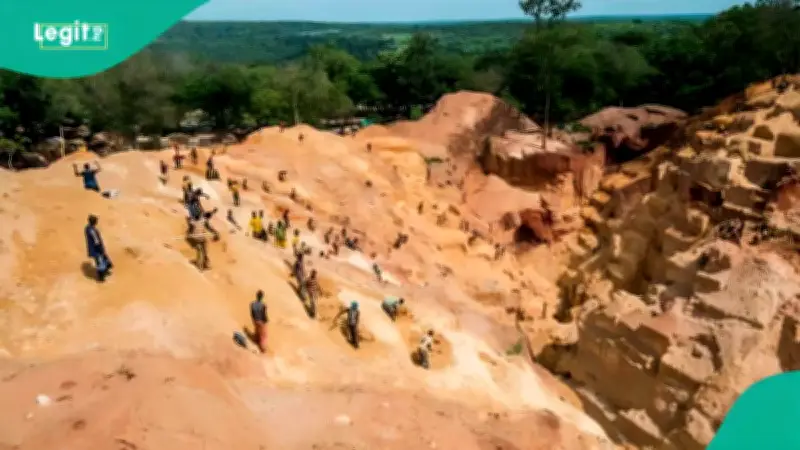
A landslide struck a gold mining site in Zamboï, western Central African Republic, on Tuesday afternoon, August 18, killing more than 100 people, with at least three victims identified as Cameroonian nationals. The disaster occurred near the Cameroon border, and rescue teams continue to search for additional bodies buried under the rubble.
Mayor Confirms 107 Bodies Recovered
Adamou Abdon, mayor of the Cameroonian border town of Garoua-Boulaï, confirmed the incident to the BBC, stating that "107 lifeless bodies had been removed from the rubble" by the time he spoke. He added that rescue efforts were continuing and that the final death toll could climb higher. Al Jazeera also reported on the tragic occurrence.
Videos circulating online appear to show a large slope giving way and crashing down onto a group of people at the site, while others scrambled to escape. A miner present at the scene, Cedric Mbango, described what unfolded to AFP: "The ground completely collapsed and buried people. As I speak to you, other people are still buried."
Cameroonian Victims Identified
Among those confirmed dead are at least three Cameroonian citizens. Grégoire Mvongo, the governor of Cameroon's East Region, told state media that the bodies of the Cameroonian victims were being brought back home for burial, while arrangements were being made to treat those who suffered injuries at the site. Survivors were transported to hospital in Baboua, a town roughly 50 kilometres from the mine, according to AFP.
Authorities in the CAR have opened a formal investigation into the cause of the disaster. A statement from the public prosecutor in Baboua, quoted by AFP, said investigators believe "the collapse of several underground tunnels in which miners were operating" triggered the slide.
Artisanal Mining Risks Highlighted
The region relies heavily on artisanal mining as a primary source of income for many households. The work is largely informal and carried out under dangerous conditions, with miners regularly exposed to serious health and environmental risks. Pits are frequently left unsealed, and heavy rainfall weakens the surrounding soil, making the area prone to exactly this kind of collapse.
Earlier, Legit.ng reported that a landslide triggered by heavy rainfall in Ethiopia’s Amhara region killed 14 people and injured seven others, while an unknown number of people remain unaccounted for as search and rescue efforts continue. The landslide occurred at Tsadqane Debre Mitmaq St. Mary Monastery, where hundreds of worshippers had gathered for a holy water cleansing ritual.