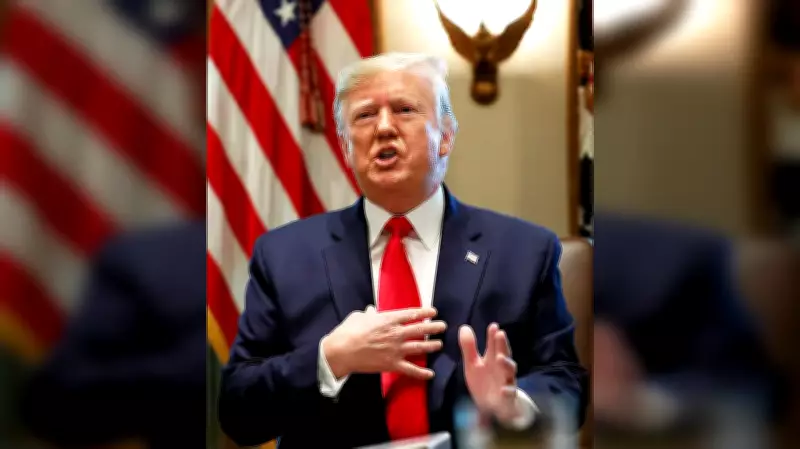
President Donald Trump's newly announced counter-terrorism strategy for Africa marks a significant departure from previous policies. Instead of long-term troop deployments and broad governance building, the new approach favors short-term campaigns and cooperation with local authorities.
A Shift to Surgical Operations
The strategy aims for a more surgical approach to counter-terrorism worldwide, moving away from nation-building and interventionist policies of the past. US troop deployments will now be set against definite timelines and targets, with campaigns intended to eliminate threats and then withdraw.
President Trump described the policy as "a return to common sense and peace through strength," emphasizing the rebuilding of bilateral counter-terrorism relations with African governments. The strategy outlines two clear goals for Africa: ensuring no jihadist groups can establish bases to plot attacks against the US or its interests, and protecting Christians from attacks by jihadist groups. The definition of 'terror merchants' has also been expanded to include drug cartels and left-wing anarchists.
US Operations in Africa
The US has directed its anti-terror operations in Africa mainly through the US Africa Command (Africom), based in Stuttgart, Germany. Africom has supported African Union forces in Somalia (AUSSOM) in collaboration with military forces from Kenya, Uganda, Ethiopia, and Djibouti, conducting aerial raids supporting ground operations against al-Shabaab.
Officials from the US State Department have indicated collaboration with Sahelian countries Burkina Faso, Mali, and Niger, which have been at the epicenter of extremist violence in Africa. Additionally, a recent surge of violence involving Russian mercenaries has led to a renewal of ties with Washington. Warming US relations have also been developing with Eritrea, a strategically important country in the Horn of Africa.
The strategy states: "We will continue to work together with governments threatened by groups like ISIS and al-Qaeda affiliates who threaten us as well, and assist them with actionable intelligence and CT partner-force development until our shared foes no longer pose a serious threat." Outside Africa, the US policy accuses China, Russia, and Iran of sponsoring terrorism by aiding extremist groups to acquire arms.
Nigeria-US Security Collaboration
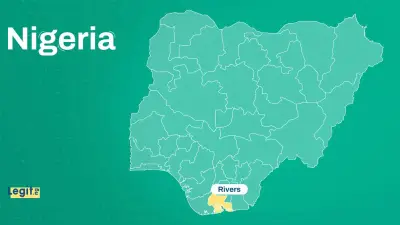
In November 2025, Nigeria's President Bola Tinubu declared a "nationwide security emergency" in response to a wave of mass kidnappings, with hundreds of schoolchildren taken captive in just one week. In February 2026, President Tinubu deployed an army battalion to the Kaiama district in Kwara state after jihadist fighters killed 170 people in an attack on Woro village on the border with Niger. On March 17, triple suicide bombers, believed to be Boko Haram militants, killed 23 people and wounded more than 100 in an attack on a busy market in Maiduguri.
Boko Haram and the rival jihadist group Islamic State West Africa (ISWAP) have recently escalated attacks in northeastern Nigeria. Their campaign is believed to have killed more than 40,000 people and displaced around two million. In February, The Economist reported that America had dispatched a team to Nigeria to help with counter-terrorism.
In the last week, Nigeria's National Security Advisor (NSA) Mallam Nuhu Ribadu undertook a three-day working visit to the United States, meeting with senior US government figures including Vice President J. D. Vance and Secretary of State Marco Rubio. The official communique stated that the meetings provided an opportunity to review the current state of Nigeria-United States relations and to strengthen ongoing collaboration in counterterrorism, defense cooperation, intelligence sharing, regional security, economic resilience, and democratic governance. Following the meetings, Ribadu emphasized the importance of sustained cooperation with the US and international partners in addressing security challenges confronting West Africa and the broader Sahel region.