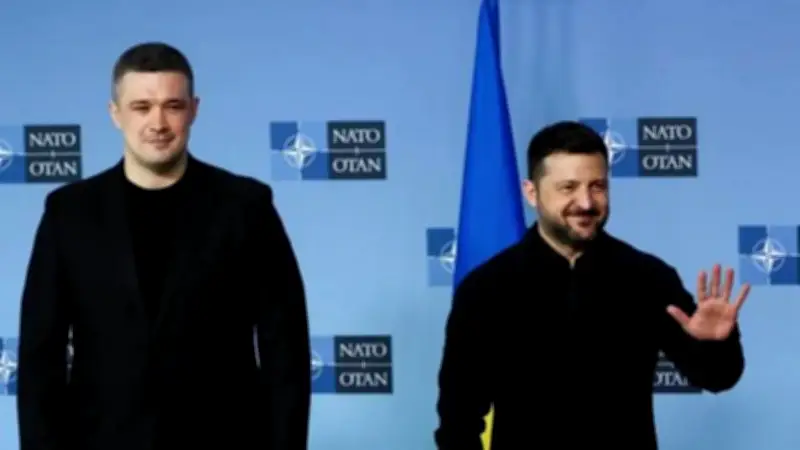
Ukraine appears to be slowly losing its four-year war against Russia, according to Mykhailo Fedorov, the ousted defence minister turned presidential rival. In an interview with Reuters, Fedorov warned that Kyiv has a window of several months to make key decisions needed to turn the tide in its favour. He said Ukraine lacks any overall vision for winning the conflict and is hobbled by its failure to innovate.
Fedorov's Warning and Departure from Official Rhetoric
Fedorov, a young reformer whose dismissal last month sparked weeks of protests, said ingrained corruption and patronage networks, as well as a lack of political independence in government institutions, are holding the country back. "I think that there's now a turning point which will determine our future trajectory, but it looks as though we're gradually, slowly losing," Fedorov said, in a marked departure from Kyiv's official rhetoric. He added that Ukraine still had "every chance" to win but urgently needed a plan to end the war.
Ukraine’s presidential office responded to Fedorov’s comments by saying he had been positive about the conduct of the war when he was at the ministry, and the only thing that had changed was his personal status.
Military Situation and Ukraine's Counter-Campaign
Russia is hammering Ukrainian factories and warehouses with dozens of ballistic missiles a month, which Ukraine is mostly unable to intercept as interceptor stocks run low. Although Russia is gaining less ground than last year, it is still slowly advancing in the Donbas, while Ukraine's sparse frontline infantry dugouts are manned mostly by unmotivated conscripts. In turn, Ukraine has ramped up its own drone and missile attacks deep into Russia, hitting key military factories, causing serious damage to oil refineries, and creating nationwide fuel shortages.
A poll conducted at the end of July found that 82% of Ukrainians believed Ukraine would win, although most expected fighting to continue into 2027 or later.
Fedorov's Vision: Technology and Strategy
Fedorov, 35, was fired six months after his appointment, having initiated reforms around procurement and mobilisation that put him on a collision course with the military establishment and political rivals. Last week, he became the first major political figure to demand wartime elections, decrying a "systemic" crisis of governance. In a new interview, he emphasised the importance of developing autonomous drones guided by artificial intelligence, cheap interceptor missiles to stop Russia's air attacks, and Ukraine's own ballistic missile programme to turn the tide of the war.
Ukrainian manufacturers are already working on those technologies, but Fedorov said the country needs a joined-up strategy to maximise their effect once deployed. He laid out a vision for a frontline covered by electronic sensors to detect enemies, with drones on land and in the air to minimise human presence. "Technologies exist already which could completely stop the Russians, but our absence of vision ... means we do not apply them," he said. Fedorov criticised the wasted potential and inefficiency of the Ukrainian state, which he said was operating at "5% effectiveness."
Drone Campaign and Budget Dispute
Fedorov says he was a driving force behind a drone campaign this year targeting Russia's fuel and military logistics in the occupied part of southern Ukraine, causing problems for Moscow's forces on the frontline. He said there is still a window of opportunity of a few months to press ahead with that operation, seeking to isolate Russian-occupied Crimea, before Russia works out how to respond to Ukraine's tactics. This strike campaign was a significant factor in shifting narratives about Ukraine's prospects.
Fedorov previously said the campaign's success was aided by his decision to front-load spending, which had been earmarked for the second half of 2026. President Volodymyr Zelenskiy, Fedorov's former political patron turned rival, said at the weekend that bringing spending forward had left a $27 billion hole in the ministry's budget, for which donor-dependent Ukraine does not have a solution. Fedorov said he had no idea where Zelenskiy got this figure, arguing his ministry devised a spending plan that relied on savings from new procurement tenders and international support.
Fedorov alleged that when he arrived at the defence ministry, he found department heads appointed at the behest of Ukrainian defence companies to lobby for their interests. "By the end of the year, the budget deficit under our planning was around five billion dollars, and we knew where we would get it," he said. "Perhaps the plan changed and new projects emerged that require such a budget."