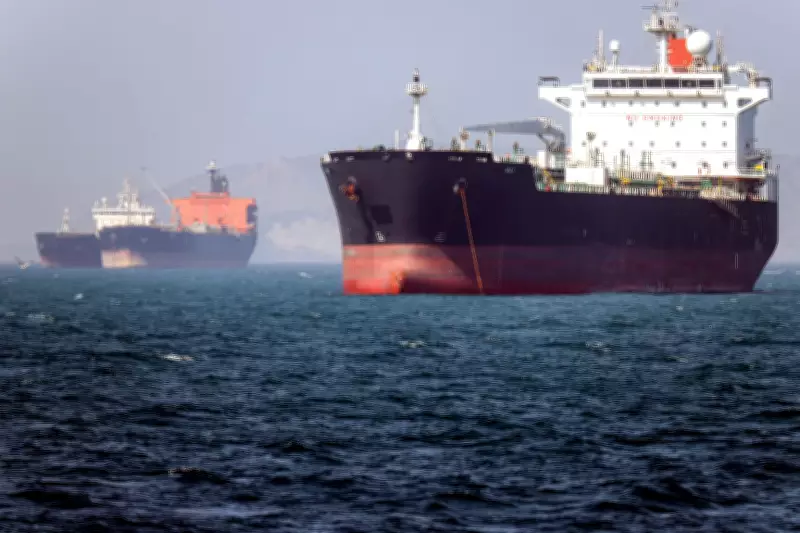
US President Donald Trump has confirmed that American forces disabled an Iranian oil tanker during heightened tensions in the Gulf of Oman, even as Washington and Tehran appear close to reaching a major peace agreement.
US Military Action Against Iranian Tanker
According to American military authorities, the tanker had allegedly attempted to breach the US blockade on Iranian ports. United States Central Command stated that multiple warnings were issued to the vessel before action was taken.
Trump also renewed threats of further military action against Iran if negotiations collapse. Speaking during a Mother's Day event at the White House, the US president claimed American forces recently intercepted 111 Iranian missiles targeting a US aircraft carrier.
Trump's Statement on Missile Interception
"Think of this, 111 missiles, high range, high quality, speed missiles, very high, very fast, very top of the line," Trump said. "But 111 coming at them, 3,500 miles an hour, all 111 were shot down and didn't even get close to the ship."
"They're all laying at the bottom of the ocean, along with the Iranian navy," he added.
Negotiations for Peace Agreement
The latest developments come as reports suggest Washington and Tehran are nearing a deal that could reopen the strategically important Strait of Hormuz.
According to reports, the proposed agreement would require Iran to suspend uranium enrichment activities for at least 12 years in exchange for the lifting of sanctions and the release of frozen Iranian funds. The reported 14-point framework would also restore free passage for ships through the Strait of Hormuz and gradually ease restrictions over a 30-day period.
Reacting to reports of the agreement, Trump posted on Truth Social that if Iran accepts the terms, "the already legendary Epic Fury will be at an end" and the blockade would allow the strait to reopen fully. "If they don't agree, the bombing starts, and it will be, sadly, at a much higher level and intensity than it was before," Trump warned.
Iran's Response and Deal Details
An account linked to Iran's Islamic Revolutionary Guard Corps later suggested that "safe, stable passage" through the waterway could resume under new conditions. The proposed deal reportedly includes restrictions on underground nuclear facilities and expanded inspection powers to ensure compliance.
Until recently, Tehran had resisted calls to give up its enriched uranium stockpile, making the latest negotiations a significant shift in talks. Oil prices reportedly fell sharply following optimism that the Strait of Hormuz may soon reopen to unrestricted shipping traffic.
Israel's Contingency Plans
Meanwhile, reports also suggest Israel is preparing contingency plans for fresh strikes on Iran should negotiations fail. The reported plans would target energy infrastructure and senior Iranian officials in an effort to pressure Tehran into further concessions.
Pause in Project Freedom
Trump also announced a temporary pause to "Project Freedom," the US operation designed to escort commercial vessels through the Strait of Hormuz. "We have mutually agreed that, while the Blockade will remain in full force and effect, Project Freedom will be paused for a short period of time," he said.
Despite concerns that the pause signalled the collapse of the ceasefire, US Defense Secretary Pete Hegseth insisted the truce remained in place.
"No, the ceasefire is not over. This is a separate and distinct project," Hegseth said.
Regional Tensions
The fragile negotiations come after Iran launched drone and missile attacks against the United Arab Emirates earlier this week, raising fears of a return to wider regional conflict.