The medal race at the 2026 Commonwealth Games has narrowed to an intriguing subplot: Nigeria and South Africa are duelling to be Africa's leading nation. After Thursday's full slate of events, Nigeria is fifth on the overall table with eight gold medals, while South Africa is sixth with six golds, yet the latter holds a significantly larger overall medal haul.
Why Nigeria Leads Despite Lower Total
Nigeria's medal tally stands at eight gold, five silver and three bronze for a total of 16. South Africa counters with six gold, nine silver and eight bronze for a total of 23. The Commonwealth Games Federation rankings prioritise gold medals, a principle that places Nigeria above South Africa in the standings, despite the seven-medal difference in overall totals.
The situation sets up a tense finale, especially as South Africa has more athletes advancing to medal rounds in multiple disciplines.
Enekwechi Makes History in Shot Put
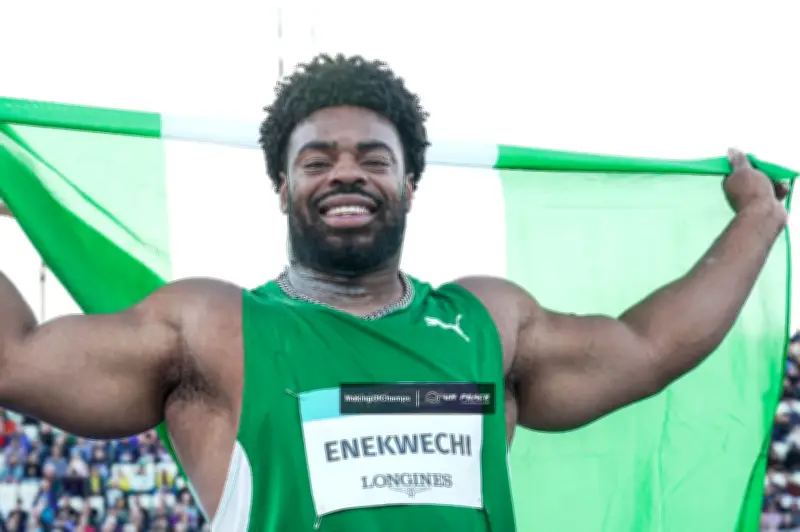
Chukwuebuka Enekwechi delivered the biggest highlight of the day for Nigeria, becoming the first Nigerian to win the men's shot put title at the Commonwealth Games. His winning mark of 21.07 metres came in the fifth round, beating New Zealand's Tom Walsh by four centimetres — Walsh threw 21.03m. England's Scott Lincoln took bronze with 20.99m.
The gold medal was Nigeria's eighth of the Games and matched the country's previous best performances in the discipline.
Amusan's Bronze and a Bold Statement
Tobi Amusan added a bronze medal to her remarkable international collection in the women's 100m hurdles, crossing the line in a wind-assisted 12.60 seconds. The Nigerian world record holder had been the overwhelming favourite after storming to a wind-assisted 12.19 seconds in the heats, but in the final she finished behind The Bahamas' Devynne Charlton and Jamaica's Megan Tapper.
Amusan, who had declared "I am far from finished" after her bronze in Glasgow, will take encouragement from another podium result as she continues her season.
Ogazi Sizzles in 400m Semifinals
Nigeria's track hopes were further boosted by Samuel Ogazi, the national record holder, who stormed to victory in his men's 400m semifinal with a time of 44.52 seconds — the fastest semifinal performance ever seen at a Commonwealth Games. He will be joined in the final by Edidiong Udo, who was promoted to second place following the disqualification of Jamaica's Antonio Watson.
In the women's 400m, Ella Onojuvwevwo won her semifinal in 51.47 seconds to secure a spot in the final, giving Nigeria two strong contenders in the one-lap events.
More Nigerians Through to Finals
Udodi Onwuzurike finished second in his men's 200m semifinal to qualify for the final, while Chincherem Nnamdi battled difficult headwinds to advance in the men's javelin. Decathlete Jami Schlueter also impressed, sitting fourth after the first day of the decathlon.
However, there were disappointments too: Jennifer Chukwuka Obi and Olayinka Olajide were eliminated in the women's 200m semifinals, and Patience Okon-George and Esther Elo Joseph missed the cut in the women's 400m.
A Decisive Final Stretch
With the Games ending on 2 August, the African supremacy battle remains wide open. South Africa is within touching distance and could overtake Nigeria if it converts its higher number of medals into golds. Nigeria, meanwhile, has several strong medal chances remaining.
Ezekiel Nathaniel will headline Nigeria's charge in the men's 400m hurdles final, having qualified with the fastest time. Onwuzurike will contest the men's 200m final, and Nnamdi will participate in the javelin final. Relay events and other athletics finals provide further opportunities for Nigeria to extend its lead.
The next few days will determine whether Nigeria holds on to its status as Africa's top Commonwealth nation or whether South Africa seizes the spotlight.