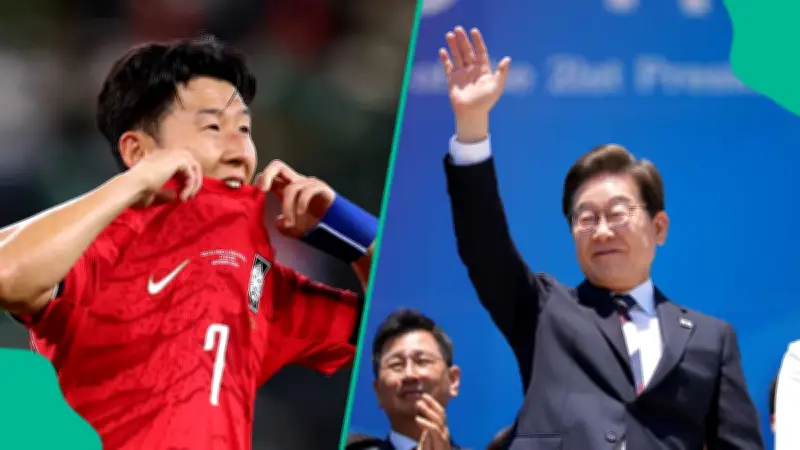
South Korea's disappointing exit from the 2026 FIFA World Cup has sparked a major political and sporting fallout after President Lee Jae Myung ordered a full investigation into the national team's failed campaign. The Taegeuk Warriors arrived in North America carrying high expectations after an impressive qualification campaign and boasting experienced stars led by captain Son Heung-min. Instead, they suffered one of their most disappointing World Cup performances in recent memory, crashing out before the knockout stages.
Group Stage Collapse
Ranked 32nd in the latest FIFA rankings, South Korea finished third in Group A with one victory and two defeats, ending behind co-hosts Mexico and South Africa, who are ranked 15th and 60th respectively. The decisive blow came in the final group-stage fixture when South Korea lost 1-0 to South Africa in Monterrey. Before kickoff, many supporters expected Hong Myung-bo's men to secure all three points and book a place in the Round of 32. Instead, Bafana Bafana frustrated the Asian side throughout the contest before punishing them through Thapelo Maseko's decisive second-half strike.
Although the tournament's expanded format gave South Korea hope of advancing as one of the best third-placed teams, those hopes disappeared once results from the remaining groups went against them. The disappointment quickly spilled onto social media, where fans criticised both the team's display and the football federation's leadership. Supporters questioned tactical decisions, player selections and the overall direction of the national team, insisting the performance failed to match the country's footballing pedigree.
Fan Backlash and Calls for Accountability
The backlash intensified after South Korea's elimination became official. According to reports from Dojeon Media, the national team's official supporters' group, the Red Devils, issued a strongly worded statement demanding immediate accountability. The fan organisation urged Hong Myung-bo to accept responsibility for the campaign, calling on the former international to step away from football after the disappointing tournament. Pressure also mounted on the Korea Football Association, with many supporters questioning the process that led to Hong's appointment as national team coach.
Presidential Intervention
Amid growing public outrage, President Lee Jae Myung stepped in by demanding a comprehensive review of the team's failed World Cup campaign. In a lengthy statement posted on X, the South Korean leader expressed disbelief over the poor performances and questioned the controversial appointment process that brought Hong back to the national team. The president also highlighted the significant amount of taxpayer money invested in preparations for the tournament and instructed the country's sports ministry to investigate both sporting and administrative shortcomings. According to reports, the government wants the investigation to identify structural problems within South Korean football and recommend reforms that would prevent similar failures in future international competitions. Authorities are expected to examine leadership decisions within the football association, including its coaching appointment procedures.
Hong Myung-bo Resigns
The mounting criticism eventually proved too much for Hong Myung-bo. According to the Yonhap News Agency, the 57-year-old announced his resignation with immediate effect after South Korea's elimination was confirmed. Hong had only taken charge of the national team in 2024 and was expected to remain in the position until the 2027 AFC Asian Cup. However, failing to guide the country beyond the group stage left his position untenable. South Korea had begun their campaign positively with a 2-1 comeback victory over the Czech Republic, but defeats against Mexico and South Africa ultimately sealed their fate.
Uncertain Future
South Korea's exit surprised many observers given their impressive qualifying record and the presence of world-class talent such as Son Heung-min. According to FIFA, the country had entered the tournament as one of Asia's strongest representatives, having qualified for an 11th consecutive FIFA World Cup. Instead, defensive lapses and inconsistent attacking displays prevented them from reaching the knockout rounds. While celebrations continue in South Africa, South Korea now faces an uncertain period of rebuilding, with both the coaching position and the football federation expected to come under intense scrutiny in the coming weeks.