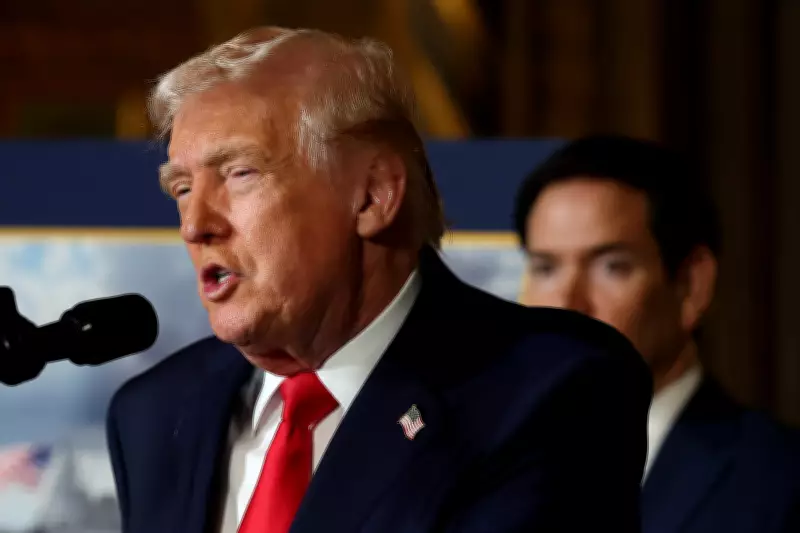
WADA Mulls Rule Change That Could Ban Trump from Olympics and World Cup
The World Anti-Doping Agency (WADA) is actively considering a significant rewrite of its regulations, a move that could potentially bar all U.S. government officials, including President Donald Trump, from attending major international sporting events such as the 2028 Los Angeles Olympics and the upcoming FIFA World Cup co-hosted by the U.S. this summer. This development, reported by the Associated Press, stems from a prolonged and contentious dispute over the U.S. government's refusal to pay its annual dues to the agency.
Background of the Funding Dispute
The proposal is set to be discussed at tomorrow's meeting of WADA's executive committee, marking the latest escalation in a years-long standoff. The U.S. government has unanimously and bipartisanly withheld funding as a protest against WADA's handling of doping cases, notably including a controversial incident involving Chinese swimmers who were permitted to compete in the 2021 Olympics despite testing positive for a banned substance. This financial withholding has prompted WADA to explore punitive measures, with the new rule aimed at addressing governments that fail to meet their financial obligations.
Confidential Agenda and Historical Context
The Associated Press obtained correspondence between WADA and European officials involved in the agency's decision-making, revealing the agenda item. Two additional sources with knowledge of the agenda confirmed the existence of the rules proposal to AP, though they were not authorized to speak publicly about it, as the agenda has not been publicly released. WADA spokesperson James Fitzgerald downplayed the significance, stating that discussions on how to handle governments withholding funding have been ongoing since 2020 and are not directly tied to the U.S. situation. In fact, the proposal was first introduced in 2024 but was rejected after U.S. authorities successfully lobbied against it, leading to the U.S. losing its seat on the executive committee.
U.S. Response and Symbolic Nature of the Rule
Sara Carter, director of the U.S. Office of National Drug Control Policy (ONDCP), responded firmly to WADA's actions, emphasizing the U.S. commitment to accountability and transparency in sports. She stated, "In spite of WADA's increasing threats, we continue to stand firm in our demand for accountability and transparency from WADA to ensure fair competition in sport." However, experts note that the proposed rule would be largely symbolic, given the practical limitations an international sports federation faces in enforcing such a ban on a national leader attending events within their own country.
Criticism and Enforcement Challenges
Rahul Gupta, Carter's predecessor at ONDCP and a former member of the WADA executive committee who led the effort to reject the proposal in 2024, criticized the idea as impractical. He remarked, "I have never heard of a $50-million-budget Swiss foundation being able to enforce a rule to, for example, prevent the United States president from going anywhere. How are you going to enforce it? Are they going to post a red notice from Interpol? It's ludicrous. It's clear they have not thought this through." This highlights the significant enforcement challenges and the symbolic rather than substantive impact of the proposed rule change.