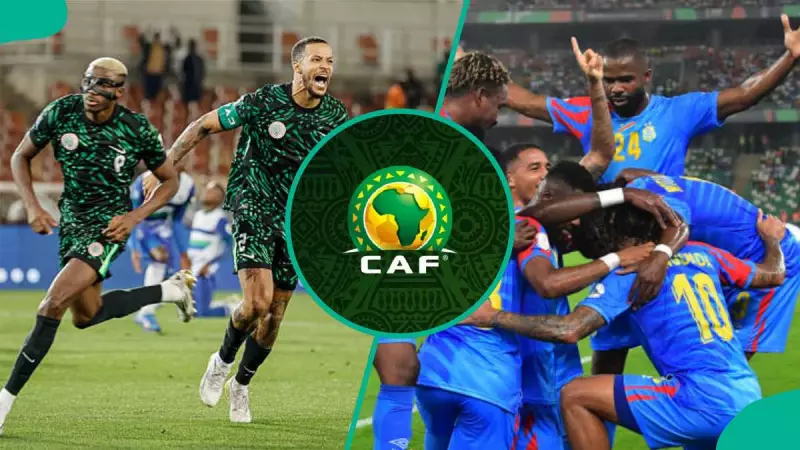
The Confederation of African Football (CAF) has officially announced five pivotal new regulations that will govern the high-stakes FIFA World Cup playoff final between Nigeria's Super Eagles and the Democratic Republic of Congo this Sunday.
High-Stakes Final in Morocco
Scheduled to be held in Morocco, this decisive match will determine which African nation advances to the six-team intercontinental playoff tournament next March. The ultimate prize is one of two final spots at the expanded 2026 FIFA World Cup, set to be hosted across the United States, Canada, and Mexico.
Nigeria arrives at this final hurdle following a thrilling 4-1 extra-time victory over Gabon. According to BBC reports, Sevilla's Akor Adams and Chidera Ejuke found the net, while star striker Victor Osimhen delivered a powerful brace to secure the win for the Super Eagles, who are desperate to return to the World Cup after missing the 2022 edition in Qatar.
DR Congo, meanwhile, earned their place in the final thanks to a dramatic 91st-minute winner from Chancel Mbemba, which sealed a narrow victory and eliminated the Indomitable Lions of Cameroon from contention.
The Five Key Rules for the Final
CAF has outlined a specific set of rules to ensure clarity and fairness in the winner-takes-all encounter.
1. Extra Time Guaranteed
CAF has confirmed the match will not proceed directly to penalties if the scores are level after 90 minutes. Instead, a full 30 minutes of extra time will be played. This rule could favor Nigeria, whose recent extra-time performance against Gabon demonstrated remarkable stamina and offensive power.
2. Penalty Shootout Decider
If the match remains tied after the additional 30 minutes, the outcome will be decided by a penalty shootout. With a World Cup playoff ticket on the line, the pressure on the players during spot-kicks will be immense, making this a critical scenario both teams will be preparing for intensely.
3. Five Substitutions Allowed
In line with modern football trends, each team will be permitted to make five substitutions during regular time. This allows coaches greater tactical flexibility to manage player fitness and influence the game.
4. Sixth Substitution in Extra Time
A significant additional rule grants each manager a sixth substitution if the match goes into extra time. This extra change could be decisive, providing fresh legs at a moment when fatigue is most likely to set in and influence the final result.
5. VAR Implementation for Key Incidents
The Video Assistant Referee (VAR) system will be fully active for the playoff final. VAR will be used to review all critical match events, including goals, penalty decisions, potential red-card offenses, and offside calls. Its implementation aims to minimize officiating errors and prevent controversy from overshadowing the monumental occasion.
The Road to the 2026 World Cup
The winner of the Nigeria vs DR Congo clash will earn the right to represent Africa at the intercontinental playoff tournament in Mexico next March. Only two nations will emerge from that six-team mini-tournament with the final tickets to the 2026 World Cup.
For the Super Eagles, victory means a chance to re-establish themselves on the global stage. For DR Congo, whose only World Cup appearance was in 1974 under the name Zaire, it represents a historic opportunity to return to the world's biggest sporting event after a 52-year absence.
The stage is set for a monumental African football showdown, with new CAF rules ensuring a fair and thrilling contest where strategy, stamina, and skill will all be tested to their limits.