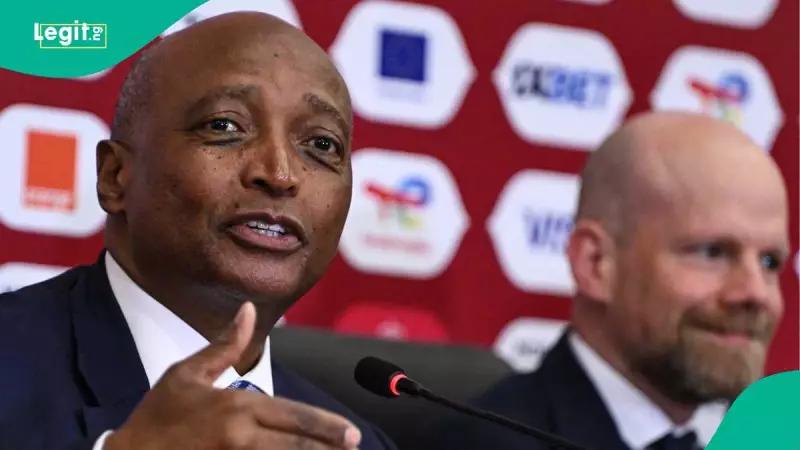
In a landmark announcement set to reshape the continental football calendar, the Confederation of African Football (CAF) has declared a major change for its premier tournament.
End of an Era: AFCON's Historic Two-Year Cycle Concludes
CAF President Patrice Motsepe has confirmed that the Africa Cup of Nations will transition from its traditional two-year schedule to a four-year cycle. This significant shift will take effect after the 2027 edition, which is scheduled to be co-hosted by the East African nations of Kenya, Tanzania, and Uganda.
The announcement was made by the South African businessman during a press conference ahead of the kickoff for AFCON 2025. This move marks the end of a format that has been in place since the tournament's inception in 1957, making it one of the most consistent schedules in world football.
Aligning with Global Football's Cadence
This strategic decision brings Africa's most prestigious football competition in line with the quadrennial rhythm followed by other major global tournaments. The FIFA World Cup, the UEFA European Championship, and the Copa América all operate on a four-year cycle.
The upcoming 35th edition of AFCON is set to commence in Morocco on December 21, 2025, and will conclude on January 18, 2026. Following this, the 2027 event in East Africa will serve as the final tournament under the old two-year format.
President Motsepe stated that the new four-year cycle will officially begin from 2028. This change is expected to have profound implications for fixture scheduling, player workload, commercial partnerships, and the overall prestige of the competition.
Implications for African Football's Future
The shift to a quadrennial calendar is poised to create greater anticipation and potentially increase the commercial value of the tournament. It may also allow for more extensive preparation time for host nations and reduce fixture congestion for players who represent both club and country.
This historic decision by CAF leadership signals a new chapter for African football, aiming to elevate the status and impact of the continent's flagship sporting event on the world stage. Further details regarding the exact timing and format of the post-2027 tournaments are expected to be released in due course.