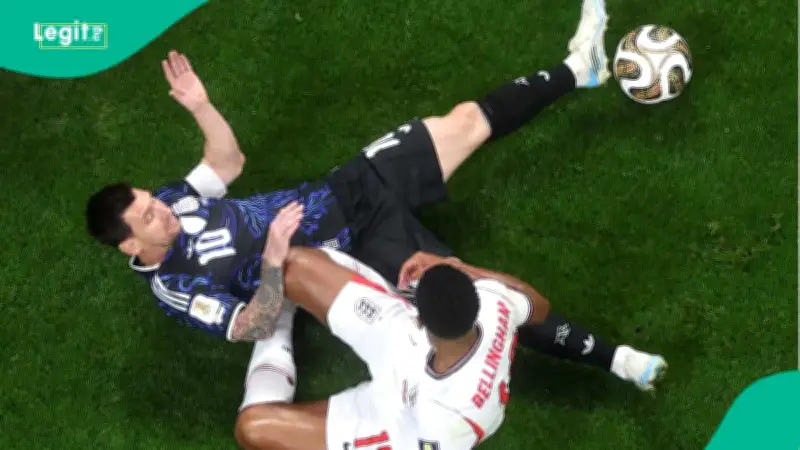
Public commentator Daniel Bwala has blamed England manager Thomas Tuchel's defensive tactics for the team's dramatic 2-1 loss to Argentina in the 2026 World Cup semifinal on July 15 in Atlanta, USA. Bwala argued that Tuchel's decision to instruct England to sit deep and absorb pressure backfired, allowing Lionel Messi the space and rhythm to orchestrate Argentina's comeback.
England's Collapse After Leading 1-0
England took the lead through Anthony Gordon's early second-half goal, and held the advantage until the 85th minute. However, Argentina's Enzo Fernandez equalized with a stunning strike from distance, and substitute Martinez headed in a 92nd-minute winner to complete a remarkable seven-minute turnaround. The defeat sparked fierce backlash against Tuchel, with pundits and fans criticizing his negative second-half approach.
Defending Deep Against Messi: A Historical Mistake
Bwala drew comparisons to Sir Alex Ferguson's Manchester United, which employed a similarly passive structure against Messi's Barcelona in the 2009 Champions League final. Ferguson's side lost 2-0 at Rome's Stadio Olimpico. Bwala wrote on his verified X (formerly Twitter) handle: "The fault is with the coach, Thomas Tuchel; the players were okay until he asked them to defend deep; You can't defend deep against Lionel Messi and go unpunished; ask Alex Ferguson in 2009."
Tuchel's Tactical Gamble Fails
The risk of adopting a low defensive block against Messi is well-documented. When teams concede territory and invite pressure, Messi thrives by drifting between lines and creating from half-spaces. Critics argue that Tuchel repeated an error already exposed at the highest level. The assessment places responsibility firmly on the manager rather than the players, who were performing adequately before the tactical shift.
Broader Implications for Elite Football
The critique reflects a broader debate about whether passive defensive structures remain viable against elite opposition. Instructing players to defend deep against one of the most clinical attacking forces in football history reduced England to a reactive unit, dependent on discipline for the full duration rather than disrupting Argentina's rhythm at source. The outcome underscores the dangers of ceding midfield control to a player of Messi's quality.