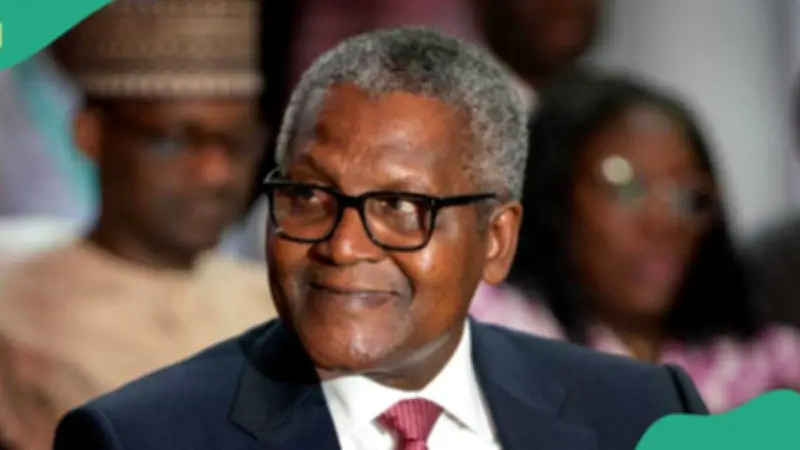
Aliko Dangote, Africa's industrial giant, is once again breathing life into a sector many thought was dead. After transforming cement and refining, the billionaire is now reviving Nigeria's automobile industry through the acquisition of Peugeot Automobile Nigeria (PAN). The move marks a bold attempt to restore local vehicle manufacturing, which collapsed years ago under economic pressure.
The Rise and Fall of Peugeot in Nigeria
For decades, the Peugeot 504 was more than just a car in Nigeria; it was a national symbol. The rugged sedan transported civil servants, powered taxi businesses, and carried families on long road trips from Lagos to Kaduna. At its peak, Peugeot represented Nigeria's industrial ambitions. However, years of economic instability, weak policies, foreign exchange shortages, and an influx of imported used vehicles pushed PAN into crisis. By 2012, the company had accumulated debts of nearly N30 billion, forcing the Asset Management Corporation of Nigeria (AMCON) to take over. Many believed Nigeria's local automobile manufacturing story had ended permanently.
Dangote's Bold Gamble
Rather than walk away, Dangote saw an opportunity. In 2016, Dangote Industries joined a consortium that acquired a controlling stake in PAN from AMCON. This acquisition reflected Dangote's proven strategy: build local production capacity in sectors heavily dependent on imports, as he had done with cement, fertiliser, sugar, and petroleum refining. Instead of merely reviving the old PAN structure, Dangote pursued a larger vision. Negotiations with Peugeot's parent company, PSA Groupe, led to the creation of Dangote Peugeot Automobiles Nigeria Limited (DPAN), a new company with rights to assemble and market Peugeot vehicles locally. Following the 2021 merger between PSA Groupe and Fiat Chrysler Automobiles to form Stellantis, the partnership continued under one of the world's largest automotive companies.
A New Generation of Peugeot Vehicles
DPAN developed a modern assembly facility along the Kaduna-Abuja Expressway, with operations beginning in January 2022 through the assembly of the Peugeot 301 sedan. Since then, production has expanded to include models such as the Landtrek pickup truck, Peugeot 508 saloon, and the 3008 and 5008 SUVs. In April 2026, Stellantis announced the local assembly of the latest Peugeot 3008 and 5008 models in Kaduna, marking another major step in rebuilding Nigeria's automotive manufacturing capacity. The facility is designed to produce up to 120 vehicles daily across two shifts, although current production remains below maximum capacity as operations expand.
More Than Just Car Sales
Dangote's interest in Peugeot goes beyond selling vehicles. He has repeatedly argued that Nigeria cannot build a strong economy while depending heavily on imports. That philosophy has shaped his investments in cement, fertiliser, petrochemicals, and the Dangote Refinery. The Peugeot revival fits directly into that broader industrial strategy. Nigeria remains one of Africa's largest automobile markets, yet most vehicles on its roads are imported used cars. Industry experts believe the country possesses enormous long-term automotive potential due to its growing population, urbanisation, and low vehicle ownership rates. The biggest challenge has always been turning that demand into sustainable local manufacturing.
Can Peugeot Succeed Again?
The return of Peugeot comes as Nigeria once again attempts to rebuild its local automobile industry. Several global brands have launched assembly operations in recent years, encouraged by government policies aimed at reducing import dependence. Yet many projects struggle with forex shortages, inconsistent regulations, poor infrastructure, and limited consumer financing. Peugeot, however, has one major advantage: Nigerians already trust the brand. For older generations, Peugeot represents a period when locally assembled vehicles were common. Dangote is betting that nostalgia, combined with modern manufacturing, can create a profitable future. He already transformed Nigeria from a major cement importer into a producer. Through the Dangote Refinery, he is attempting a similar revolution in petroleum refining. Now, he is trying to prove that Nigeria can once again build cars at scale. More than a decade after financial troubles nearly wiped out Peugeot's Nigerian operations, vehicles bearing the famous lion badge are rolling off assembly lines in Kaduna once again. For Nigeria's struggling manufacturing sector, that comeback may represent something far bigger than automobiles.