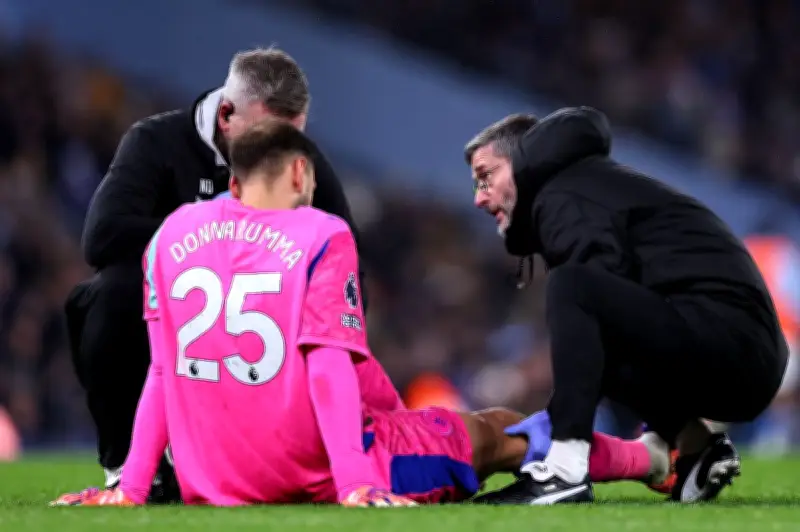
A new football rule designed to prevent goalkeepers from faking injuries to force tactical timeouts could be trialled in England as early as this weekend. The proposed change, backed by the Football Association, Premier League, English Football League, National League and Women's Super League, aims to curb the growing trend of keepers disrupting match flow by feigning injuries. Under the current rules, when a goalkeeper appears injured, play stops for treatment, allowing coaches to pass tactical instructions to players. The new law would introduce a one-minute penalty: if a referee allows medical staff onto the pitch to treat a goalkeeper, the manager must nominate an outfield player to leave the field for one minute. If no player is chosen within 10 seconds, the captain will automatically be required to leave.
Approval Still Needed from IFAB
Despite widespread backing from England's top football bodies, the rule still requires approval from the International Football Association Board (IFAB) before the trial can formally begin. If approved in time, the rule could make its debut during Saturday's Carabao Cup preliminary-round match between Tranmere Rovers and Rochdale. This would mark the first test of the measure in a competitive fixture, offering a real-world assessment of its impact on match pace and tactical behaviour.
Growing Criticism of Goalkeeper Tactics
The proposal follows mounting criticism of goalkeepers using injury stoppages to slow games and enable tactical discussions. In a high-profile incident in November, Leeds United manager Daniel Farke accused Manchester City goalkeeper Gianluigi Donnarumma of exploiting current rules during a match at the Etihad Stadium. Farke claimed the goalkeeper's stoppage was an obvious attempt to gain a tactical advantage. While acknowledging that the action was within the rules, Farke stated it went against the spirit of fair play and urged football authorities to find a solution. Such incidents have become more common as teams seek to break opponents' momentum or waste time when leading.
How the Rule Would Work in Practice
Under the proposed law, the process is swift and punitive. When a referee signals for medical staff to enter the pitch for a goalkeeper, the clock stops. The team's manager then has ten seconds to select an outfield player to temporarily leave the field. The player must remain off the pitch for a full minute, during which their team plays with ten men. If no choice is made in time, the captain automatically becomes the player who must leave. This mechanism aims to discourage goalkeepers from simulating injuries, as the penalty of a numerical disadvantage outweighs any tactical benefit from a stoppage.
Potential Impact on Matches
If implemented, the rule could significantly alter match dynamics. Goalkeepers are often the last line of defence, but also key in orchestrating attacks from the back. Removing an outfield player for a minute could create gaps that opponents can exploit. Conversely, it may reduce the frequency of time-wasting, leading to more fluid play. The trial in the Carabao Cup preliminary round will be closely watched by IFAB and football stakeholders worldwide. Supporters hope the rule will uphold the spirit of fair play, while critics worry about unintended consequences, such as goalkeepers now genuinely injured being penalised. The football community awaits the IFAB decision with bated breath.