Former Manchester United Star Alleges Age Fraud in Ghana's 2007 U17 Squad
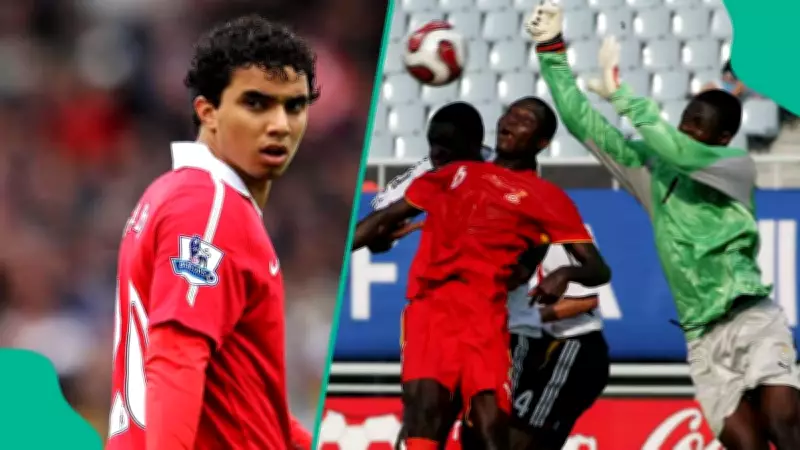
Former Manchester United defender Fabio da Silva has made explosive allegations against Ghana's 2007 FIFA U-17 World Cup squad, claiming the team included players who were significantly older than the tournament's age limit. The Brazilian star, now 35, revealed these claims in a recently published video that has gone viral across social media platforms, reigniting a long-standing debate about age integrity in youth football competitions.
Da Silva's Specific Allegations
In the viral video, da Silva recalled Brazil's quarter-final defeat to Ghana during the 2007 tournament held in South Korea. The former Nantes and Middlesbrough FC defender expressed serious doubts about the ages of his Ghanaian opponents, stating he conducted his own investigation during the competition.
"Unfortunately, Brazil lost in the quarter-finals to Ghana in the World Cup," da Silva said. "They said they had 17-year-olds, but I don't think so. I think they were 25-year-olds. I met one and started speaking with him; he already had three kids."
The former Brazilian international emphasized that having three children at what was supposed to be 17 years old raised immediate red flags about the player's true age. These allegations come nearly two decades after the tournament, adding a new chapter to ongoing discussions about age verification in international youth football.
Historical Context of the 2007 Tournament
The 2007 FIFA U-17 World Cup saw Ghana's Black Starlets achieve a fourth-place finish, while Nigeria's Golden Eaglets emerged as champions. Spain finished as runners-up, with Germany claiming third place. Individual awards went to Nigeria's Macauley Chrisantus (Golden Boot), Ghana's Ransford Osei (Silver Boot), and Germany's Toni Kroos (Bronze Boot).
Da Silva's allegations specifically target Ghana's squad composition during this tournament, suggesting that age irregularities may have contributed to their competitive performance against Brazil in the knockout stages.
Ghanaian Fans React to Allegations
The allegations have sparked intense debate among Ghanaian football supporters, with many questioning da Silva's claims while others acknowledge broader issues with age verification in African and South American football.
One fan, @ChrispinAB, challenged the practicality of da Silva's story: "What language did he speak with the Ghanaian player? These guys barely spoke English even when they were playing in Man Utd... how much more when they had just left Brazil or Portugal at 17 years? Sometimes they just lie to make the program interesting."
Another supporter, @ansahsays, countered the biological argument: "Having 3 kids doesn't necessarily make you old, by the way. There's a Brazilian player who had 2 kids at 16 – Wesley Moraes Ferreira Da Silva. Played for Aston Villa. There are some who had 3 by the same age."
Several fans pointed out that age fraud isn't exclusive to African nations. @Sa_ddyk noted: "Lol, as if Brazilians don't lie about their age too. Europeans are the only people who hardly cheat in U20/U17 tournaments. South Americans and Africans are THE SAME."
Broader Context of Age Fraud in Football
Da Silva's allegations emerge amid ongoing concerns about age manipulation in youth football across multiple continents. Just recently, Cameroon's football federation suspended 17-year-old Wilfried Nathan Douala from Victoria United's squad for their Championship playoff over age fraud allegations.
According to FECAFOOT, 62 players including Douala and several other internationals have been provisionally declared ineligible for the MTN Elite One play-offs due to dual identity issues. This case demonstrates that age verification remains a significant challenge for football governing bodies worldwide.
African football enthusiasts have also questioned the integrity of players in South America, citing examples like Igor Thiago as potential cases of age manipulation. The debate extends beyond continental boundaries, suggesting systemic issues in how age is verified and documented in football development systems.
Implications for Youth Football Development
These allegations highlight persistent challenges in maintaining age integrity in international youth tournaments. When older players compete in age-restricted competitions, they gain physical and developmental advantages that can distort competitive balance and undermine the development pathways for genuinely age-appropriate players.
The controversy raises important questions about verification processes, documentation standards, and enforcement mechanisms across different football federations. As youth tournaments serve as crucial platforms for player development and scouting, ensuring fair competition through accurate age representation remains essential for the sport's integrity.
Football authorities continue to implement various measures including bone density tests, dental examinations, and document verification to combat age fraud, but cases like the one alleged by da Silva suggest more work may be needed to ensure complete transparency and fairness in youth competitions.