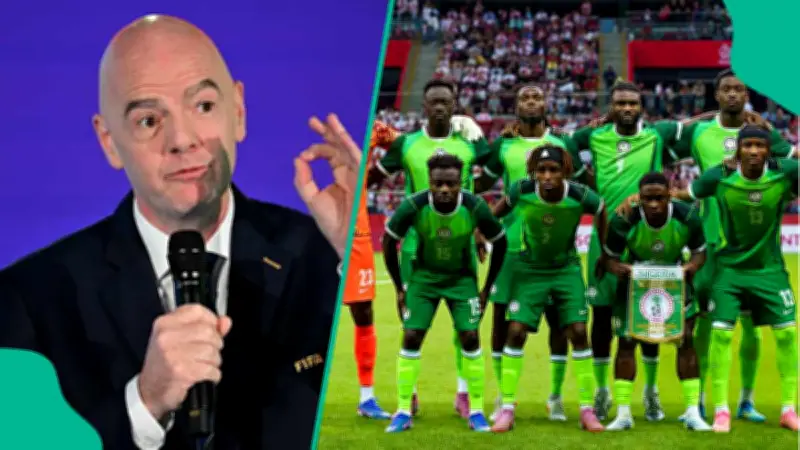
FIFA released a detailed assessment on July 22, 2026, warning Nigeria that talent alone will not secure a place at the 2030 FIFA World Cup. The governing body identified four specific areas requiring immediate action, pointing to deep administrative instability as the core problem behind the Super Eagles' failure to qualify for the last two World Cups.
FIFA's Four-Point Plan for Nigeria
According to the assessment, the first priority is coaching stability. FIFA urged Nigeria to end the pattern of frequent managerial changes and commit to a long-term technical project with clearly defined objectives. The second area is administrative reform: the Nigeria Football Federation (NFF) must strengthen its internal structures to prevent off-field disruptions from affecting the national team. Third, FIFA stressed the need for a defined football identity that begins at youth level and extends consistently through to the senior side, giving players a unified system and playing philosophy. Finally, the governing body called for sustained investment in grassroots football, including academies and youth development programmes, to build a reliable talent pipeline rather than depending on individual player quality.
Consecutive World Cup Absences Hurt Nigeria's Reputation
The warning arrives at a particularly sensitive moment. The Super Eagles have now failed to qualify for two consecutive FIFA World Cups, missing out in both 2022 and 2026. During the 2026 qualifying campaign, Nigeria were managed by Eric Chelle. The team finished behind South Africa in Group C and then lost to the Democratic Republic of Congo in a penalty shootout, ending any hope of appearing at the tournament co-hosted by the United States, Canada, and Mexico. Africa had as many as 10 representatives in the 2026 World Cup, but Nigeria was not among them.
FIFA's assessment acknowledged that Nigeria boasts world-class players but emphasized that sustainable success at major tournaments can only be achieved through stronger governance, improved planning, and a genuine commitment to long-term development. Without those foundations, consistent World Cup qualification will remain out of reach regardless of individual talent.
High Stakes for Super Eagles' Star Players
The stakes are especially high for the 2030 World Cup, which will be the centenary edition of the tournament. Nigeria risks a 12-year absence from the World Cup if they fail to qualify. Star players like Victor Osimhen, who are in their prime years, could miss the chance to shine on football's biggest stage. FIFA's reminder serves as a wake-up call for the NFF to address the structural issues that have hindered the nation's football progress.