
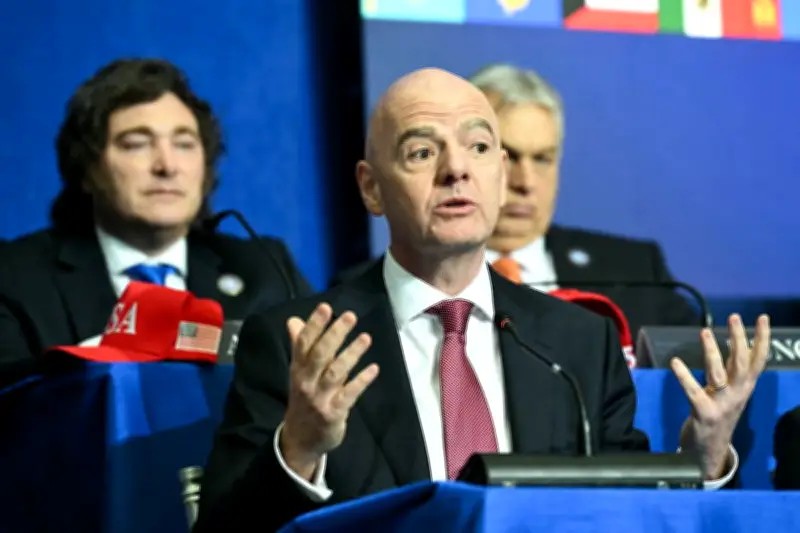
FIFA President Gianni Infantino on Wednesday described the proposed launch of a private subsidiary to commercially exploit the World Cup as "an opportunity but not an obligation," defending the plan after it sparked global backlash.
Proposal Sparks Outrage
The proposal to sell stakes in FIFA's major competitions was met with disbelief and outrage when it was revealed Tuesday. Critics argue it could compromise the integrity of football's premier tournament. However, Infantino insists too little of football's commercial value reaches those who need it most.
"FIFA Forward Enterprise, or FFE, is actually a proposal, an offer. It's part of a democratic process – a consultation process – and, above all, it is an opportunity but not an obligation," Infantino said in a video released Wednesday evening. "It is a golden opportunity to turbocharge the development of the game globally. But again, it is just an offer, not an obligation."
Unlocking Commercial Value
Infantino stressed that the proposal is focused on unlocking "previously uncaptured commercial value" and is conditional on a democratic vote by FIFA's 211 member associations and approval by the FIFA Council. "Capturing that value requires additional expertise, additional insight, distinct from governing and developing the sport," he said. "It would simply commercialise and organise all FIFA-owned competitions along with sponsorship, broadcast, licensing and new ventures for the benefit of FIFA's 211 member associations."
The plan would see a new private entity handle the commercialization of the World Cup and other FIFA events. Infantino argued that this would not change the game itself and would ultimately make fans happier. "Fans from everywhere in the world would gain immeasurably from this game-changing potential because it will transform football in their countries," he added.
Democratic Process
The FIFA president emphasized that the FFE proposal is part of a broader consultation process and will only proceed if approved by the member associations. He portrayed it as a voluntary option for member associations to participate in a new revenue-sharing model. The backlash, however, has raised questions about governance and the potential for private interests to influence football's governing body.
Critics remain skeptical, pointing to past controversies involving FIFA's leadership and commercial deals. The proposal comes at a time when FIFA is already facing scrutiny over its handling of World Cup hosting rights and financial transparency. Infantino's defense seeks to reassure stakeholders that the core principles of the sport remain intact.
With 211 member associations set to vote on the proposal, the outcome remains uncertain. Infantino's framing of the plan as an "opportunity" rather than a mandate may be aimed at winning over wary members. The debate underscores ongoing tensions between football's commercial ambitions and its grassroots development needs.