Nigeria's FIFA World Cup 2026 Petition Against DR Congo Gains Momentum
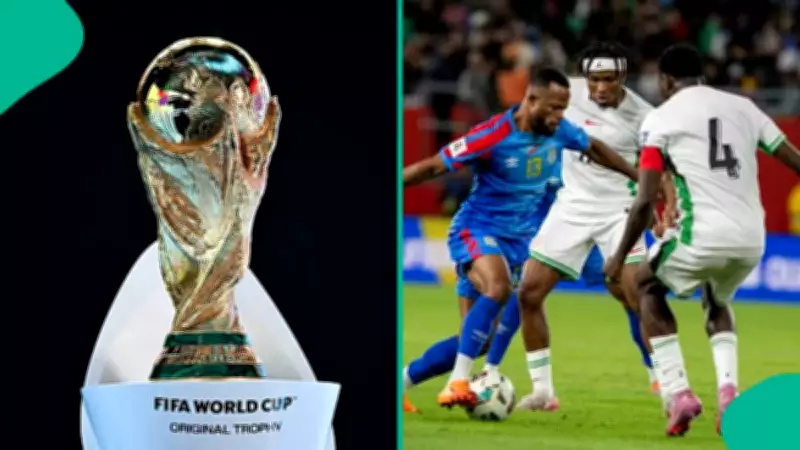
Nigeria's path to the 2026 FIFA World Cup might have dramatically reopened as the Nigeria Football Federation (NFF) awaits a crucial verdict from FIFA regarding its petition against DR Congo. The Super Eagles were eliminated from the qualification race after a heartbreaking penalty shootout loss to the Congolese side in a decisive playoff held in November 2025. However, the NFF is now challenging that result, arguing that DR Congo fielded multiple ineligible players, which could invalidate the match outcome.
FIFA's Precedent with Malaysia Strengthens Nigeria's Case
A significant factor boosting Nigeria's confidence is FIFA's recent ruling against the Football Association of Malaysia (FAM) in November 2025. In that case, FIFA discovered that false documentation had been used for seven naturalised players, leading to severe penalties. Malaysia was heavily fined, and the affected matches were overturned, recorded as 3-0 defeats. This decision demonstrates FIFA's renewed commitment to strictly enforcing player eligibility rules.
National Sports Commission Chairman Shehu Dikko has publicly referenced the Malaysia case, highlighting it as evidence that FIFA will not hesitate to impose sporting sanctions when documentation breaches are proven. Nigerian officials argue that if FIFA confirmed wrongdoing in Asia, it would be inconsistent to ignore similar violations in Africa. This precedent has shifted the mood within Nigerian football circles from uncertainty to guarded optimism.
NFF Challenges DR Congo's Player Eligibility
Central to Nigeria's argument is the allegation that DR Congo fielded up to nine ineligible players during the playoff, including well-known names such as Aaron Wan-Bissaka. The NFF claims that DR Congo's constitution does not permit dual citizenship, and some players holding European passports were improperly cleared to represent the Congolese national team based on misleading or fraudulent documentation.
Nigeria's legal team contends that these players could not legally represent DR Congo under the country's own laws, rendering their participation invalid. If FIFA accepts this interpretation, the consequences could be far-reaching. The playoff result might be annulled, and DR Congo could face disqualification from the qualification process altogether, dramatically altering Nigeria's World Cup fate.
Potential Route Back for the Super Eagles
Should FIFA rule in Nigeria's favour, the most likely outcome would be DR Congo's removal from the qualifiers and Nigeria's reinstatement into the process. This could hand the Super Eagles a place in the Intercontinental Playoffs scheduled for March in Mexico, offering them a final opportunity to reach the 2026 World Cup. The NFF has made it clear that it will not abandon the case easily, with officials confirming readiness to escalate the matter to the Court of Arbitration for Sport (CAS) if the initial ruling goes against them.
FIFA's verdict is expected around February 15, 2026, and for Nigeria, the stakes are incredibly high. Having missed the last two World Cups, a successful petition would reopen a door that seemed firmly shut, reigniting hopes for a return to global football's biggest stage.