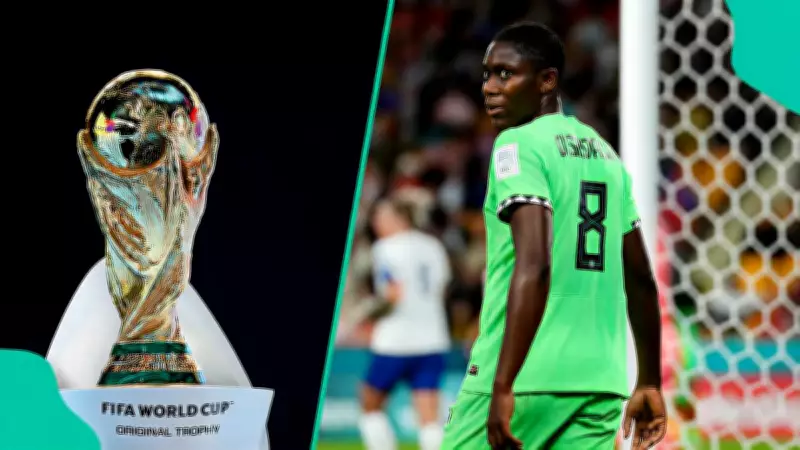
Super Falcons Star Asisat Oshoala Voices Strong Opposition to FIFA's 2026 World Cup Medical Protocol
Nigerian football icon Asisat Oshoala has launched a vocal protest against FIFA's newly implemented regulations for the upcoming 2026 FIFA World Cup, scheduled to be hosted across Mexico, the United States, and Canada. The six-time CAF Women's Player of the Year and Super Falcons forward has expressed significant concerns regarding the governing body's revised medical treatment protocol, which she contends unjustly disadvantages players who sustain legitimate injuries during matches.
FIFA's Comprehensive Rule Changes Aimed at Accelerating Gameplay
FIFA, in collaboration with the International Football Association Board (IFAB), has introduced a series of sweeping modifications designed to minimize time-wasting and enhance the pace of the game. These adjustments include strictly enforced time limits for substitutions, throw-ins, and on-field medical attention. Additionally, the scope of the Video Assistant Referee (VAR) system has been expanded to encompass decisions related to yellow cards and corner-kick situations.
The most contentious alteration, however, is the medical treatment rule. Under this new protocol, any player who receives medical treatment on the pitch must subsequently sit out for a mandatory sixty-second period before being permitted to rejoin play. While FIFA asserts this measure is intended to deter players from feigning injuries to waste time, Oshoala and other critics argue it creates a punitive environment for athletes who are genuinely hurt.
Oshoala's Public Critique Highlights Unintended Consequences
Asisat Oshoala took to social media platform Instagram to publicly question the logic behind the sixty-second penalty. In a pointed statement, she emphasized that players should not be penalized for being fouled or injured, suggesting the rule introduces unnecessary risks and disrupts the natural rhythm of the game.
"This is crazy, because how do I get fouled and then still get to lose a minute? Come on guys," Oshoala remarked, capturing the frustration shared by many players. Her comments reflect a growing apprehension within the football community that these regulatory changes could inadvertently influence match outcomes by forcing teams to play short-handed following legitimate injuries.
The Delicate Balance Between Fair Play and Player Safety
FIFA maintains that the overarching goal of the new rules is to uphold fair play by reducing deliberate delays and keeping matches flowing smoothly. The governing body points to existing measures, such as the eight-second countdown for goalkeepers holding the ball, as precedents for time-management regulations.
Nevertheless, Oshoala and other stakeholders argue that the medical treatment protocol may compromise player safety. There is concern that the fear of forcing their team to play with ten players for a full minute might discourage athletes from seeking necessary medical attention or from fully committing to physical challenges, potentially leading to more severe injuries.
Broader Context of the 2026 FIFA World Cup Regulations
The 2026 World Cup is poised to be one of the largest tournaments in football history, prompting FIFA to implement these significant rule changes ahead of the opening match between Mexico and South Africa at Estadio Azteca on June 11. The expanded use of VAR for yellow card and corner-kick decisions represents another major shift aimed at increasing accuracy in officiating.
As the tournament approaches, the debate surrounding these regulations is expected to intensify. With high-profile athletes like Asisat Oshoala publicly challenging the fairness of the medical treatment rule, FIFA may face mounting pressure to reconsider or adjust the protocol. The core issue remains finding an equitable balance that deters time-wasting without penalizing players for genuine injuries, thereby preserving both competitive integrity and athlete welfare.
The Super Falcons forward's protest underscores a critical dialogue in international football governance, highlighting the need for rules that protect players while maintaining the sport's dynamic nature. As preparations for the 2026 World Cup continue, all eyes will be on FIFA to see how it addresses these player-led concerns.