CAF Appeal Board Members Exposed After Controversial AFCON 2025 Title Decision
Massive protests have erupted across Africa following the Confederation of African Football's unprecedented decision to overturn the 2025 African Cup of Nations final results, two months after the tournament concluded. In a ruling that has sent shockwaves through the football community, CAF has officially stripped Senegal of their hard-earned AFCON title and declared Morocco as the new champions with a 3-0 walkover victory.
Journalist Reveals CAF Appeal Board Composition
Sports journalist Gary Al-Smith has publicly disclosed the identities of the nine-member CAF appeal board responsible for this controversial decision. The board, which includes representatives from across the African continent, made the ruling on Tuesday, March 17, 2026, triggering an immediate backlash on social media platforms and among football fans worldwide.
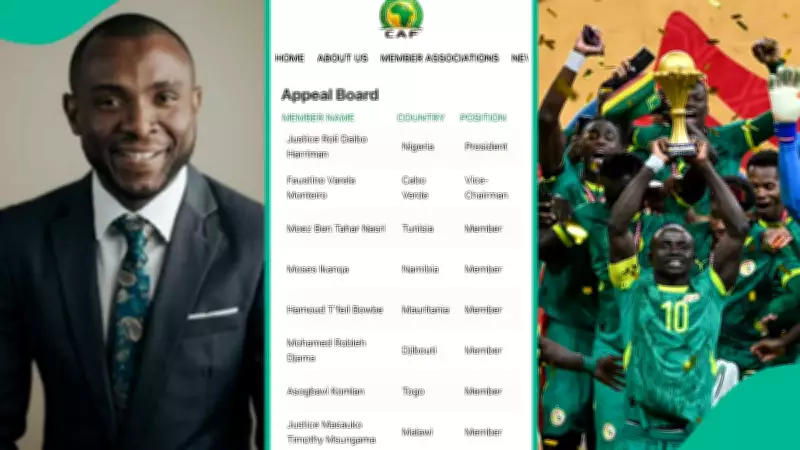
The CAF appeal board is headed by Justice Roli Daibo Harriman from Nigeria, who serves as President of the panel. In his statement following the announcement, Gary emphasized that Justice Daibo leads the team that decided to strip Senegal of their AFCON championship and transfer the title to Morocco.
Complete List of CAF Appeal Board Members
According to verification from CAF's official website, the full composition of the appeal board includes:
- Justice Roli Daibo Harriman (Nigeria) - President
- Faustino Varela Monteiro (Cabo Verde) - Vice-Chairman
- Moez Ben Tahar Nasri (Tunisia) - Member
- Moses Ikanqa (Namibia) - Member
- Hamoud T'feil Bowbe (Mauritania) - Member
- Mohamed Robleh Djama (Djibouti) - Member
- Asogbavi Komlan (Togo) - Member
- Justice Masauko Timothy Msungama (Malawi) - Member
- Lubamba Ngimbi Hector (DR Congo) - Member
Gary noted in his social media post that "the nine-member team comprises men and women from all over Africa" and predicted that "in the coming days, they will be the subject of much discussion" across the continent.
Widespread Public Outrage and Criticism
The decision has sparked intense criticism from football enthusiasts, analysts, and former players across Africa. Social media platforms have been flooded with reactions condemning what many perceive as a corrupt and unjust ruling that undermines the integrity of African football.
One user commented: "Such a shameful decision, they just spat on the whole AFCON tournament. How on earth will y'all take such a decision? We all know who the real winners are and no corrupt panel can tell us otherwise. Senegal won and that's how it's going to remain."
Another critic added: "History will never forget them. We can all see this corruption at its highest level. Morocco is their champion but Senegal is the champion of Africa. Soccer has never been won in boardrooms."
Several commentators have questioned the legitimacy of a nine-member panel representing only nine of Africa's 54 nations making such a monumental decision. One Nigerian respondent stated: "Please, the team doesn't comprise members from all over Africa. Africa has 54 countries and just 9 member states is not enough to form a quorum to overturn a game like this."
Background of the Controversial Decision
The controversy stems from the original AFCON 2025 final match between Senegal and Morocco, which CAF initially declared Senegal as winners. However, following disputes surrounding match officiating decisions and a reported walkout during the game, Morocco formally appealed the initial verdict.
After a two-month review process, the CAF appeal board concluded that Senegal's title should be withdrawn and awarded to Morocco with a 3-0 walkover scoreline. This decision marks one of the most significant reversals in African football history and has raised serious questions about tournament integrity and governance.
The ruling has particularly stung Senegalese fans and players who celebrated what they believed was a legitimate championship victory. Meanwhile, Moroccan supporters find themselves in the awkward position of receiving a title through administrative decision rather than on-field performance.
As protests continue to grow across the continent, football analysts predict this decision will have lasting implications for CAF's credibility and the future administration of African football tournaments. The coming weeks are expected to see formal appeals, legal challenges, and continued public debate about the proper governance of Africa's premier football competition.