Former NFF President Raises Alarm Over Super Eagles Payment Crisis
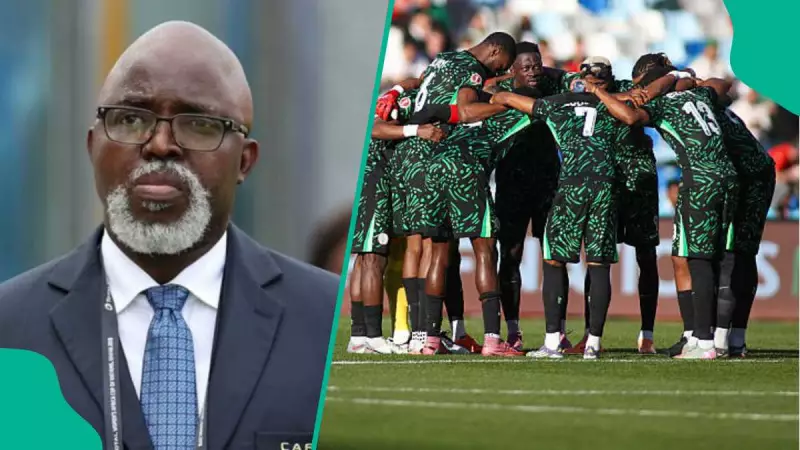
Amaju Pinnick, the former president of the Nigeria Football Federation, has voiced serious apprehension regarding the persistent salary crisis plaguing the Super Eagles and other national teams. Pinnick highlighted that unpaid salaries for coaches have become a recurrent issue, largely due to the absence of a stable and well-defined payment structure within Nigerian football administration.
Widespread Impact Across National Teams
The payment problem extends far beyond just the senior men's team. Pinnick emphasized that players across various national squads, including the Super Eagles, are significantly affected by delayed wages and unpaid bonuses. This issue reached a critical point during the 2025 Africa Cup of Nations tournament, where Super Eagles players staged protests over outstanding bonuses, even threatening to boycott a crucial Round of 16 match.
The crisis also impacts youth teams and women's national teams, with the Flying Eagles, Golden Eaglets, and female squads experiencing similar payment delays. According to Pinnick, the fundamental problem lies in the inconsistent responsibility for payments, which alternates unpredictably between the federal government and the NFF.
"It has become almost a norm that coaches are owed. Today, the government wants to pay, tomorrow the NFF wants to pay. Until there is a stable arrangement, this will continue," Pinnick stated in an interview with Brila FM.
Pinnick's Proposed Long-Term Solution
To address this recurring challenge, Pinnick has proposed a clear, sustainable solution: the federal government should assume full responsibility for paying national team coaches and incorporate their salaries directly into the national budget. He pointed to successful models in countries like Ghana and Morocco, where such budgetary provisions ensure timely and consistent payments.
"Put it in the budget, be serious about it, and plan ahead for one or two years. It's not too much for the government, and it will solve the problem once and for all," Pinnick explained.
By formalizing payment responsibilities through government budgeting, Pinnick believes the NFF and federal authorities can prevent future disputes and ensure that both coaches and players receive their compensation promptly. He stressed that resolving this issue is not merely about financial management but is crucial for building professionalism, stability, and morale within Nigerian football.
Recent Government Intervention and Tournament Performance
Earlier developments saw the Federal Government approving approximately ₦3 billion to motivate the Super Eagles during the 2025 AFCON tournament. The NFF reportedly agreed to pay each player $30,000 for reaching the Round of 16, with additional funds disbursed after the team secured a bronze medal finish.
Despite these injections, the underlying structural issues remain unresolved. Current head coach Eric Chelle was reportedly owed several months of salary ahead of the tournament, continuing a pattern that has affected numerous previous coaches, both Nigerian and foreign.
Pinnick's intervention comes at a critical juncture for Nigerian football, where payment uncertainties threaten team morale and competitive performance. His proposed budgetary solution aims to create a more predictable and professional environment for all national team stakeholders.