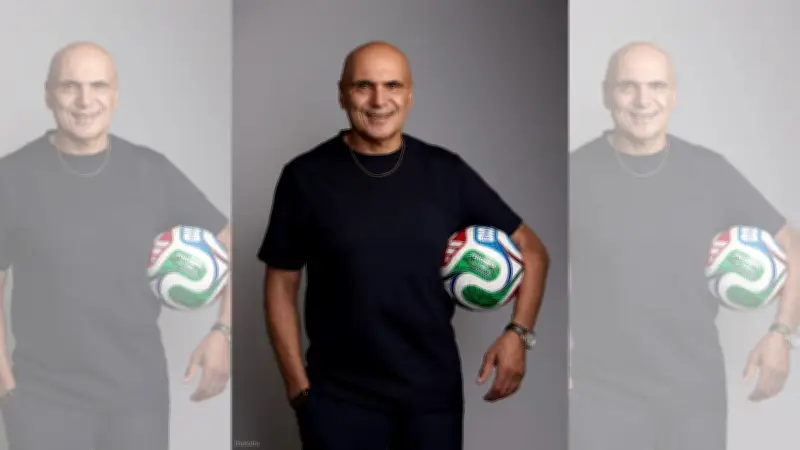
Ricky Weir, the president of the Jersey 2 Africa 4 Football Foundation and former Jersey FA president, recently concluded his fifth visit to Nigeria. His trip focused on promoting his award-winning memoir, Illegitimately Blessed, supporting grassroots football initiatives, and strengthening the country's Walking Football movement. In an exclusive interview with PREMIUM TIMES, Weir shared insights into tracing his Nigerian roots, obtaining Nigerian citizenship, his football journey, experiences with racism, and his views on the expanded FIFA World Cup.
Why Nigeria? A Fifth Visit with Purpose
Weir explained that his primary reason for visiting was to receive an award, but he also worked with Walking Football groups in Lagos and Abuja and attended the opening of the Five Stars League in Abuja. He described the league as "one of the best grassroots football programmes of its kind." Additionally, he completed personal matters related to his Nigerian heritage.
Tracing Roots and Obtaining Nigerian Citizenship
Weir emphasized that obtaining Nigerian citizenship was about more than visa convenience. "The journey started more than 26 years ago when I began tracing my father's roots," he said. "Finally holding a Nigerian passport because my father was born here is something I never imagined would happen." He noted that while many seek European or American passports, he pursued a Nigerian passport for identity and connection.
Father's Legacy and Adoption Story
Weir's father was Nigerian and his mother Scottish. His father died before he was born, and his mother, unmarried in the 1960s, placed him for adoption shortly after birth. Wonderful adoptive parents in Scotland raised him. For years, he resisted searching for his biological family to avoid making his adoptive parents feel inadequate. Eventually, he felt it was time to understand his origins, leading him to Nigeria.
Nigerian Culture: Warmth and Directness
Weir appreciated Nigerian straightforwardness, which can seem harsh at first but reveals tremendous warmth and kindness. "I've always been made to feel welcome here," he said, adding that his emotional connection to Nigeria grows with every visit.
Football as Sanctuary
Growing up as a mixed-race child in 1960s and 1970s Scotland, Weir faced discrimination. "Football became my sanctuary," he recalled. "It was the one place where I felt accepted." He started playing as a striker and became a prolific goalscorer. Football gave him confidence and shaped his identity.
Pelé and the Glasgow Pelé
The 1970 World Cup, watched on colour television, made Pelé a global icon. Because of his skin colour, people jokingly called Weir "Pelé." He happily accepted the comparison, and one chapter of his book is titled "Glasgow Pelé."
Illegitimately Blessed: A Memoir of Resilience
Weir self-published Illegitimately Blessed in September 2024. A European publisher offered a contract in March 2025, and the book received a literary award in Italy a month later. His goals were to finish the book, leave a legacy for his three sons, and inspire at least one person. "Everything else has been a bonus," he said. The book resonates because it covers family, fathers, identity, discrimination, and resilience—not just football.
Impact in Africa and Nigeria
Weir believes the book can have a strong impact in Nigeria, where a significant part of the story originates. "If it can encourage even one person to keep going despite difficult circumstances, then it has done its job," he stated.
FIFA World Cup Expansion: A Step Too Far?
Weir expressed reservations about the 2026 FIFA World Cup expanding to 48 teams. "I wasn't a fan when it was first announced, and nothing has changed my mind," he said. He argued that expansion dilutes quality, makes the tournament too long, and increases mismatched games. He acknowledged it's wonderful for countries like Cape Verde or Curaçao to experience a World Cup, but the negatives outweigh the positives. "The expansion is driven largely by revenue," he added.
Further Expansion: Risking the Magic
Regarding discussions of even larger tournaments, Weir warned, "If football keeps going in that direction, they might as well invite everybody and scrap qualifiers." He emphasized that the World Cup should be special because it is difficult to reach, and expansion risks sacrificing quality and heritage for commercial gains.
Support for Time-Wasting Rules
Weir supported new FIFA rules to reduce time-wasting, such as limiting goalkeeper possession and requiring quicker throw-ins. "All those little delays add up and reduce the spectacle," he said. He believes these measures benefit fans and improve the game.
Criticism of Commercial Innovations
However, Weir criticized mandatory water breaks in moderate climates, calling them "more like a commercial break than a welfare measure." He also opposed halftime player interviews, saying, "Footballers are not actors in a television show. They are competitors." He worried that football is becoming too commercialized, with decisions driven by commercial interests rather than football values. "If we're not careful, football risks losing some of the traditions and values that made it the world's most popular sport," he concluded.