Senegal Football Chief Levels Explosive Allegations Against Moroccan Federation
The president of the Senegal Football Federation, Abdoulaye Fall, has made startling allegations against the Moroccan Football Association, claiming it exerts undue influence over the Confederation of African Football (CAF). These accusations come exactly one week after the dramatic and contentious 2025 Africa Cup of Nations final that saw Senegal defeat hosts Morocco 1-0 in extra time.
Controversial Final Sparks Diplomatic Football Crisis
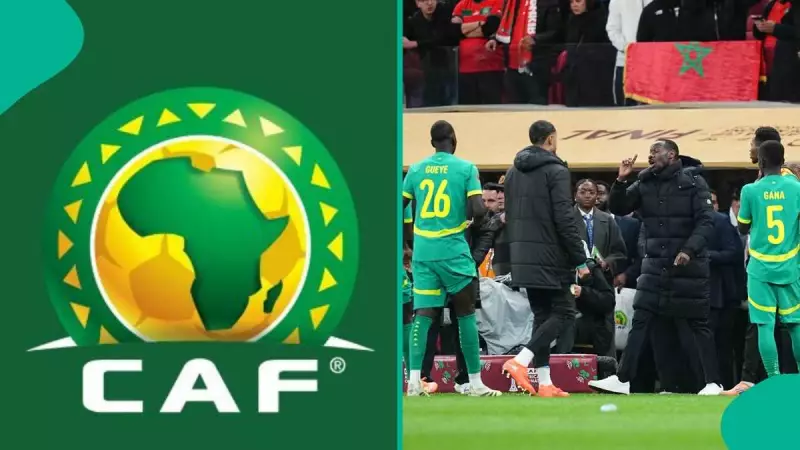
The championship match at Rabat's Prince Moulay Abdellah Stadium was marred by unprecedented stoppages and a brief walk-off by the Senegalese team. The controversy centered around a penalty awarded to Morocco in the 97th minute, which Real Madrid star Brahim Díaz ultimately missed after an 18-minute delay. The Moroccan Football Federation has since petitioned CAF to strip Senegal of their title, arguing that the Teranga Lions' temporary departure from the pitch constituted an official withdrawal from the match.
The North African football body maintains that this issue transcends the final result and must be addressed through strict application of international competition regulations. This position has intensified the diplomatic football crisis between the two nations.
Explosive Claims of Moroccan Control Over African Football
In a bold statement reported by multiple sports outlets, President Abdoulaye Fall alleged that "Morocco controls the African football governing body (CAF)" and holds decisive power over continental football matters. The 56-year-old administrator claimed his federation was presented with a "fait accompli" regarding various competition arrangements.
Fall specifically referenced pressure to train at Moroccan facilities before the final, stating: "They wanted to force us to train at their base camp. I made it clear: we're not going. If you train there, your team is exposed. They'll know every little detail." The Senegal FA president suggested that many African nations avoid opposing Morocco due to fear of repercussions.
Social Media Reactions Reflect Continental Divide
The allegations have sparked intense reactions across social media platforms, revealing deep divisions within African football communities. One user questioned why Moroccan FA president Fouzi Lekjaa hasn't held a press conference to address the claims, calling the silence "very serious." Another commentator expressed concern about Senegal's position, noting: "FIFA is an extremely powerful institution, and for a small country like Senegal, the balance of power is clearly unequal."
More extreme reactions included calls to expose what one user described as "this Zionist and barbaric country" and efforts to remove Morocco from co-hosting the 2030 FIFA World Cup. These comments highlight how football controversies increasingly intersect with broader geopolitical tensions across the continent.
Broader Context of AFCON 2025 Controversies
This diplomatic football dispute represents just one aspect of the controversies surrounding the 2025 tournament. Earlier reports indicated that a Moroccan parliamentarian accused Senegal of employing supernatural practices in their dressing room before Díaz's penalty attempt. The same official called for the arrest of referee Jean-Jacques Ndala for allowing the match to continue after the walk-off incident.
The Confederation of African Football has already taken administrative action, removing an official from a key committee amid the ongoing investigations. As both federations await CAF's final verdict, this controversy threatens to reshape power dynamics within African football governance and establish precedents for how similar incidents will be handled in future continental competitions.
The situation remains fluid, with the Senegalese federation maintaining their championship was earned fairly despite the extraordinary circumstances, while Moroccan officials continue to press for sanction based on regulatory technicalities. This clash between two football powerhouses reveals deeper structural issues within African football administration that extend far beyond the pitch.