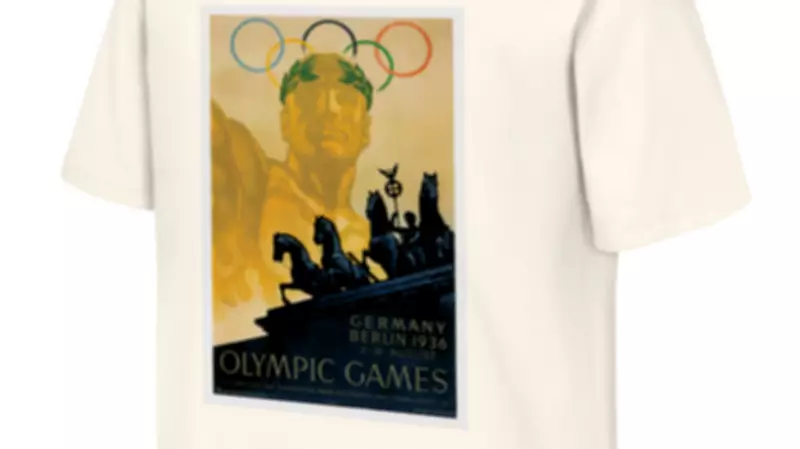
International Olympic Committee Faces Intense Backlash Over Sale of 1936 Berlin Olympics T-Shirt
The International Olympic Committee (IOC) is currently confronting significant criticism and public scrutiny for its decision to sell merchandise that commemorates the controversial 1936 Berlin Olympic Games. This event is widely recognized as having been extensively utilized by Adolf Hitler's Nazi regime for propaganda purposes, making the sale particularly contentious.
Controversial Merchandise in Heritage Collection
A men's T-shirt marking the Berlin Games was prominently listed on the official Olympics website as part of the IOC's Heritage Collection. Although the item is currently marked as "out of stock," its mere presence has drawn intense scrutiny from historians, human rights organizations, and the public. The 1936 Games are historically significant because they were strategically employed by the Nazi government to promote its ideology to a global audience during a critical period.
The design of the T-shirt features the original 1936 Olympic poster created by artist Franz Würbel. This artwork depicts a crowned athletic figure with the iconic Olympic rings and the Brandenburg Gate beneath, accompanied by the words "Germany Berlin 1936 Olympic Games." While aesthetically significant, the historical context raises serious ethical questions.
Historical Context and Criticism
The Heritage Collection page attempts to frame each edition of the Games as reflecting a distinct historical moment when the world gathered to celebrate humanity. However, critics argue that this framing dangerously overlooks the specific political context of the Berlin Games, which were held just three and a half years after the Nazis came to power in Germany.
Hitler and his regime meticulously used the 1936 Olympics to project an image of a strong, unified Germany to international observers. The event was designed to promote the supposed superiority of so-called Aryan athletes while systematically suppressing dissent and enforcing discrimination domestically. Jewish athletes were largely excluded from participation, hundreds of Roma residents in Berlin were forcibly rounded up and removed from view, and overt antisemitic propaganda was temporarily reduced to avoid international backlash.
Despite the Nazi regime's intentions, African American athlete Jesse Owens emerged as the standout figure of the Games, winning four gold medals and directly challenging Nazi racial ideology on the world stage. His achievements remain a powerful symbol of resistance against oppression.
Expert Condemnation and Concerns
Christine Schmidt, co-director of the Wiener Holocaust Library in London, emphasized that the 1936 Games were instrumental in helping the Nazi regime improve its international image while persecution of Jews and other minorities intensified behind the scenes. She questioned whether the artistic elements of the 1936 Olympics can or should be separated from the atrocities that followed in subsequent years.
Scott Saunders, chief executive of the International March of the Living, also strongly criticized the IOC's decision. He noted that the Berlin Olympics served to legitimize the Nazi government at a time when antisemitic persecution was already well underway. Saunders warned that sport can be dangerously manipulated to normalize exclusion and hatred if historical lessons are ignored or minimized.
IOC Defense and Response
In response to the growing controversy, the IOC has defended its Heritage Collection, stating that it celebrates 130 years of Olympic art and design and includes merchandise from all past Games without exception. The organization acknowledged the complex historical issues surrounding the 1936 Olympics but noted that 4,483 athletes from 49 countries competed in 149 events, producing significant sporting achievements that deserve recognition.
The IOC further explained that the historical context of the Berlin Games is addressed in detail at the Olympic Museum in Lausanne, Switzerland. Additionally, the organization stated that the number of 1936-themed T-shirts produced was intentionally limited, which accounts for their current unavailability on the website. This response has done little to quell the concerns of critics who believe the merchandise trivializes a dark chapter in Olympic history.