
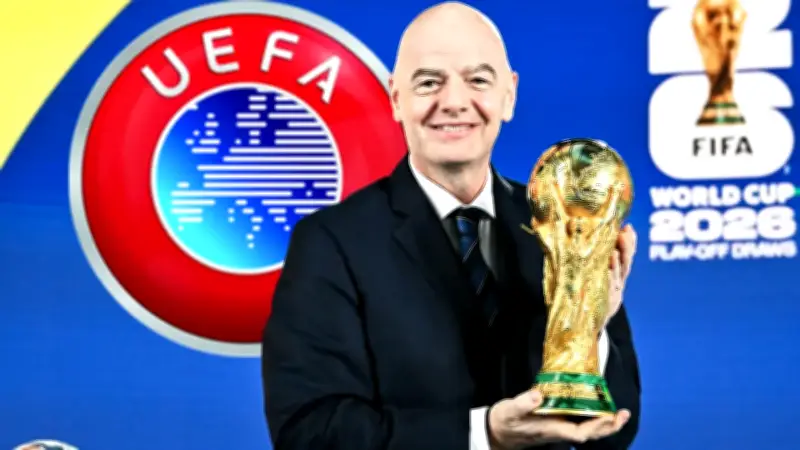
UEFA has sharply criticised FIFA President Gianni Infantino after he was forced to abandon a controversial plan to sell stakes in the World Cup to private equity investors. The European governing body declared that it has lost confidence in Infantino's leadership and that "no option should be off the table" when it comes to identifying who was responsible for the failed initiative.
The plan, announced on Tuesday, proposed creating a $20 billion company to run the World Cup with private investors. It drew immediate backlash from across the football world, with opposition intensifying daily until Infantino scrapped it early Saturday. The collapse came after his senior adviser, Carlos Cordeiro, resigned on Friday, and Asia's soccer body joined Europe and North America in opposing the proposal.
UEFA's Blistering Response
UEFA, led by President Aleksander Čeferin, issued a scathing statement hours after FIFA confirmed the withdrawal. "We must identify those responsible and hold them to account," the statement read. "No option should be off the table. The current FIFA leadership has not only lost UEFA's confidence but also that of many other members of the football family."
The statement went further, criticising the secrecy surrounding the plan. "We cannot keep going on like this with secret schemes on fast-track timescales, cooked up by faceless individuals and of dubious benefit to the game," UEFA said. "It is right that, in the coming days and weeks, UEFA will work with its associations and in close cooperation with other confederations to reflect on how this happened and devise a plan to make sure that it cannot occur again."
Global Opposition Grows
UEFA's 55 member nations had already agreed on Thursday to boycott the World Cup and all other FIFA competitions over Infantino's plan. They were joined by North America's CONCACAF and the Asian Football Confederation, both of which publicly opposed the private equity proposal. The unprecedented level of resistance highlighted the deep unease among football's governing bodies about selling a stake in the sport's most prestigious tournament.
Infantino had argued that the $20 billion investment would help grow the game globally, but critics warned that it would hand control of football's commercial rights to outside investors with no loyalty to the sport. The fast-tracked timeline, which appeared to bypass normal consultation processes, added to the sense of alarm. The plan was seen as a radical shift from FIFA's traditional model of funding through broadcast rights and sponsorship deals.
Key Resignations
Carlos Cordeiro, a former Goldman Sachs banker who served as Infantino's senior adviser and represented FIFA on the White House Task Force for the World Cup, resigned on Friday. In his resignation statement, Cordeiro said: "I cannot stand by while FIFA considers selling a stake in the World Cup." He also urged other senior FIFA staff to speak out against the proposal. Hours earlier, FIFA had insisted that "nobody is selling football," a claim that quickly unravelled.
Following Cordeiro's departure, FIFA Chief Operating Officer Kevin Lamour issued a statement to The Associated Press, revealing that FIFA staff had been deceived by Infantino's lack of openness during the months of planning. Lamour said the project must not continue, effectively confirming that the plan was unsupported by key figures inside FIFA itself.
Impact and Next Steps
The collapse of the private equity plan marks a significant blow to Infantino's authority just months before the 2026 World Cup, which will be hosted by the United States, Canada, and Mexico. The rebellion by confederations, particularly UEFA's threat of a boycott, raises questions about Infantino's ability to lead FIFA through the tournament's expanded format and its commercial negotiations.
UEFA's promise to conduct a full review and "devise a plan" suggests that European football's governing body is preparing to push for structural reforms within FIFA. The 55 member nations' willingness to unite against a FIFA initiative is rare and signals a potential shift in power dynamics. Whether Infantino can rebuild trust will depend on the findings of UEFA's review and the response of other confederations.
For now, the football world watches closely as UEFA and its allies seek to ensure that such a proposal is never attempted again. The episode has exposed deep fractures between FIFA's leadership and its member associations, and the demand for accountability echoes far beyond Infantino's office.