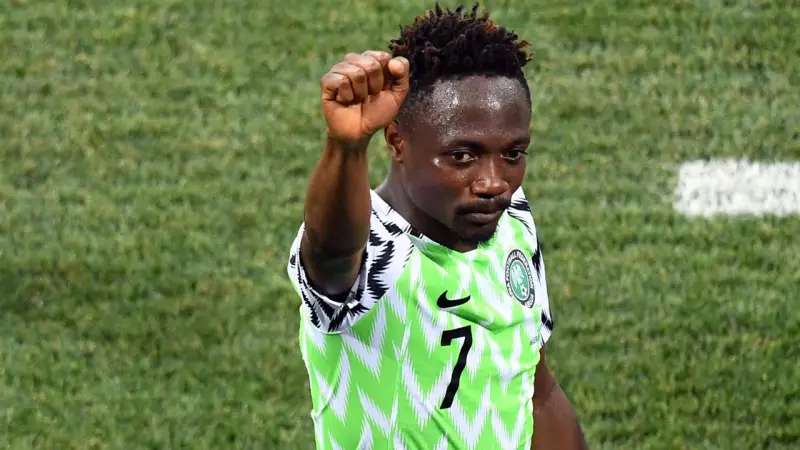
Nigerian football icon Ahmed Musa has officially hung up his boots, bringing an end to a remarkable 15-year international career that cemented his status as a true legend of the game. The former Super Eagles captain announced his retirement this week, leaving behind a legacy defined by exceptional leadership, resilience, and historic performances on the world's biggest stages.
A Career of Records and Resilience
Ahmed Musa's journey with the Super Eagles began in 2010 when he made his debut as a promising 17-year-old. He would go on to become the most capped player in the team's history, earning an unprecedented 111 international appearances. His career is a testament to consistency and patriotism, having represented Nigeria at every level: U-20, U-23, and the senior team.
Musa's trophy cabinet reflects his pivotal role in Nigerian football's successes. He was a key member of the squad that triumphed at the Africa Cup of Nations in South Africa 2013. He also helped secure silver at AFCON 2023 in Côte d'Ivoire and bronze at the 2019 edition in Egypt. At the youth level, his victories include the WAFU Nations Cup in 2010 and the African Youth Championship in 2011.
World Cup Hero and Historic Achievements
For many fans, Musa's most iconic moments came on the global stage of the FIFA World Cup. He etches his name in history as Nigeria's highest goalscorer in World Cup history, netting four crucial goals. His brilliance shone brightly with two memorable braces: two goals against Argentina at Brazil 2014 and another two against Iceland at Russia 2018.
This feat places him in an elite group, making him one of only two African players, alongside Roger Milla, to score two braces in World Cup tournaments. He also ranks as the third-highest African goalscorer in World Cup history, a record that speaks volumes about his ability to perform when it mattered most.
Leadership Beyond the Armband
Ahmed Musa's legacy extends beyond goals and trophies; he was revered as a great commander, motivator, and a symbol of humility. His maturity was tested and proven in 2016 during an AFCON qualifier against Egypt in Kaduna. Then-coach Samson Siasia stripped him of the captain's armband upon arrival in Kaduna, handing it to John Obi Mikel.
Rather than protest or spark discontent among his loyal fans, Musa accepted the decision with remarkable grace. He stated at the time that "such things do happen" and that he had to move on, demonstrating a team-first attitude that defined his leadership. This incident highlighted his character and unwavering commitment to the national team's cause above personal pride.
The Director General of the National Sports Commission (NSC), Bukola Olopade, has expressed immense pride in Musa's contributions. "On behalf of the NSC and the entire Nigerian sporting family, we thank Ahmed Musa for his selfless service and wish him continued success in the next chapter of his journey," Olopade said.
As the curtain falls on his playing days, Ahmed Musa leaves as an enduring icon. His footprints on Nigerian football are deep and permanent, inspiring a generation of young players with his commitment, patriotism, and unforgettable moments of magic. His story will remain a central talking point in the nation's football history for many years to come.