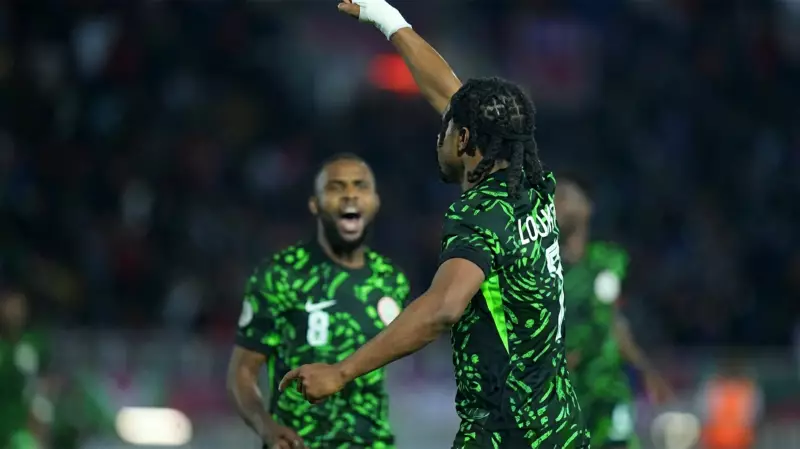
As Nigeria's Super Eagles gear up for a high-stakes Africa Cup of Nations semifinal against hosts Morocco, a former international has framed the team's journey as a starting point, not an end goal. Paul Okoku, a 1984 AFCON silver medalist, argues that while the squad has shown promise on the pitch, deep-rooted systemic problems off it threaten Nigeria's football potential.
Okoku's Stark Warning: On-Field Promise vs. Off-Field Chaos
Speaking from his base in the United States, Okoku, who was vice-captain of Nigeria's first-ever FIFA World Cup team in 1983, praised the current Eagles' tactical growth. He highlighted their "tactical awareness, mental composure, cohesion, and belief" as clear signs of a team ready to compete at Africa's highest level.
However, he delivered a blunt assessment of the familiar structural weaknesses that continue to hamper progress. "Off the field, familiar structural weaknesses once again undermined that progress," Okoku told The Guardian. He pointed to a recurring list of issues plaguing Nigerian football administration.
These problems include unresolved player bonuses, delayed allowances, unpaid coaching salaries, the neglect of home-based talent, and a culture of blaming players for failures caused by poor leadership. Okoku was unequivocal in his analysis of Nigeria's failure to qualify for the 2026 FIFA World Cup.
"This team's failure to reach the 2026 World Cup was not a reflection of inadequate quality, effort, or professionalism," he stated. "What was missing was consistency in governance, stability in technical direction, financial discipline, and leadership." He concluded that until these issues are fixed, Nigeria will keep falling short of its true potential.
Owolabi's 1980 Flashback: A Semifinal for History
The upcoming clash in Rabat rekindles a historic AFCON rivalry and memories of Nigeria's 1980 semifinal against Morocco in Lagos. That match was decided by a legendary goal from left-back Felix Owolabi, then playing for IICC Shooting Stars.
Recalling the tense encounter 46 years ago with Sports Village Square, Owolabi said the odds were stacked against the then Green Eagles. "Many sports lovers didn't believe in us beating Morocco because they were a strong force," he remembered. The Moroccan team had come from Group B in Ibadan and were widely expected to overpower Nigeria.
For Owolabi and his generation, the match carried the weight of past disappointments. "All the players of our era were bent on making history... having lost out in 1976 and 1978," he explained. "For us, it was either the cup or nothing more."
That burning ambition materialized in the ninth minute. Owolabi unleashed what he calls a "bullet shot" from 24 metres, a thunderous strike that beat the Moroccan goalkeeper and sent the Lagos crowd into a frenzy, booking Nigeria's ticket to the final.
Legacy and the Path Forward
Nigeria went on to defeat Algeria in that final, winning its first-ever AFCON title and cementing the 1980 squad's legendary status. Looking at the current team set to face Morocco on Wednesday, Owolabi expressed confidence they can surpass the old heroes' achievements.
"I believe our boys can do better than what we did," he said. His advice to them is simple: stay focused and embrace a core philosophy. "Nothing should distract them. All they need is team spirit, teamwork, discipline and attitude."
Together, the perspectives of Okoku and Owolabi paint a complete picture of Nigerian football: one of glorious history and individual brilliance on one hand, and a pressing need for systemic reform on the other. The Super Eagles' performance in the ongoing AFCON 2025 is seen not as a final destination, but as a foundation that must be built upon with proper structure and leadership.