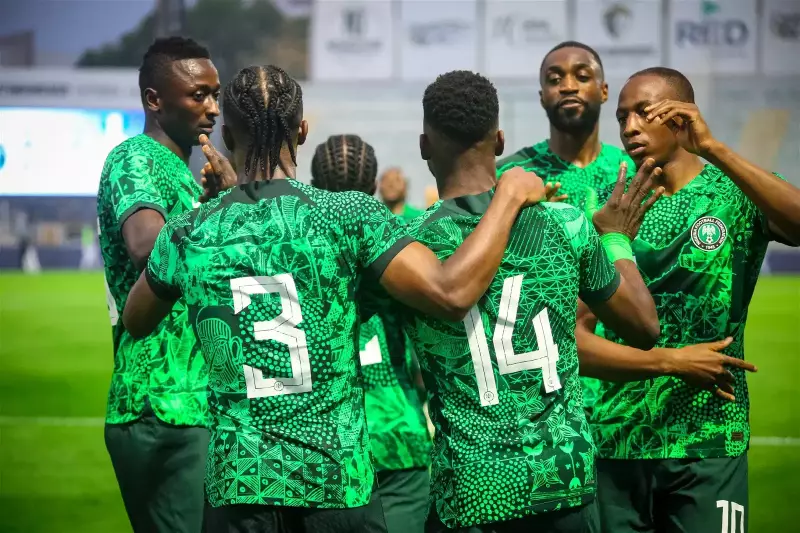
The 2025 Africa Cup of Nations (AFCON) is set to commence in Morocco this Sunday, December 21, but a cloud of indifference hangs over Nigerian football fans. Following a second consecutive failure to qualify for the FIFA World Cup, the Super Eagles enter the continental showpiece with diminished public faith, despite being rated among the tournament's top contenders.
A Nation's Waning Enthusiasm
From December 21, 2025, to January 18, 2026, 24 nations will battle across six Moroccan cities for Africa's most prestigious football crown. Hosts Morocco will open the tournament against Comoros Island in Rabat. While continental euphoria builds, the mood in Nigeria is notably subdued. The team's recent losses to supposedly lesser African sides and the lingering pain of missing the 2022 and 2026 World Cups have left many fans apathetic.
This disinterest is further fueled by a controversial broadcast decision from the Confederation of African Football (CAF). Only 30 per cent of the games will be available on free-to-air channels in Africa, while European viewers get 100 per cent free access. This disparity has been widely criticized as pandering to European interests at the expense of African fans.
Financial Stakes and Past Investments
The financial implications of the tournament are significant for Nigeria. The Federal Government had previously budgeted N6 billion for the men's team at the last AFCON and the women's AWCON victory. Of that, N3 billion was allocated to the Super Eagles' 2024 campaign, which ended with a silver medal.
While the Nigeria Football Federation (NFF) has not disclosed the budget for Morocco 2025, sources at the National Sports Commission (NSC) assure that funding will not be an issue. The government is keen to avoid a repeat of the "disgraceful incident" where players protested and refused to train before a World Cup playoff in Morocco just a month ago.
The prize money is a major incentive. The champion will pocket $7 million (approximately N6.70 billion) from a total prize pool exceeding N30 billion. A runners-up finish earns $4 million, a semi-final spot $2.5 million, and a quarter-final berth $1.3 million.
Voices from the Football Community
Reactions from stakeholders are mixed. Sports analyst and lawyer Sabinus Ikewuaku lambasted CAF's broadcast policy, stating it treats Africans as "second-class citizens" and mirrors corruption at the highest level of African football administration. He questioned how many Nigerians without Pay TV will be able to follow their team.
Former captain Segun Odegbami admitted the Super Eagles have been "so mismanaged that Nigerians are no longer interested." However, he believes national attitude will shift once the tournament begins. He highlighted non-monetary benefits like national joy and unity, recalling Nigeria's unexpected Olympic gold win in 1996 after a poor build-up.
Another ex-international, Waidi Akanni, sees AFCON as an "elixir" for the nation's hard times. He argues that the competition's value in showcasing Nigeria as Africa's giant far outweighs the financial cost, comparing it to priceless global advertising. He dismissed concerns over the N3 billion expenditure, emphasizing national pride.
Friday Elaho, a star of the 1990 AFCON silver-winning team, expressed concern over the team's preparation, contrasting it with the extensive camping his squad undertook. He urged Nigerians to forget past disappointments and support the team, but questioned if the current players can "adapt to the coach’s plan."
As the kick-off approaches, the Super Eagles carry the weight of a nation's fractured expectations. The question remains: Will Morocco 2025 be the stage for redemption, or another chapter of unfulfilled potential?