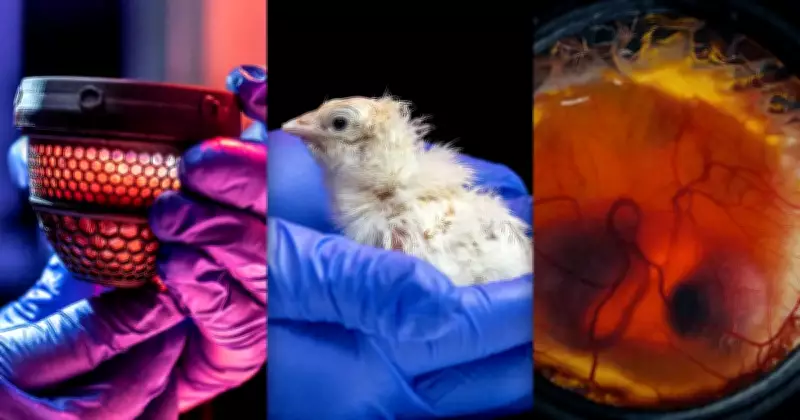
Colossal Biosciences has successfully hatched healthy chicks from fully artificial eggs for the first time, marking a major breakthrough in de-extinction technology. The Texas-based biotech company announced that 26 chicks were born without the need for a natural mother or shell, using a system that mimics natural oxygen transfer.
How the Artificial Egg Works
The artificial egg is made from titanium and a specially engineered silicone membrane that replicates how natural eggs transfer oxygen to developing embryos. Scientists monitored every stage of development, from embryo formation to hatching, through a small portal built into the egg. The chicks were able to peck against the shell when ready to hatch, just like in natural eggs.
Colossal CEO Ben Lamm said, "We didn't just copy nature. We tried to re-engineer it." The company believes the technology could eventually change bird conservation efforts worldwide, helping endangered species with low hatch success rates and paving the way for reviving extinct birds like the dodo and the giant moa.

Reviving the Giant Moa
The moa, once native to New Zealand, stood up to 13 feet tall and weighed up to 500 pounds, making it one of the largest birds to ever exist. Its egg was nearly eight times larger than an emu egg. Because no living bird is large enough to incubate a moa egg, Colossal created the artificial egg to serve as an incubator for the extinct species.
Lamm said the company could potentially bring back the moa in the early to mid-2030s. The moa resurrection project is being developed alongside the Ngāi Tahu Research Centre and filmmaker Peter Jackson, best known for directing The Lord of the Rings trilogy. Jackson said the project could also support the protection of endangered wildlife in New Zealand.
Progress on the Dodo
Colossal has also made progress on its dodo project. In 2025, scientists successfully grew pigeon primordial germ cells, which are early cells that develop into sperm and eggs. Lamm suggested the dodo could return within the next four or five years, adding that each breakthrough makes future de-extinction projects easier to tackle.
"So as you layer on additional extinct species in a certain workflow, I wouldn't say they get easier, but you don't have to design the system from scratch," he said. "You just have to do the work."
Future Plans and Conservation Impact
Before attempting a full moa incubation, Colossal plans additional testing using larger bird eggs, such as those from emus or ostriches. The company says any revived moa would eventually be returned to natural habitats in New Zealand, rather than being kept in a theme park-style attraction.
Lamm hopes seeing extinct animals like the moa alive again will inspire people to take conservation more seriously. "Hopefully they see now we're using a different form of innovation and technology to undo the sins of the past, as well as use those same technologies to help conservation," he said.
The avian reproductive toolkit developed by Colossal could also be used to save currently endangered birds with low natural hatching rates, offering a new tool for conservationists worldwide.