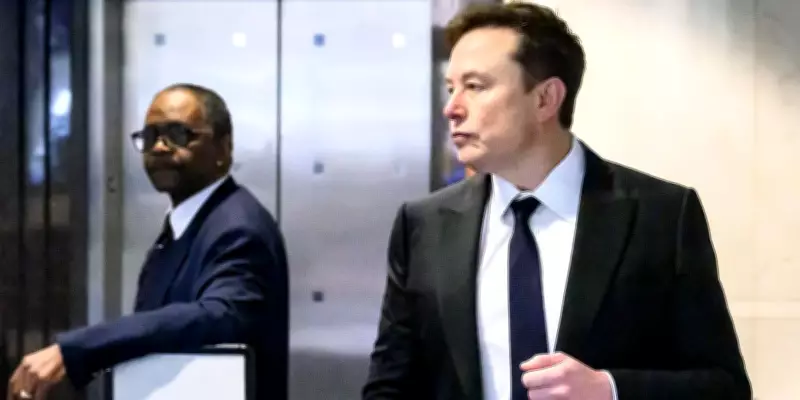
Billionaire entrepreneur Elon Musk faced another day of intense questioning on Thursday during his high-stakes trial against OpenAI in California, as he struggled to reconcile his own for-profit artificial intelligence ventures with his legal challenge against the company's commercial direction.
Musk, visibly frustrated, clashed with OpenAI's defense attorney for the third consecutive day, at times finding it difficult to explain how his own AI-related businesses differ from the model he is contesting in court. "Few answers are going to be complete, especially when you cut me off all the time," he told the lawyer.
Judge Intervenes in Proceedings
Federal Judge Yvonne Gonzalez Rogers repeatedly interrupted the proceedings, urging Musk to answer questions directly rather than argue with the line of questioning. When Musk objected that certain questions were "leading," the judge reminded him of his role in the courtroom.
"I am not a lawyer," Musk admitted, before adding with a touch of humor, "Well, technically I did take Law 101 in school," prompting laughter from those present.
Musk's Allegations Against OpenAI
Musk, who contributed approximately $38 million to OpenAI between 2015 and 2017, alleges that the organization's leadership, including CEO Sam Altman and President Greg Brockman, abandoned its original non-profit mission and transformed it into a commercial entity now valued at over $850 billion.
He is asking the court to compel OpenAI to return to its non-profit structure, a decision that could have major implications for the future of artificial intelligence governance and control in the United States.
Cross-Examination Highlights
During cross-examination, OpenAI's lawyer William Savitt argued that Musk's own companies, including Tesla, Neuralink, X, and his AI firm xAI, operate on a for-profit basis while also claiming to benefit humanity. "There's nothing wrong with having a for-profit organisation," Musk replied, reiterating his stance: "You just can't steal a charity."
In a moment that drew attention, Musk remarked, "The worst-case situation would be that AI kills us all, I suppose," referencing a hypothetical scenario often associated with science fiction. The judge had earlier cautioned against such digressions.
"I think it's ironic that your client, despite these risks, is creating a company that's in the exact same space," Judge Rogers told Musk's legal team.
What's Next in the Trial
Musk concluded his third day of testimony on Thursday, though he may be recalled before the trial progresses further. Sam Altman, who attended the session, is expected to testify in the coming weeks, alongside OpenAI president Greg Brockman. A ruling in the case is anticipated by mid-May.