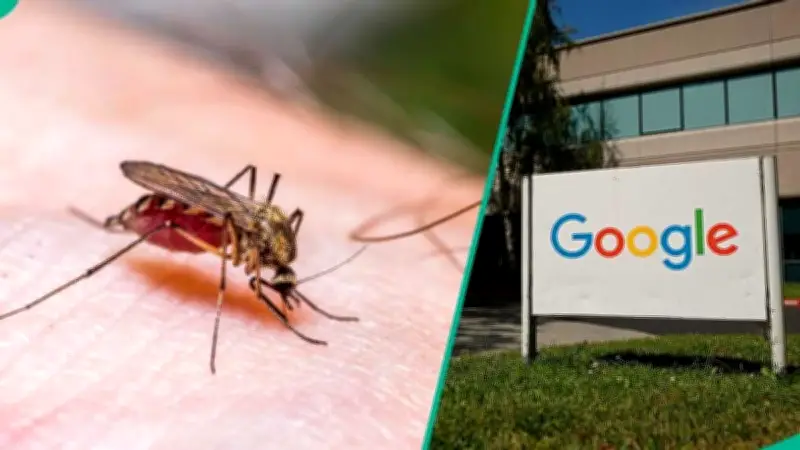
Technology giant Google has requested approval from US regulators to release as many as 32 million sterilized mosquitoes into the wild in parts of California and Florida. The move is part of an experimental program intended to curb mosquito-borne diseases, according to a federal notice and project details.
Google Awaits EPA Decision
The proposal now awaits the US Environmental Protection Agency's (EPA) decision on whether to grant an experimental use permit. This would authorize the release of up to 16 million mosquitoes per year for two years, following a public comment period ending June 5.
The effort is part of Google's 'Debug' initiative, a biotechnology and public health effort leveraging data science, artificial intelligence, and biological engineering to manage disease-carrying insects using a 'stop bad bugs with good bugs' strategy that releases sterile males. This involves the naturally occurring bacterium Wolbachia, which interferes with mosquitoes' ability to reproduce. Males infected with Wolbachia, when released to mate with wild females, cause the resulting eggs to never hatch, gradually reducing mosquito populations over successive generations. This helps control population sizes and potentially disease transmission.

Why Are Mosquitoes Important?
Mosquitoes are arguably the world's deadliest animal, transmitting diseases like malaria, dengue, Zika, chikungunya, and West Nile virus, responsible for hundreds of thousands of deaths annually. Health researchers are increasingly turning to new biological control methods as insecticide resistance becomes widespread.
The program focuses primarily on Aedes aegypti mosquitoes, known to transmit dengue, Zika, yellow fever, and chikungunya. Project engineers reportedly employ automated breeding systems, sensors, and AI to mass-produce and sort mosquitoes, ensuring that only males are released.
Google claims to use computer vision to distinguish males and females, delivering sterile males to specific locations and amounts. They argue that traditional chemical methods are failing and could harm ecosystems over time. Debug has been trialed in Singapore, where sustained releases of Wolbachia mosquitoes reduced populations of disease-carrying insects and the incidence of dengue disease by 70% and 80-90%, respectively, according to program data.
Google's Project Targets the World's Deadliest Animal
The initiative also taps expertise from other Alphabet companies, including prior research by health technology firm Verily on data-driven disease prevention. The project will likely be reviewed for ecological impact, long-term biological effects, and public acceptance of releasing modified organisms into the open environment, factors typically required for large-scale sterile mosquito trials.
Should the proposal receive approval, it would mark a major milestone in the field of technology-driven disease control and a significant expansion of Google's presence in public health.
Earlier, Legit.ng reported that an artificial intelligence expert, Oludayo Ojerinde, has unveiled an innovative health-focused chatbot to address people's healthcare needs. Aside from building a chatbot, Ojerinde has published opinions and white papers to contribute to the body of knowledge in the artificial intelligence space. He said the idea of building a chatbot for health consultation was premised on the need to help people get virtual consultation from the comfort of their homes, thereby eliminating hospital waiting time and helping address other healthcare challenges.