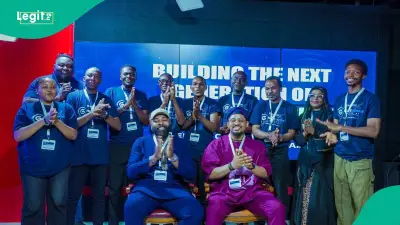
The Minister of Youth Development, Ayodele Olawande Wisdom, has called on Nigerian youths to seize emerging opportunities in Artificial Intelligence (AI) and robotics to drive innovation, entrepreneurship, and national development. Speaking at a youth training and competition programme in Abuja, the minister emphasized that the future of Nigeria’s economy hinges on the ability of its young population to embrace technology, think creatively, and develop solutions addressing real-world challenges.
Event Organised by NextWear Technologies and ITU
The event was organized by NextWear Technologies in partnership with the International Telecommunication Union (ITU), a United Nations specialized agency. Represented by Chief Obinna Nwaka, the minister stressed that Nigerian youths must transcend traditional career paths and position themselves within the global technology ecosystem. He noted that AI and robotics are rapidly transforming industries worldwide, creating new avenues for innovation, job creation, and economic growth.
Minister's Call to Embrace Innovation
“The world is evolving at an unprecedented pace, and technology is at the center of that transformation. Nigerian youths must be ready to embrace innovation, acquire relevant digital skills, and contribute meaningfully to national development,” the minister stated. He acknowledged persisting disparities in technology access, especially in rural areas with infrastructure and digital literacy gaps. However, he expressed confidence that ongoing government policies, coupled with increased awareness from media and private sector initiatives, would gradually bridge this divide.
“The government is committed to ensuring that no young Nigerian is left behind in this digital revolution. With sustained investment in education, innovation hubs, and connectivity, even those in rural areas will soon access the same opportunities,” he added.
Emphasis on Creativity and Problem-Solving
The minister underscored the importance of creativity and problem-solving, urging participants to view technology not merely as a tool but as a means to transform society. He encouraged exploration of AI and robotics applications in critical sectors like agriculture, healthcare, and manufacturing.
Kemisola Bolarinwa, the event host, stated that the initiative aims to inspire a new generation of innovators who will use technology to tackle pressing challenges, particularly in food security and sustainable development. She noted that hands-on training and competitive platforms help build confidence, nurture talent, and prepare youths for future careers in science, technology, engineering, and mathematics (STEM).
ITU's Strategic Investment in Africa's Future
Ali Drissa Badiel, West Africa Area Representative of ITU, described the programme as a strategic investment in Africa’s future. He said the continent now has a unique opportunity to leverage AI and digital technologies to accelerate development and close the gap with advanced economies. “Africa may have missed earlier industrial revolutions, but with AI, we have another chance to catch up and even lead in innovation. These young participants represent the future, and with the right support, they can become world-class inventors and problem solvers,” he remarked.
Badiel emphasized that early exposure to technology is critical for shaping young people's mindsets and capabilities, noting that initiatives like this create a strong foundation for long-term growth.
Opportunities for International Exposure
Engr. Ronald Ajiboye, Founder and Executive Director of STEM Garages Africa, revealed that competition winners from public and private schools would receive prizes and earn the chance to represent Nigeria at an international event later this year in Geneva. He said the exposure would allow participants to interact with global peers, showcase their innovations, and gain valuable experience on the world stage.
The event, which attracted students, educators, and technology enthusiasts, highlights the growing importance of digital skills in shaping Nigeria’s future workforce. Stakeholders agreed that sustained collaboration between government, private sector, and international organizations is key to unlocking the full potential of Nigerian youths in the age of AI and robotics.