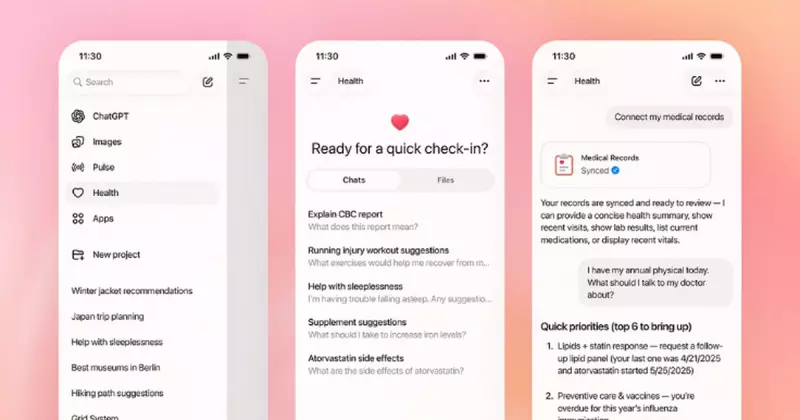
In a major development for digital health, OpenAI has officially launched ChatGPT Health, a specialised section within its popular chatbot designed to handle medical and wellness inquiries. This move responds to the massive, existing user trend of seeking health advice from AI, with the company revealing that over 230 million health-related questions are asked on its platform every single week.
A Dedicated and Secure Space for Sensitive Queries
ChatGPT Health creates a separate, fortified environment within the chatbot specifically for health conversations. OpenAI states that this dedicated space is built with enhanced privacy and security measures, including additional encryption. This means your sensitive health discussions are kept isolated from your general chats.
The core philosophy behind the tool is clear: "Health is designed to support, not replace, medical care." It is framed as an educational assistant to help users understand information better, not as a diagnostic service.

How It Works: Connecting Data and Prioritising Safety
A key feature of ChatGPT Health is the ability to connect personal health data from various sources to provide more contextual insights. With explicit user permission, it can link information from apps like Apple Health, MyFitnessPal, and Weight Watchers. Crucially, OpenAI assures that conversations and data within ChatGPT Health are not used to train its core AI models, and users can delete health memories or disconnect data anytime.
The tool's responses were shaped by extensive collaboration with medical professionals. Over 260 doctors from 60 countries provided feedback over two years, guiding how the AI communicates health information, when to stress safety, and how to encourage seeking real-world medical care.
What Nigerians Can Do With ChatGPT Health
For users in Nigeria and worldwide, ChatGPT Health enables several functions while maintaining its supportive role. You can use it to ask wellness questions with stronger privacy protections, upload lab results for clearer explanations, and connect fitness apps to understand lifestyle patterns in sleep, activity, or diet. It can also help prepare questions for a doctor's appointment.
This launch aligns with a policy shift OpenAI made in late October 2025, where it clarified that ChatGPT should not give personalised health, legal, or financial advice requiring a professional license. ChatGPT Health reinforces this stance, positioning itself as a preparatory and informational tool that aims to make users feel more informed and confident before consulting a healthcare provider.