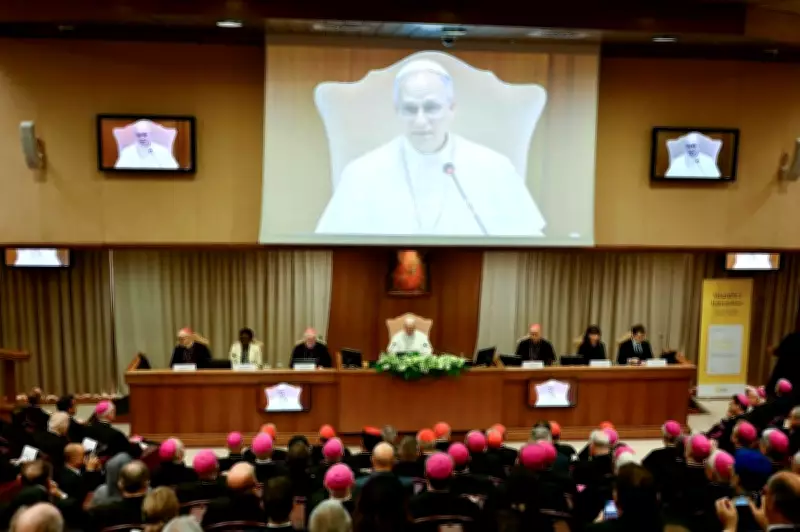
Pope Leo XIV has issued a strong call for the "disarming" of artificial intelligence, cautioning that the rapid global expansion of AI could lead to exploitation, warfare, and "new forms of slavery" if left unregulated. The Pope made these remarks on Monday during the unveiling of his first encyclical, Magnifica Humanitas, at a Vatican presentation attended by church officials, academics, and prominent figures from the technology industry, including Christopher Olah, co-founder of Anthropic, a leading AI firm.
Anthropic has recently been involved in a dispute with the US military over its refusal to allow its AI systems to be used for lethal autonomous warfare and mass surveillance programs. In the encyclical, Pope Leo XIV criticized the global race for increasingly powerful algorithms and massive datasets, driven by geopolitical and commercial competition. "Disarming AI means freeing it from the mentality of armed competition," the Pope wrote, emphasizing that technology should serve humanity rather than dominate it. He warned that no algorithm should ever be permitted to make decisions involving human life and death, stating that "no algorithm can make war morally acceptable."
Challenging Just War Theory
The Pope also challenged the "just war" theory recently invoked by some political leaders, including figures within the administration of Donald Trump, describing the doctrine as outdated in the age of artificial intelligence and autonomous weaponry. Leo XIV has repeatedly criticized the militarization of AI and previously clashed with the White House over the use of religious language to justify conflict, including during tensions surrounding Iran.

Human-Friendly AI and Ethical Oversight
The encyclical argues that artificial intelligence should remain "human-friendly," accessible to everyone, and subject to open public debate and ethical oversight. The Vatican document also focuses heavily on labor exploitation and environmental damage linked to the AI industry. Leo XIV warned that AI systems often rely on hidden human suffering, from content moderators exposed to disturbing material to workers and children involved in extracting rare earth minerals used in electronic devices. "Nothing in the world of AI is immaterial or magical," the Pope wrote, adding that technological progress should not excuse "a chain of exploitation that remains deliberately hidden."
Environmental Impact and Historical Apology
He further called for stronger action to reduce the environmental impact of AI infrastructure and protect what he described as humanity's "common home." In one of the most striking passages of the manifesto, Leo XIV issued an apology on behalf of the Catholic Church for its historical role in slavery and the slave trade. "For this, in the name of the Church, I sincerely ask for pardon," he wrote, describing slavery as "a wound in Christian memory." The encyclical was signed on May 15, marking the 135th anniversary of an influential 1891 social doctrine text issued by Pope Leo XIII during the Industrial Revolution.
Vatican's Growing Role in AI Ethics
The Vatican has increasingly positioned itself as a major voice in debates around artificial intelligence and ethics. In 2020, the Holy See launched the Rome Appeal for an AI Ethic, calling for technology to respect human dignity and fundamental rights. Observers say Magnifica Humanitas could become one of the defining documents of Leo XIV's papacy, drawing comparisons with Pope Francis's 2015 climate encyclical Laudato Si, which influenced global political and environmental debates.