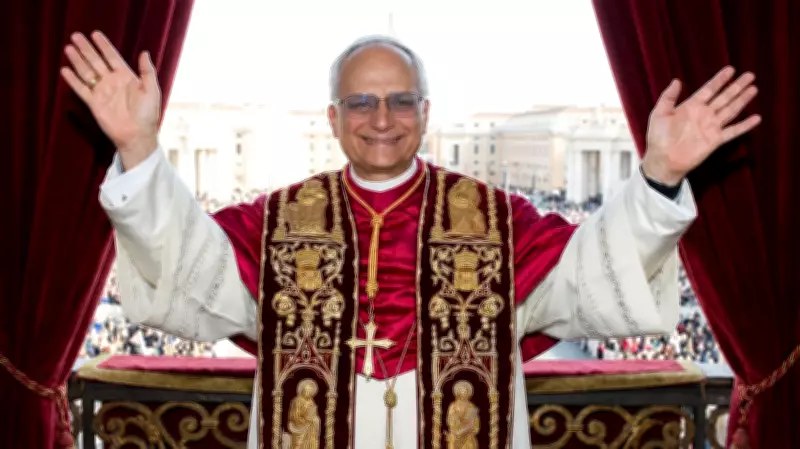
Pope Leo XIV has entered the global debate over artificial intelligence with a warning that reads less like a routine Vatican statement and more like an alarm about the future direction of human civilisation. In his first major encyclical, Magnifica Humanitas, the Pope warns that humanity risks building a 'new Tower of Babel' through the unchecked rise of artificial intelligence and the growing concentration of technological power in the hands of governments and giant corporations.
A Pivotal Choice for Humanity
The document, formally titled 'On Safeguarding the Human Person in the Time of Artificial Intelligence', instantly places the Vatican at the centre of one of the defining arguments of this age: whether artificial intelligence will serve humanity or slowly diminish it. 'Humanity, created by God in all its grandeur, is today facing a pivotal choice: either to construct a new Tower of Babel or to build the city in which God and humanity dwell together.' This line is among the most striking in the encyclical and captures the broader mood of the document.
Pope Leo is not writing about technology as a distant or abstract issue. He is writing about power, human dignity, and what becomes of society when machines increasingly shape how people live and work. For the Vatican, this is not simply another debate about innovation. It is a moral and civilisational question.

The Context of Rapid AI Advancement
The encyclical arrives at a moment when artificial intelligence is spreading into nearly every part of modern life. Governments are pouring billions into AI development. Technology companies are racing to dominate the field. Militaries are adapting the technology for warfare. Entire industries are already being reshaped by systems capable of performing tasks once thought to belong only to human beings. Against that backdrop, Pope Leo's intervention feels significant not only because of what he says, but because of who is saying it.
Encyclicals are among the Catholic Church's most authoritative teaching documents. They are traditionally reserved for major moral or social questions. By devoting his first major encyclical to artificial intelligence, Pope Leo is signalling that the Vatican views AI as one of the great defining issues of modern life, much like industrialisation and war shaped earlier generations.
Technology Is Never Neutral
One of Pope Leo's strongest arguments is that technology is never truly neutral. That directly challenges a long-standing assumption within parts of the technology industry that innovation itself is morally neutral and that responsibility lies only with users. 'Technology is never neutral, because it takes on the characteristics of those who devise, finance, regulate, and use it.' The statement cuts to the heart of the encyclical. Artificial intelligence, the Pope argues, will inevitably reflect the values and interests of the people shaping it. If those values are driven mainly by profit or political power, then AI systems may deepen inequality and weaken human freedom rather than improve society.
Critique of Profit-Driven Culture
Underlying much of the encyclical is a deeper criticism of an economic culture the Pope suggests is increasingly driven by what he describes as the 'idolatry of profit'. The concern is not only that artificial intelligence may become too powerful, but that systems built mainly around commercial dominance and competition may gradually push human dignity to the margins. Without mentioning specific firms, the document repeatedly raises concern about the concentration of technological influence among a small number of powerful corporations.
At several points, the encyclical reads almost like a warning about the rise of a new digital order in which information, communication, and public behaviour are increasingly shaped by opaque systems operating beyond meaningful democratic oversight. 'When such power is concentrated in the hands of a few, it tends to become opaque and evade public oversight.' That concern extends into politics, media, and public life. Pope Leo warns about manipulation, surveillance, and misinformation in a world where algorithms increasingly determine what people see and believe.

Anxiety Over Labour and Human Work
The anxieties underlying the encyclical are no longer theoretical. Artificial intelligence is rapidly moving beyond chatbots and software into surveillance systems, autonomous weapons, and increasingly human-like machines capable of navigating physical spaces and performing tasks once reserved for people. The Pope's warning appears rooted in a fear that technological capability is advancing far faster than humanity's moral readiness for it.
There is also a deep anxiety in the document about labour and the value of human work. The Pope draws a deliberate connection with the Industrial Revolution and the upheaval that transformed workers' lives in the nineteenth century. The symbolism is difficult to miss. The encyclical was signed on the anniversary of Rerum Novarum, the landmark Vatican document that defended labour rights during the rise of industrial capitalism. The message appears clear: Pope Leo sees artificial intelligence as this generation's defining social disruption. He warns that workers risk becoming expendable in economic systems driven mainly by efficiency and automation. Yet the concern goes beyond jobs. The encyclical repeatedly pushes back against the idea that human beings should be valued mainly for productivity or economic usefulness.
Warning on Autonomous Weapons
The document becomes even more forceful when addressing warfare. Pope Leo raises alarm about autonomous weapons and the growing role of AI in military operations. He warns against handing life and death decisions to machines and fears a future where violence becomes easier to carry out because societies are increasingly detached from its human consequences. The warning mirrors wider concerns already being raised by scientists, diplomats, and human rights groups as governments compete to develop more advanced AI-driven military systems. The encyclical is particularly firm on warfare, especially the rise of autonomous weapons systems that can identify and engage targets without direct human judgment. Pope Leo warns that removing humans from the point of lethal decision risks weakening moral responsibility and making conflict easier to initiate, faster to execute, and harder to restrain.
Defence of Human Uniqueness
At the centre of the encyclical is a defence of the uniqueness of the human person. Artificial intelligence may imitate human conversation and reasoning with astonishing sophistication, the Pope acknowledges, but machines cannot possess conscience, spiritual awareness, or genuine human experience. 'So-called artificial intelligences do not undergo experiences, do not possess a body, do not feel joy or pain. They do not know from within what love, work, friendship or responsibility mean.' The passage helps explain the deeper fear running through the document. The Vatican is not only worried about what artificial intelligence may become. It is worried about what humanity itself may become in a world increasingly organised around machines.
Shaping the Moral Language of AI
That is what gives Magnifica Humanitas its broader significance. This is not merely a church document about ethics in technology. It is an attempt to shape the moral language surrounding artificial intelligence before governments and technology companies alone define the future of the AI age. Whether the world listens is another question. The race for dominance in artificial intelligence is accelerating rapidly. Nations increasingly view AI as an economic and strategic necessity. Technology companies see it as the next great engine of wealth and influence. In that environment, warnings about moral restraint can easily sound secondary to ambition and competition. Still, Pope Leo's use of the Tower of Babel imagery suggests he believes the danger is not technology itself, but a civilisation becoming so captivated by technological power that it gradually loses sight of the human person standing before the machine.