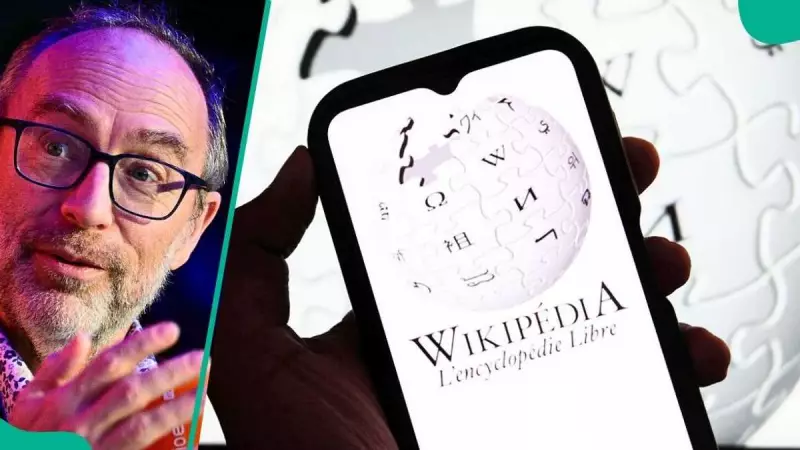
The digital cornerstone of the internet, Wikipedia, has officially marked its 25th anniversary, celebrating a quarter-century of providing free, community-driven knowledge to the world. Launched in 2001, the platform has evolved from an ambitious experiment into one of the top ten most-visited websites globally, attracting billions of visits monthly.
The Human Heart of a Digital Giant
At the core of Wikipedia's success are its nearly 250,000 volunteer editors worldwide who write, verify, and maintain content under strict principles of neutrality. To mark the anniversary, the Wikimedia Foundation released a video docuseries highlighting these contributors, including Nigeria's own Goodness Ignatius.
Ignatius, a librarian and cultural advocate, focuses on documenting Nigerian and Igbo histories from an insider's perspective. An active contributor across Wikipedia projects, she also co-founded the Ig Wiki Librarians Hub to foster collaboration among information professionals in the Igbo community. Her story underscores the platform's central anniversary message: even in the age of AI, knowledge remains a profoundly human endeavor.

Africa's Critical Role in Wikipedia's Future
The next chapter for Wikipedia strongly emphasizes closing global knowledge gaps, with a particular focus on expanding representation across Africa. Initiatives like language translation, community-led projects, and Abstract Wikipedia aim to ensure the platform reflects the full diversity of human experience.
Bobby Shabangu, a Wikimedia Foundation trustee, emphasized the continent's importance: "As we look to the next billion people coming online, Africa will play a critical role. The continent’s voices and stories are essential to the future of Wikipedia and the wider internet."
Navigating the Age of Artificial Intelligence
With over 65 million articles in 300 languages viewed nearly 15 billion times each month, Wikipedia's human-curated content has become a foundational, trusted dataset for training large language models (LLMs). In response, the Wikimedia Foundation has adopted an AI strategy that prioritizes and supports human contributors, ensuring technology augments rather than replaces editors.
The foundation has also strengthened partnerships through Wikimedia Enterprise, enabling companies like Google, Amazon, and Microsoft to responsibly reuse Wikipedia content while supporting its sustainability as a nonprofit.
A New Rival Emerges: Musk's Grokipedia
The anniversary celebrations coincide with the launch of a new competitor. Elon Musk's company xAI has introduced Grokipedia, positioned as a rival to Wikipedia. Musk and some on the American political right have accused Wikipedia of ideological bias.
By the evening of its launch, the site, dubbed version 0.1, reportedly hosted over 885,000 articles. Musk has promised a future version 1.0 that he claims will be "10X better" than the current site, which he asserts is already superior to Wikipedia. This development sets the stage for a new dynamic in the online encyclopedia space.
Wikipedia's 25th-anniversary campaign includes a digital time capsule, global events, and a new mascot named Baby Globe. Reflecting on the milestone, founder Jimmy Wales stated, "Against all odds, Wikipedia has become the backbone of knowledge on the internet. It proves that when people collaborate in good faith, the impossible becomes possible." The celebration reaffirms that after 25 years, the simple, powerful idea that knowledge belongs to everyone endures.