DeFi in Africa: The Trust Deficit Over Technical Hurdles
In Web3 discussions, a persistent question arises: why has decentralized finance (DeFi) not achieved widespread adoption across Africa? Common explanations often focus on technical aspects, such as the complexity of wallets, unpredictable gas fees, and unfriendly user interfaces. Deeper analyses sometimes point to issues like financial literacy gaps, regulatory uncertainties, and the lack of fiat on-ramps. While these are genuine obstacles, they are not the core reason why DeFi products, despite initial promise, frequently yield disappointing results in African markets.
The Core Issue: A Misunderstanding of Trust Dynamics
The primary barrier is simpler yet more challenging to address than any product update: the industry fundamentally misunderstands how trust operates in this context. Its standard go-to-market strategy relies on a trust model that does not translate effectively to regions like Africa. Typically, Web3 market entry follows a predictable pattern: a product launches with a press release, token incentives, and social media campaigns, sponsors conferences, recruits influencers, and runs referral programs. These tactics are not without value—they generate visibility, which is a prerequisite for adoption. However, visibility does not equate to trust.
In markets such as Nigeria, where consumers have faced repeated disappointments from financial products that overpromised and underdelivered, and where the naira's volatility has fostered deep skepticism toward new savings or investment options, trust is not merely an added benefit. It is the essential product itself. When HaloFi entered the Nigerian market in late 2023, it made a deliberate choice to prioritize trust-building as the central goal of its launch, rather than treating it as a secondary outcome of the product.
Building Trust Through Community Engagement
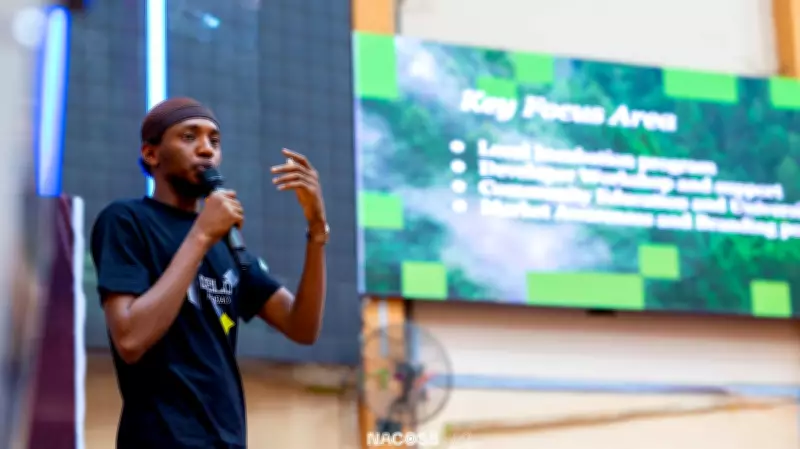
This strategic decision influenced every aspect of the launch. Before the official product release, HaloFi engaged in relationship-building within the local ecosystem, partnering with entities like Celo Africa DAO, MiniPay, and GoodDollar—communities that had already established credibility with Nigerian users. The launch event was designed as a community activation, framed as an invitation from familiar voices rather than an advertisement from outsiders. The Africa Startup Festival booth was scheduled three days after this community event, allowing real users with authentic stories to share their experiences.
The ambassador program, implemented across 20 Nigerian universities, followed a similar logic. Instead of recruiting content creators or affiliate marketers, HaloFi sought out community members who were already trusted within their peer networks. These ambassadors were equipped with tools, knowledge, and support to extend that trust to HaloFi. This approach differs fundamentally from the typical influencer strategy, yielding different outcomes—not in the initial week, but over subsequent months, as referred users remain engaged because someone they respect explained the product's value.
The Requirements for Sustainable Success
The industry must acknowledge what this model demands. Effective community architecture—beyond a mere Telegram group with pinned announcements—requires time, local expertise, and a willingness to measure success over longer timelines than a typical campaign cycle. It necessitates on-the-ground personnel who understand the cultural nuances of the market: how financial decisions are made, who is trusted and why, and which language signals credibility versus triggering skepticism born from experience. This cannot be managed remotely from locations like London or San Francisco, nor outsourced to growth hacking agencies.
A deeper issue is that many Web3 projects treat community as a marketing expense rather than a core product function. A Discord moderator is not equivalent to a community manager, and a referral program does not constitute a comprehensive community strategy. Projects that view community solely as a distribution channel often find that users acquired at scale do not exhibit the loyalty or high lifetime value expected.
The Future of DeFi in Africa
Over the next decade, the DeFi products that succeed in African markets will not necessarily be those with the most advanced technology. Instead, they will be the ones that recognized early on, in a market characterized by earned skepticism, that community is not just a channel—it is the foundational element upon which everything else either stands or collapses. By prioritizing trust through genuine engagement and local insights, companies can overcome the barriers that have hindered mass adoption and build sustainable growth in this dynamic region.