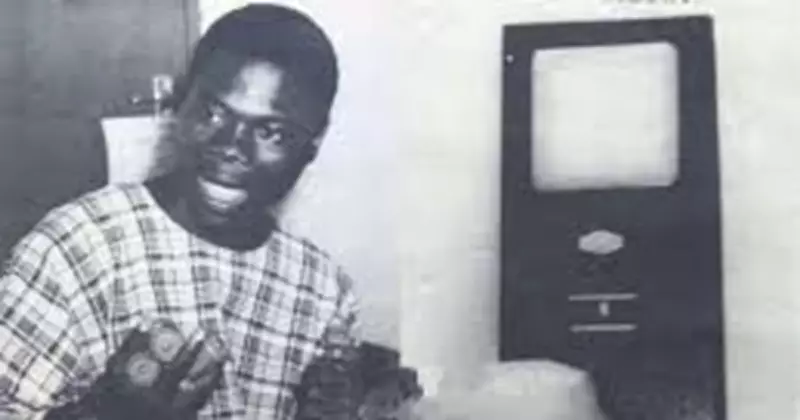
In 1971, long before Nigeria's modern tech ecosystem emerged, a 20-year-old student named Mudashiru Ayeni built a robotic receptionist called the Mudagraph, also known as the Receptograph. This battery-powered device was designed to answer a simple question: “Is the boss available?” Depending on the situation, the machine would respond accordingly, indicating whether the boss was present or busy.
Today, such a system would be considered a basic automated assistant or an early chatbot. However, in Nigeria during the early 1970s, when most offices relied on manual processes and telephone answering systems were rare, the invention was met with confusion and skepticism.
The Invention and Its Reception
Ayeni, popularly known as Muda, had a passion for electronics from a young age. He often dismantled radios and experimented with electrical components, believing that machines could reduce repetitive human tasks and boost productivity. Convinced of the value of his invention, he reached out to school officials and government authorities, hoping to present his ideas and even suggesting a demonstration to the country's Head of State.
Instead of support, Ayeni was referred for psychiatric evaluation. School authorities interpreted his ambitions as signs of mental instability. Over several weeks, he was interviewed multiple times by a psychiatrist before being declared mentally sound. However, the damage was done: he was barred from classes and eventually left school without recognition or institutional backing.
Aftermath and Legacy
Despite the setback, Ayeni continued to refine his invention, improving its wiring and functionality while seeking support. He eventually secured a meeting with late Nigerian politician Aminu Kano, then Federal Commissioner for Communications, who encouraged his work. Some businessmen also expressed interest in commercializing the device. For a brief period, the project seemed poised for success, but then the story faded.
More than five decades later, little is known about what became of Mudashiru Ayeni. His name survives through old magazine pages, archived reports, and occasional social media discussions about forgotten Nigerian inventors. There are no public records indicating whether he continued in engineering, left the country, or pursued a different path.
Broader Implications
Ayeni's story highlights the challenges faced by independent innovators in Nigeria during that era. While the government established the Nigeria Council for Science and Technology in 1970 to coordinate research, support for young inventors outside formal institutions was limited. Unlike today's ecosystem of tech incubators and startup accelerators, many inventors had little access to grants, mentorship, or technical communities.
His robotic receptionist may not compare to modern AI systems, but it represented a desire to automate tasks and rethink systems using technology. The story raises questions about how unconventional talent is treated and how many promising ideas disappear without institutional support or documentation.
Today, Nigeria's tech sector is one of Africa's fastest-growing, with startups attracting global investment. Yet decades before this boom, a young student was already experimenting with automation using batteries, wires, and imagination. Ayeni's story remains a forgotten chapter in Nigeria's early technology history, a reminder of the silent struggles of independent inventors who paved the way.