
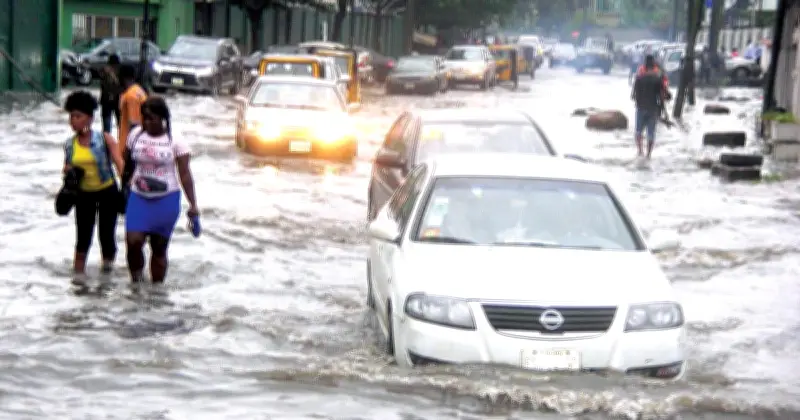
Heavier Rainfall Linked to Changing Weather Patterns
One of the biggest reasons for the increase in flooding is the intensity of this year's rainfall. Meteorologists have repeatedly warned that climate change is making rainfall more unpredictable, with storms becoming heavier over shorter periods. Instead of steady rain spread over several hours, Lagos has experienced downpours that overwhelm drainage systems within minutes. When that volume of water falls on a densely populated city like Lagos, flooding becomes almost unavoidable.
Blocked Drainage Systems Continue to Make Matters Worse
Poor drainage remains one of the biggest contributors to flooding in Lagos. Many drains are clogged with plastic waste, sand, construction debris and household refuse. When heavy rain begins, the water has nowhere to flow, forcing it onto roads and into residential areas. Despite regular government sanitation exercises, blocked drainage channels remain common in many communities, especially densely populated neighbourhoods. Environmental experts have repeatedly urged residents to stop dumping refuse inside drainage channels, saying it significantly increases the risk of urban flooding.
Rapid Urban Development Has Reduced Natural Waterways
Lagos continues to expand rapidly, with new housing estates, shopping centres and commercial developments appearing across the state. However, much of this development has replaced wetlands that once absorbed excess rainwater naturally. In some cases, buildings have been constructed on flood plains or close to drainage channels, reducing the city's natural ability to manage heavy rainfall. As more land is covered with concrete and asphalt, rainwater runs off much faster instead of soaking into the ground, increasing the chances of flash floods.
Rising Sea Levels Affect Coastal Communities
Lagos' location on the Atlantic coast also makes it especially vulnerable. Communities in areas such as Lekki, Victoria Island, Ajah and other coastal locations face the combined effects of heavy rainfall and rising sea levels. During periods of high tide, rainwater drains more slowly into surrounding lagoons and the ocean, causing floodwater to remain on streets for longer. Experts have warned that rising sea levels linked to climate change could continue to increase flood risks for low-lying coastal communities in the coming years.
Drainage and Flood-Control Infrastructure Is Struggling to Keep Up
Lagos has invested in new roads, drainage channels and flood-control projects over the years. However, population growth and rapid urban expansion have outpaced much of the existing infrastructure. Some drainage systems were designed decades ago for a much smaller population and lower levels of development. During intense rainfall, many of these systems simply cannot handle the volume of water. Urban planning experts say that alongside better drainage, stricter enforcement of building regulations and continued investment in flood-control infrastructure will be necessary to reduce flooding in the future.
How Flooding Is Affecting Residents
The impact of flooding goes beyond flooded roads. Many homes suffer damage to furniture, electrical appliances and building foundations after repeated flooding. Businesses are forced to close temporarily, while commuters often spend hours trapped in traffic caused by submerged roads. Floods also disrupt electricity supply. For safety reasons, power distribution companies sometimes switch off electricity to affected areas to prevent accidents involving damaged electrical equipment. Health risks also increase after floods. Floodwater is often contaminated with sewage and waste, exposing residents to water-borne diseases, skin infections and injuries from hidden debris beneath the water.
How Residents Can Prepare
Although flooding cannot always be prevented, residents can reduce the risks by taking practical precautions before and during the rainy season. Some important steps include: Clear drainage channels around homes regularly. Store important documents in waterproof containers. Elevate electrical appliances where possible. Turn off the main electricity supply if floodwater enters the house. Avoid walking or driving through floodwater. Follow weather forecasts and official flood warnings from relevant government agencies.
The Bigger Picture
Flooding has become one of Lagos' biggest environmental challenges, driven by a combination of climate change, poor waste disposal, rapid urbanisation, coastal geography and ageing drainage infrastructure. Addressing the problem will require more than emergency responses after each heavy rainfall. Experts say long-term solutions include expanding drainage networks, protecting wetlands, enforcing planning regulations, improving waste management and increasing public awareness. As the city continues to grow, preparing for floods is no longer optional for many Lagos residents, it's becoming an essential part of living in Nigeria's commercial capital.




