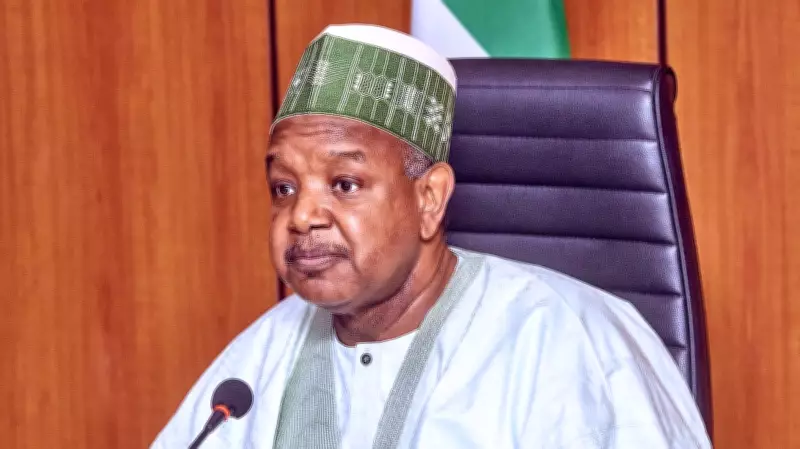
Senator Abubakar Atiku Bagudu, Nigeria's Minister of Budget and Economic Planning, has emphasized that granting young people access to land is crucial for their participation in agriculture. He made this statement during the national launch of the Youth Agribusiness Land Trust Fund (YALTF) in Abuja on Monday, praising the initiative as a key driver for youth involvement in agriculture and its value chain.
The YALTF, a collaboration between the Federal Ministry of Youth Development and the International Institute of Tropical Agriculture (IITA), aims to bring more young Nigerians into agriculture. The program seeks to unlock land resources within the 42 National Youth Development Centres across Nigeria for youth-led agribusiness. It targets six million Nigerian youths who will receive training from IITA in modern agriculture, climate-smart farming, value-chain opportunities, and agribusiness incubation.
Overcoming Land Access Barriers
Bagudu described the trust fund as a timely and strategic measure to tackle one of the biggest obstacles to youth participation in agriculture: access to land. He noted that despite Nigeria's vast agricultural potential, challenges related to land access, ownership structures, and inadequate coordination continue to hinder productivity and discourage long-term investment.
The minister stressed that agriculture must no longer be seen as mere subsistence farming but as a modern business sector capable of creating jobs, driving innovation, and strengthening the national economy. Drawing lessons from global examples like the Netherlands, he explained that agricultural success depends not only on land size but also on organization, technology, skills, and productivity.
Collaboration and Private Sector Role
Bagudu highlighted the importance of collaboration among federal, state, and local governments, noting that land administration and agricultural development require a whole-of-government and whole-of-federation approach grounded in shared responsibility. He cited the Renewed Hope Ward-Based Development Programme as a key framework for identifying land availability and economic opportunities across Nigeria's wards and communities.
Acknowledging that government resources alone cannot fund the required transformation, he called for greater private-sector participation and investment in agribusiness. He encouraged young Nigerians to embrace opportunities in farming, livestock, fisheries, food processing, agritech, and agricultural value chains, expressing confidence that initiatives like YALTF will empower them to become major contributors to food security, economic growth, and national development.
Government Commitment to Youth Empowerment
Minister of Youth Development, Mr. Ayodele Olawande, reaffirmed the Federal Government's commitment to moving beyond policy discussions to practical youth empowerment initiatives. He stated that the challenge facing Nigerian youth is not a lack of talent or innovation but limited access to opportunities and support.
According to Olawande, the YALTF was conceived as a direct response to these barriers and aligns with President Bola Tinubu's Renewed Hope Agenda, which recognizes young people as central to Nigeria's economic future. He described agriculture as one of the largest untapped opportunities for job creation, poverty reduction, and economic expansion in Nigeria, emphasizing that modern agriculture extends beyond cultivation to include technology, processing, packaging, marketing, exports, and value-chain enterprises.
Inspiration and Long-Term Impact
Olawande disclosed that the initiative was inspired by visits to youth development centres across the country, where he observed large tracts of underutilized land with potential to become productive agribusiness hubs. This discovery prompted the Ministry to develop a program that goes beyond land allocation, providing young people with training, mentorship, technology, business support, and market access.
Describing YALTF as a national program designed for long-term impact, the minister emphasized that its success depends on collaboration among government institutions, financial organizations, development partners, and the private sector. He maintained that land alone is insufficient without financing, technical support, and market linkages, urging stakeholders to actively support the initiative.
Commending partner institutions and relevant ministries for their contributions, Olawande described the launch not merely as a ceremonial event but as a declaration of confidence in Nigerian youth and a collective commitment to building sustainable pathways for economic empowerment and agribusiness development across the country.